- 1 God and the Supernatural
The reality of Hell
Of all the different doctrines in Christianity, Hell is the most burdensome to believe. In a world absent of Heaven and Hell, life's choices lose their infinite significance. The triumphs and failures, the victories and defeats, become relative and measured against each other, diminishing their inherent value. Without Hell, Heaven itself becomes a mundane and automatic destination, accessible to all without distinction or consequence.
The reality of Hell is firmly established in both Scripture and the teachings of the Orthodox Church. Our Lord Jesus Christ Himself spoke about Hell and warned of its existence. Dismissing this concept solely because it may be unbearable or unpleasant would set a dangerous precedent, leading to the potential rejection of other challenging or uncomfortable truths. To better understand the Orthodox Church's perspective on Hell, it's essential to explore the relevant beliefs and address common objections raised against the concept. The Orthodox Church holds that Hell is a real and distinct place, separate from both Heaven and the physical world. It's a realm of eternal torment and suffering, where unrepentant sinners and those who reject God's love and mercy will abide.
However, the Orthodox Church emphasizes that Hell is not merely a place of punishment but also a manifestation of God's love and justice. It serves as a reminder of the consequences of sin and the importance of striving for spiritual growth and communion with God. The existence of Hell underscores the significance of free will, as individuals have the choice to accept or reject God's grace and salvation.
Let us then understand what does the Orthodox Church believe with regards to hell? Then we will move on to the objections about hell and why they are not correct.
What is Hell?
The concept of hell is shrouded in mystery and often evokes fear and trepidation. Divine revelation, through scriptures and teachings, provides limited information about hell compared to heaven. This disparity can be understood from the perspective of human purpose and design. Humans were created for a heavenly existence, not for a place of torment.
Just as a travel agent would focus on promoting the beauty and amenities of a beach resort rather than the dangers of a swamp by the highway, divine revelation emphasizes the joys and blessings of heaven over the horrors of hell. This approach aligns with the belief that humans were intended for a life of love, joy, and eternal happiness.
However, it is important to acknowledge the existence of hell as a place of punishment and separation from God. While it was not intended for humans, the torments of hell were primarily designed for Satan and his fallen angels. Passages like Matthew 25:41 in the Bible indicate that hell was prepared specifically for the devil and his followers: “Then He will also say to those on the left hand, ‘Depart from Me, you cursed, into everlasting fire prepared for the devil and his angels ...” (Mt 25:41)
The concept of hell serves as a reminder of the consequences of straying from the path of righteousness and embracing evil. It highlights the importance of making moral choices and living a life aligned with divine principles. By emphasizing heaven as the ultimate destination for those who follow God's teachings, divine revelation guides individuals towards a life of virtue and spiritual growth.
What do we know about hell?
While no one truly desires to physically experience the nature of these torments, the Holy Scriptures provide us with numerous examples to deter us from sinning and guide us toward repentance.
Comparable to the heavenly reward, of which it is written, “eye has not seen, nor ear heard, nor have entered into the heart of man,” the same words can be applied to the punishment in hell. We may not fully comprehend its exact form, but certain elements have been revealed to us.
- Binding of the hands and feet (Matthew 22:13): This symbolizes the complete loss of freedom, representing the inability to act according to one's will or make choices that could potentially lead to liberation.
- Outer darkness (Matthew 8:12; 22:13; 25:30): This signifies alienation from God, who is the true light and source of life. It portrays the profound isolation and despair experienced by those separated from the divine presence.
- Weeping, wailing, and gnashing of teeth (Matthew 13:42, 50): This imagery conveys a state of extreme guilt, sorrow, and anguish. It reflects the profound regret and remorse felt by those who realize the consequences of their actions and the magnitude of their sins.
- Unquenchable darkness (Mark 9:43-48): Jesus speaks of an unquenchable fire
and worms that do not die, symbolizing severe pain and suffering. This fire is not
physical but spiritual and signifies the lack of communion with God after death.
The resurrection of our bodies will transform them to conform to the resurrected
body of Christ, which will differ from our current earthly bodies.
Now let us ask. Is there any contradiction between the “unquenchable fire” and the “outer darkness”? The concepts of "unquenchable fire" and "outer darkness" in theological discourse may initially appear contradictory, presenting a paradox that challenges our understanding of eternal punishment. However, a closer examination reveals that these concepts are not mutually exclusive and serve distinct purposes in conveying the nature of eternal consequences. For instance, the microwave ovens generate heat without light. The concept of darkness in the Bible is often associated with evil, chaos, and the absence of God's presence. In contrast, light is often associated with God, truth, and salvation. John 1:4, as mentioned in the input text, highlights this connection, stating that "In Him (Jesus) was life, and the life was the light of men." This verse reinforces the idea that God is the ultimate source of life and that separation from Him results in a state of darkness and spiritual death.
The description of "unquenchable fire" evokes the image of a perpetual and intense state of suffering, reminiscent of the torments experienced in earthly fires. Therefore, eternal punishment can be understood as both a state of intense suffering and a state of profound alienation from God's love and presence. The "unquenchable fire" symbolizes the perpetual consequences of sin, while "outer darkness" represents the absence of communion with the divine. These concepts serve as warnings against rejecting God's grace and the importance of seeking reconciliation with Him during our earthly existence. In this sense, eternal punishment is not simply a vindictive act of divine retribution but a natural consequence of choosing a path that leads away from God. Just as physical death is the result of a body's separation from its vital life force, eternal death, symbolized by the unquenchable fire and outer darkness, is the consequence of a soul's separation from its true source of life, which is God.
Hell: Eternal Torments
The concept of eternal torment in hell is a significant theological tenet within various religious texts, particularly in Christianity. Numerous verses in scripture provide evidence supporting the belief that the punishment for sin in the afterlife is everlasting. One prominent passage often cited is Matthew 25:41, where Jesus is depicted saying, "Depart from me, you cursed, into the everlasting fire prepared for the devil and his angels." This verse suggests that the fate of those who are condemned to hell is not temporary but extends infinitely.
Another notable verse is Revelation 14:11, which states, "And the smoke of their torment goes up forever and ever, and they have no rest day or night." This passage emphasizes the relentless and unending nature of the suffering experienced by those in hell. The imagery of perpetual smoke rising conveys the idea that the torment is continuous, without any respite or relief.
There are many more verses in scripture that confirm that Torments of hell are eternal:
- “... Some to shame and everlasting contempt.” (Dan 12:2)
- “These will go away into everlasting punishment.” (Mt 25:46)
- “... to whom the gloom of darkness is reserved forever.” (2 Pet 2:17)
- “Sodom and Gomorrah, and the cities around them ... are set forth as an example, suffering the vengeance of eternal fire.” (Jude 7)
- “... for whom is reserved the blackness of darkness forever.” (Jude 13)
- “They will be tormented day and night forever and ever.” (Rev 20:10)
The concept of eternal torment is often contrasted with the notion of purgatory, which is believed by some Christian denominations to be a temporary state of purification for souls before they enter heaven. However, the idea of everlasting punishment in hell stands in stark contrast to the concept of purgatory, as it suggests that there is no possibility of redemption or eventual salvation for those who are condemned. The Catholic Church believes in the existence of Purgatory, a place of temporary punishment or purification for souls who have died in a state of grace but have not yet fully atoned for their sins. However, this doctrine lacks a clear Scriptural basis and contradicts certain passages in the Bible.
One such passage is found in Luke 23:43, where Jesus tells the thief crucified alongside Him, "Assuredly, I say to you, today you will be with Me in Paradise." This verse suggests that the thief would go directly to Paradise, or Heaven, upon his death, without undergoing any intermediate purification in Purgatory.
Another passage that contradicts the doctrine of Purgatory is 1 Thessalonians 4:16-17: “And the dead in Christ will rise first. Then we who are alive and remain will be caught up together with them in the clouds to meet the Lord in the air. And thus we shall always be with the Lord.” (1 Thess 4:16,17). This passage implies that believers will immediately be with the Lord after death, without the need for any intervening period of purification.
The doctrine of Purgatory also contradicts the doctrine of Atonement and Redemption. If Purgatory exists, it implies that the blood of Jesus Christ was not sufficient to fully cleanse believers from their sins. This would undermine the central tenet of Christianity that salvation through the incarnation, death and Resurrection of Jesus Christ alone. If human sufferings were capable of satisfying the Divine Justice, then what was the need for Lord Jesus Christ’s Incarnation and death on the cross?
The Bible portrays purging as an act of mercy and grace that takes place on Earth through the cleansing power of the water of baptism, not through tormenting flames of fire after death. Passages such as Ephesians 5:25-27 and Titus 3:5 emphasize the sanctifying work of the Holy Spirit in believers' lives, transforming them into the image of Christ.
Hell: Levels
In the realm of the afterlife, the concept of levels within hell holds profound significance. It suggests that the severity of punishment in the afterlife is not uniform but varies based on the actions and deeds of individuals during their earthly existence. This notion is rooted in the belief that divine judgment is just and equitable, considering the nuances and degrees of sin.
Scriptural evidence supports the existence of levels in hell. In the Gospel of Luke, Jesus Christ speaks of the servant who knew his master's will but failed to act accordingly. “That servant who knew his master’s will, and did not prepare himself or do according to his will, shall be beaten with many stripes. But he who did not know, yet committed things worthy of stripes, shall be beaten with few.” (Lk 12:47; Lev 5:17) This servant will receive "many stripes" as punishment, implying a more severe consequence compared to someone who acted ignorantly or committed lesser offenses.
Similarly, in the Gospel of Mark and the Gospel of Luke, Jesus warns of "greater condemnation" for those who exploit widows and take advantage of the vulnerable. “Who devour widows’ houses ... those will receive greater condemnation.” (Mk 12:40; Lk 20:47) This differentiation in punishment suggests that certain sins are considered more heinous and warrant more severe retribution.
The Epistle of James highlights the responsibility of teachers and leaders, emphasizing that they will face a stricter judgment. “Let not many of you become teachers, knowing that we shall receive a stricter judgment.” (Jam 3:1) This underscores the idea that those who hold positions of influence and authority are held to a higher standard and will be accountable for their actions accordingly.
The Gospel of Matthew Chapter 10 provides further evidence of levels in hell by contrasting the fate of Tyre and Sidon with that of Capernaum. Jesus indicates that it will be "more tolerable" for Tyre and Sidon on the day of judgment compared to Capernaum, which had rejected his teachings and miracles. This comparison implies that the severity of punishment in hell is influenced by the extent to which individuals have embraced or rejected divine revelation.
Understanding the concept of levels in hell serves several purposes. It instills a sense of accountability and encourages individuals to reflect on their actions and strive for righteousness. It also provides a framework for understanding divine justice and the consequences of sin. Additionally, it emphasizes the need for repentance and transformation, as individuals can seek forgiveness and strive to align their lives with divine principles. By contemplating the existence of levels in hell, we gain a deeper appreciation for the intricate workings of divine judgment. It reminds us that every action and decision has consequences, and that true justice will ultimately prevail in the afterlife.
Hell: Absence of God’s Grace
It seems somewhat weird when we say God is in hell right? But God is everywhere. He is omnipresent, let’s read those verses.
- If I ascend into heaven, You are there; If I make my bed in hell, behold, You are there. (Psalm 139:8)
- Then a third angel followed them, saying with a loud voice, “If anyone worships the beast and his image, and receives his mark on his forehead or on his hand, he himself shall also drink of the wine of the wrath of God, which is poured out full strength into the cup of His indignation. He shall be tormented with fire and brimstone in the presence of the holy angels and in the presence of the Lamb. (Revelation 14:9-10)
While He is there, it’s going to be the lack of communication with Him that will be in Hell. Right now God is everywhere too, but do we ALL enjoy his joy, His peace, His grace the same way? Do some people not enjoy it at all? Are you living in the darkness of sin? They are. Same with hell.
How can a “Loving” God allow Hell?
In the parable of the unmerciful servant, we witness a profound interplay of justice and mercy. The servant begs his master for patience and forgiveness, promising to repay the debt he owes. Moved by compassion, the master releases and forgives the servant, demonstrating boundless mercy. “The servant therefore fell down before him, saying, ‘Master, have patience with me, and I will pay you all.’ Then the master of that servant was moved with compassion, released him, and forgave him the debt.” Matthew 18:26–27
However, when the same servant refuses to show compassion to his fellow servant, despite having received such mercy himself, the master's anger is kindled. He hands the unmerciful servant over to the torturers until he can repay all that is due. This act of justice serves as a reminder of the consequences of unforgiveness and the need for reciprocal mercy.
‘You wicked servant! I forgave you all that debt because you begged me. Should you not also have had compassion on your fellow servant, just as I had pity on you?’ And his master was angry, and delivered him to the torturers until he should pay all that was due to him. “So My heavenly Father also will do to you if each of you, from his heart, does not forgive his brother his trespasses.” Mt 18:32–35
Jesus concludes the parable with a sobering warning, emphasizing that our heavenly Father will treat us in the same way that we treat others. If we fail to forgive our brothers and sisters from our hearts, we risk incurring God's judgment and experiencing the full weight of justice. The parable invites us to consider the profound nature of God's love. Love is not merely a sentiment; it is an active force that manifests itself in both justice and mercy. Justice ensures that there are consequences for wrongdoing, while mercy offers the possibility of redemption and a fresh start.
Far from being incompatible, justice and mercy are two sides of the same coin. They are both essential expressions of God's love, working together to create a harmonious and just world. CS Lewis expresses: “What are you asking God to do? To wipe out their past sins and, at all costs, to give them a fresh start, smoothing every difficulty and offering every miraculous help? But He has done so, on Calvary.” Love is God's essence, justice is one of its works, and mercy is another. We think of mercy as the relaxation and compromising of justice, and justice as prior. Justice is simply a form that love takes, and on the cross, he expresses justice on Himself on behalf of His love for mankind.
In the book of Sirach, scripture puts forth clearly the wrath of God: “Even if there were only one stiff-necked person, it would be a wonder if he remained unpunished. For mercy and wrath are with the Lord; he is mighty to forgive—but he also pours out wrath. Great as is his mercy, so also is his chastisement; he judges a person according to his or her deeds. The sinner will not escape with plunder, and the patience of the godly will not be frustrated.” Sirach 16:11–13. God is a Just Perfect Judge. If someone has chosen to be evil, and God has been very patient with him, but the person still refuses to come back, God must puts an end to that evil because He does not want others to suffer because of this person. This may not be out of utmost desire, He desires all men to be saved, but out of necessity - just like during Noah’s flood. He thus puts an end to it. God is all knowing and knows if this person will repent or not. If given a million more years, will they change their way or not?
Forgiveness appeals to freedom; it must be freely given and freely accepted, like any gift. If we do not repent and ask for God's forgiveness, we do not receive it, not because God holds it back but because we hold ourselves back.
An Unfair “Punishment”
The word "punishment" carries a complex meaning, embracing two distinct interpretations. Positive law punishments are those chosen by the punisher, rather than being inherently necessary. They may be just and reasonable, but they are subject to change and are not absolute. For example, if you steal a cookie, the punisher might slap your hand, or if you drive at ninety miles per hour, your license might be taken away. These punishments are imposed externally and are intended to deter certain behaviors.
On the other hand, natural law punishments are intrinsic and stem from the natural consequences of one's actions. They are necessary and unavoidable, and they are not subject to the whims of the punisher. For instance, if you eat a cookie before supper, you may spoil your appetite. If you drive at ninety miles per hour, you will endanger your life. And if you jump off a cliff, you will likely die. These punishments are inherent to the actions themselves and serve as a natural deterrent to harmful or dangerous behaviors.
Positive law punishments are often imposed by authority figures, such as parents, teachers, or the government, to maintain order and enforce rules. They can be subjective, as the punisher has the discretion to choose the appropriate punishment. However, natural law punishments are objective and universal, as they are embedded in the laws of nature. They are not subject to human interpretation or manipulation.
Understanding the distinction between positive law and natural law punishments is important within the dialogue of mercy and justice. First, it helps individuals to recognize the different types of consequences that their actions may have. When looking at the fall, God instilled a natural law: “Of every tree of the garden you may freely eat; 17 but of the tree of the knowledge of good and evil you shall not eat, for in the day that you eat of it you shall surely die.” (Genesis 2:16-17) He defined and described a natural consequence to the action. If we eat the forbidden fruit of disobedience to God's will, divorcing our will and spirit from God's, then the inevitable result will be disaster and death, for God is the source of all joy and life.
A “Punishment” not fitting for the crime
Those who object to hell's over severity do not see what sin really is. They probably look at sin externally, sociologically, legalistically, as "behaving badly." They fail to see the real horror of sin and the real greatness and goodness and joy of the God who is refused in every sin. We all fail to appreciate this.
Eternity is not more time, or even endless time. It is another dimension than time, just as time is another dimension than space. The relation between earthly choices and eternal rewards or punishments is not like the relation between crimes and prison sentences, but like the relation between a foundation and a building. Hell's punishment fits sin's crime because sin is divorce from God. The punishment fits the crime because the punishment is the crime. Saying no to God means no God.
Some have objected saying that a “short-lived” sin should not be punished with eternal punishment. In this case, neither should the reward of the righteous be eternal, for the same analogy and relationship exists between this joy and the worthiness of the deeds. There is no opportunity for repentance in the afterlife, sins will remain with the person eternally and thus the torments will also continue forever.
Let’s look at an example of Civil Law. Let’s say someone murdered a person and it took them 15 minutes, does this mean you get to stay in prison for only 15 minutes? We hear of many cases when someone, due to the sins he/she has committed at one point or another, received a punishment which lasted many years or even until the end of his/her life. The duration of time in which the evil act itself was committed does not necessarily commensurate with the duration of the imposed punishment. Someone may spend years in prison for a fifteen-minute crime.
Contrary to Human Freedom
We do, and therefore can, freely choose hell over heaven. We do this in principle in every sin. We do not want or explicitly choose sin's "wages," sin's inevitable punishment-banishment from the paradise of God's presence-but we do choose the sin and falsely hope to escape the punishment.
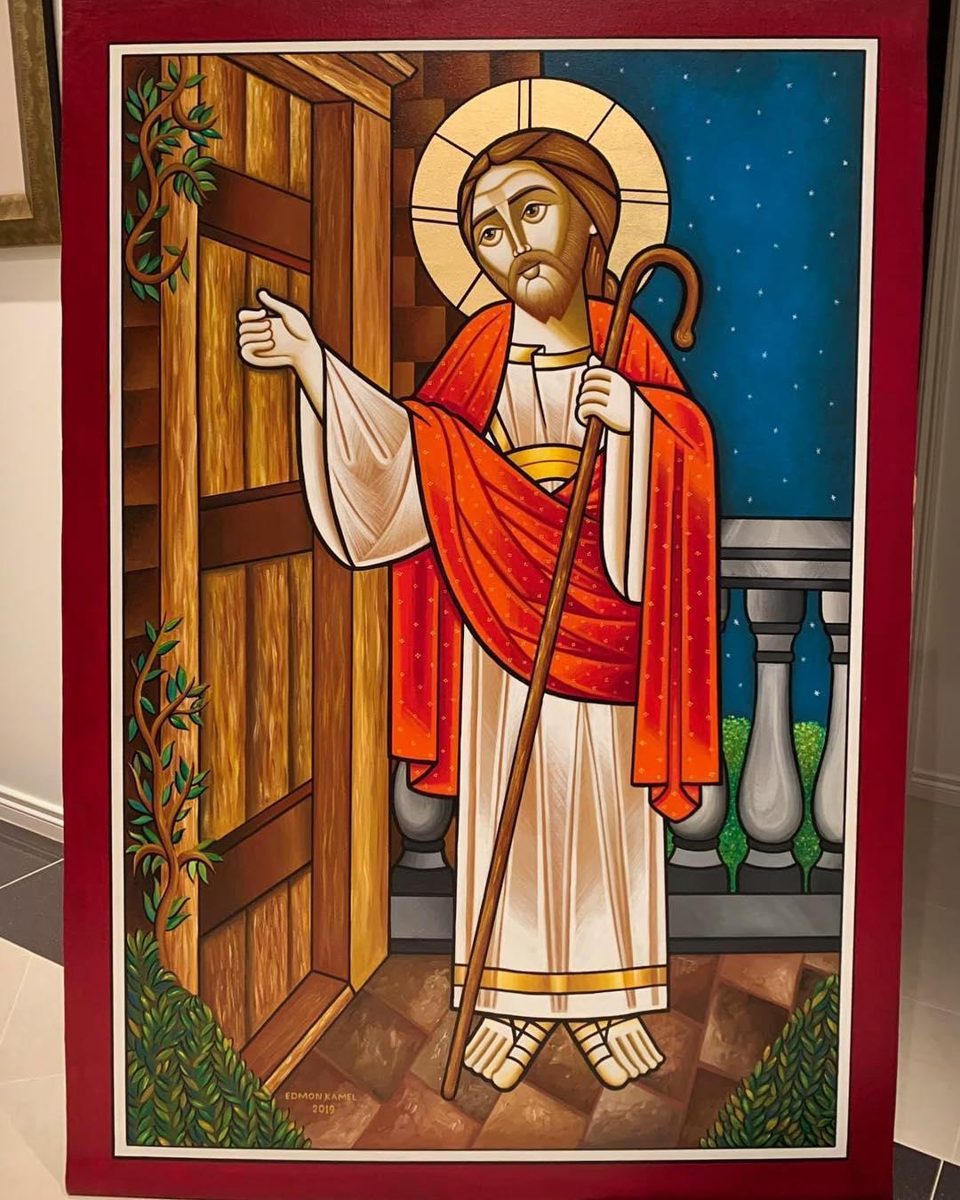
If you look at the icon of Jesus knocking on the door, you’ll notice something….what is it? There’s no door knob. The door can only be opened on the inside.
C.S Lewis has a nice quote….the doors of hell are locked from the inside. Not literally of course, but meaning that we choose that willingly chose it and will not leave. They have gotten the freedom they asked for and are enslaved to themselves.
Does the fear of hell remove free choice? Does fry contradict free? No more than the fear of falling off a cliff removes the free choice to skate close to the edge or to avoid it. If the threat "repent or you'll fry" removed free will, then all would repent. The threat does not remove free choice.
"In all our discussions of hell we should keep steadily before our eyes the possible damnation, not of our enemies nor our friends ... but of ourselves. This chapter is not about your wife or son, nor about Nero or Judas Iscariot; it is about you and me.” - C.S. Lewis The Problem of Pain
Contrary to Omnipotence
The question of why God, with his limitless power, does not destroy hell or ensure that no one goes there raises profound theological and philosophical issues. Three primary options emerge: destroying hell, annihilating the souls in hell, or preventing the conception of hell-bound persons.
- Destroying Hell:
Destroying hell would mean eliminating one of the two options available to individuals through free choice: choosing God or rejecting Him. If hell does not exist and there is no separation from God, then all individuals would be compelled to choose God. However, this would essentially destroy free will, as individuals would no longer have the ability to make meaningful choices. - Annihilating the Souls in Hell:
Annihilating the souls in hell would involve destroying something God created. Even though these souls have made choices that led them to hell, God created them with the potential for salvation. Annihilating them would be akin to erasing a part of God's creation, which goes against the notion of God's love and mercy.
- Preventing the Conception of Hell-Bound Persons:
Preventing the conception of hell-bound persons would effectively be another way of destroying free choice. By predetermining who will and will not exist, God would be eliminating the possibility of individuals making their own choices and shaping their destinies. This would undermine the purpose of human existence and reduce individuals to mere pawns in a predetermined game.
The objection assumes that a world without hell is possible and questions why God did not create such a world. However, the response is that God did indeed create a world without separation from Himself. God did not create hell; it is a consequence of the choices made by individuals who freely reject His love and grace.