BIBL302 - Christ and Salvation in OT
Fulfillment, Not Replacement
The New Testament is a fulfillment of the Old Testament. Everything God did for the Jews in the Old Testament was preparing them for Christ’s coming in the New Testament. To understand the New Testament and the significance of Christ’s coming, we need to understand the Old Testament. “The New Testament is in the Old Testament Concealed and the Old Testament is in the New Testament Revealed.”
This does not mean that the Old Testament was false or defective. It means that the realities signified in the Law and the Prophets—often in types and shadows—are made manifest in Christ. The same God who delivered Israel from Egypt has acted definitively in the death and resurrection of His Son. Therefore, Christian reading of the Old Testament is neither dismissal nor mere admiration, but recognition of Christ-centered fulfillment.
Sacred Time and the Number Seven
The Old Testament feasts are arranged within a sacred structure. A key feature of that structure is the pattern of seven, which appears throughout Scripture as a sign of completeness, fullness, and ordered holiness.
This pattern is visible in Israel:
- The Sabbath is on the seventh day, sanctifying time itself to God.
- Major feasts occur within the seventh month, intensifying holy remembrance and repentance.
- The Sabbatical year occurs every seven years, training Israel to rest, trust, and release.
- Pentecost is counted after seven weeks, signifying fullness before gift.
- The Jubilee follows seven times seven years, declaring release, restoration, and renewed life.
By shaping worship around this pattern, the Law teaches that time belongs to God. The feasts are not merely cultural traditions; they are appointed times that train the people in remembrance, purification, thanksgiving, and hope.
The Seven Feasts Jesus Celebrated
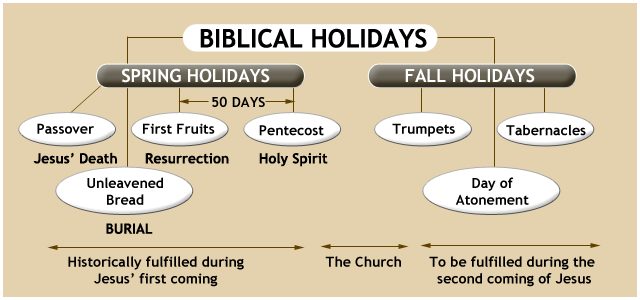
The Jewish feasts that Jesus Christ celebrated were:
- The Passover
- The Feast of Unleavened Bread
- The Feast of First Fruits
- The Feast of Pentecost
- The Feast of Trumpets
- The Day of Atonement
- The Feast of Tabernacles
These feasts are not disconnected observances. Together they form a theological arc that moves from redemption to sanctification, from harvest to hope, and from atonement to God dwelling with His people. They teach Israel to expect that God will act again—more fully, more finally, and more universally—than He did in the Exodus.
Beginnings That Frame the Feasts
These feasts were preceded by 2 main events: Jewish New Year (Nisan 1 ~March 1) and the Cleansing and New Beginning.
- The Tabernacle as the Center of Holy Time
When Israel is instructed to set up the tabernacle, it is established at the beginning of the first month, indicating that worship is not a private option but the organizing center of covenant life.
“On the first day of the first month you shall set up the tabernacle of the tent of meeting.” (Exodus 40:2, NKJV)
And when Moses completes the work, God confirms His presence:
“So Moses finished the work. Then the cloud covered the tabernacle of meeting, and the glory of the LORD filled the tabernacle.” (Exodus 40:33–34, NKJV)
This teaches that Israel’s holy calendar is not merely seasonal. It is ordered around the presence of God. The feasts exist to preserve remembrance and holiness, but their deepest meaning is communion: God with His people.
- Cleansing Before Renewed Worship
Holy celebration presupposes purification. When worship is restored, Scripture repeatedly shows cleansing and confession preceding renewed liturgical life. This is illustrated in Hezekiah’s restoration of temple worship, where sin offerings are brought and hands are laid upon them:
“Then they brought out the male goats for the sin offering before the king and the assembly; and they laid their hands on them.” (2 Chronicles 29:23, NKJV)
The principle is consistent: before God’s people gather and rejoice, corruption must be acknowledged and removed. Worship is not only joy; it is holiness.
The goal is not simply to memorize feast names and dates, but to understand how God used holy time to prepare His people for Christ—and how, through Christ, the Church now lives in fulfilled remembrance and watchful expectation.
The Passover: Redemption, Sacrifice, and New Beginning
[Nisan 14 // April]
The Passover as the Foundation of Israel’s Sacred Memory
The Feast of Passover stands at the foundation of Israel’s liturgical year. It commemorates God’s act of deliverance, when Israel was freed from slavery in Egypt by the blood of the lamb and the power of God. This feast does not merely remember an event; it establishes a pattern of redemption unfolded progressively until its fulfillment in Christ.
God commands Israel:
“This month shall be your beginning of months; it shall be the first month of the year to you.” (Exodus 12:2, NKJV)
Time itself is reordered around redemption. Israel’s calendar no longer begins with nature or harvest, but with salvation. From this point forward, history is measured from deliverance.
Sanctification of the Passover Lamb
Before the lamb is sacrificed, it is set apart. The lamb is chosen days in advance, examined, and kept until the appointed time.
“Speak to all the congregation of Israel, saying: ‘On the tenth day of this month every man shall take for himself a lamb, according to the house of his father, a lamb for a household… Your lamb shall be without blemish, a male of the first year. You may take it from the sheep or from the goats.’” (Exodus 12:3, 5, NKJV)
Sanctification precedes sacrifice. What will be offered must first be examined, chosen, and kept pure. This prepares Israel to understand that redemption is not accidental, but deliberate and costly.
This sanctification finds a striking parallel when Israel crosses the Jordan and enters the Promised Land under Joshua, renewing covenant life:
“Now Joshua made flint knives for himself, and circumcised the sons of Israel at the hill of the foreskins.” (Joshua 5:3, NKJV)
“And they ate of the produce of the land on the day after the Passover, unleavened bread and parched grain, on the very same day.” (Joshua 5:11, NKJV)
Redemption leads to covenant renewal, not autonomy.
Christ Our Passover: Cut Off for Us
The New Testament reveals that Christ is not merely associated with Passover, He is the Passover Lamb. His death occurs at the very hour when lambs are slain, and His offering fulfills what the feast had always proclaimed.
The prophet Daniel foretells the Messiah’s fate:
“And after the sixty-two weeks Messiah shall be cut off, but not for Himself; And the people of the prince who is to come Shall destroy the city and the sanctuary. The end of it shall be with a flood, And till the end of the war desolations are determined.” (Daniel 9:26, NKJV)
Christ is “cut off,” not for His own sin, but for the redemption of others.
St. Paul the apostle proclaims this fulfillment plainly:
“For indeed Christ, our Passover, was sacrificed for us.” (1 Corinthians 5:7, NKJV)
Passover in the New Testament: The Last Supper and the Cross
On the night of Passover, Jesus celebrates the feast with His disciples—not to repeat it, but to transform it.
“And He took bread, gave thanks and broke it, and gave it to them, saying, ‘This is My body which is given for you; do this in remembrance of Me.’ Likewise He also took the cup after supper, saying, ‘This cup is the new covenant in My blood, which is shed for you.’” (Luke 22:19–20, NKJV)
Christ establishes a New Covenant, not sealed with the blood of lambs, but with His own blood.
The Epistle to the Hebrews interprets this moment definitively:
“Then He said, ‘Behold, I have come to do Your will, O God.’ He takes away the first that He may establish the second. By that will we have been sanctified through the offering of
the body of Jesus Christ once for all.” (Hebrews 10:9–10, NKJV)
The sacrifice of Christ does not abolish Passover, it completes it.
Passover as a New Beginning
The Fathers of the Church emphasize that Passover signifies not only deliverance, but renewal of creation itself.
“In like manner also we can understand this statement: ‘This month shall be to you the beginning of months.’ This statement is to be interpreted in reference to time. There is reference to the pasch of the Lord, which is celebrated at the beginning of spring… Then there was the mild temperature of spring, a season suitable for all things.” — St. Ambrose of Milan, SIX DAYS OF CREATION 1.4.13
“After having inflicted the Egyptians with many plagues, he led them out of Egypt in the month of flowers, when the most pleasant spring appears and the sadness of winter passes away.” — Pseudo-Macarius, HOMILY 47.3
“This is the first month of the year. This brings joy to every creature… This is for Christians Xanthicus, the first month, the time of the resurrection in which their bodies will be glorified…” — Pseudo-Macarius, HOMILY 5.9
Passover marks the transition from death to life, winter to spring, slavery to freedom. Christ’s death on the Cross likewise inaugurates a new beginning: liberation from sin and entry into resurrected life.
A Lamb from the Sheep or the Goats
The Law allows the Passover lamb to be taken from sheep or goats, a detail the Fathers interpret spiritually:
“The lamb… may be taken from either the sheep or the goats… In the house of the church, moreover, Christ is offered in a twofold manner: if we are just, we eat of the flesh of the lamb; if we are sinners and do penance, for us a goat is slain.” — St. Jerome, HOMILY 91
“The lamb… should be taken from the sheep or from the goats—that is, from the righteous or the wicked.” — St. Augustine, AGAINST FAUSTUS 22.64
Christ adapts Himself to the condition of those He saves, not changing His holiness, but meeting each person where repentance or righteousness is required.
The Sacrifice of the Lambs: Evening and Fulfillment
The lamb is sacrificed in the evening:
“Now you shall keep it until the fourteenth day of the same month. Then the whole assembly of the congregation of Israel shall kill it at twilight.” (Exodus 12:6, NKJV)
The Fathers see divine wisdom in this timing:
“You see Christ is not immolated except in perfect and full light.” — St. Jerome, HOMILIES ON THE PSALMS 5
“Our Lord and Savior suffered his passion at the close of the ages.” — St. Jerome, HOMILY 91
“It was fitting for Christ to offer the sacrifice in the evening of the day in order that the very hour might show the setting and evening of the world.” — St. Cyprian, LETTER 63.16
“It was fitting for Christ to offer the sacrifice in the evening of the day in order that the very hour might show the setting and evening of the world as it is written in Exodus: “And the whole multitude of the children of Israel shall slaughter it in the evening.” And again in the Psalms: “The lifting up of my hands as evening sacrifice.” But we celebrate the resurrection of the Lord in the morning. LETTER 63.16. Exodus 12:6” St. Cyprian
Christ dies as the old age passes away, ushering in the dawn of the Kingdom.
The Command to Eat the Passover
The Passover is not completed merely by sacrifice or by the marking of blood. The Lord commands that the lamb must be eaten. Redemption is not only something that happens for the people of God; it is something into which they must actively enter.
“Then they shall eat the flesh on that night; roasted in fire, with unleavened bread and with bitter herbs they shall eat it.” (Exodus 12:8, NKJV)
Eating the Passover is participation in redemption. Israel does not observe salvation from a distance; they consume what God has provided. This principle prepares the way for the New Testament understanding of communion, where salvation is not only proclaimed but received.
Roasted with Fire: Suffering and Fulfillment
The lamb is not eaten raw, nor boiled in water, but roasted with fire.
“Do not eat it raw, nor boiled at all with water, but roasted in fire—its head with its legs and its entrails.” (Exodus 12:9, NKJV)
Fire in Scripture signifies testing, judgment, and purification. The lamb passes through fire before it is eaten, teaching that redemption comes through suffering, not avoidance of it.
Origen warns against a purely literal or careless consumption of Scripture:
“One must not therefore eat the flesh of the lamb raw, as the slaves of the letter do in the manner of animals which are irrational and quite savage.” — Origen, COMMENTARY ON THE GOSPEL OF JOHN 10.103–4
To eat the lamb “roasted with fire” is to receive the Word of God rightly—understood, tested, and transformed—rather than consumed superficially or distorted to suit comfort.
The Head, the Feet, and the Inner Organs
The lamb is eaten whole, not divided or selected according to preference. This wholeness becomes a key theological principle.
“You shall let none of it remain until morning, and what remains of it until morning you shall burn with fire.” (Exodus 12:10, NKJV)
St. Cyril of Jerusalem interprets this wholeness Christologically:
“Being counted worthy to partake of the flesh of the spiritual Lamb, let us take the head with the feet, understanding the head as the divinity and the feet as the humanity.” — St. Cyril of Jerusalem, CATECHETICAL LECTURE 12.1
St. Jerome adds a complementary interpretation:
“The head may be taken to signify spiritual understanding; the shanks, historical narrative; the inner organs are whatever lies hidden within the letter.” — St. Jerome, HOMILY 91
Christ is not received in parts. To receive Him is to receive His divinity and humanity, His mystery and His history, His visible teaching and hidden depth.
Unleavened Bread: Purity and Separation from Sin
The Passover meal is eaten with unleavened bread. Leaven, which causes fermentation and swelling, becomes a scriptural image for corruption and sin.
“Seven days you shall eat unleavened bread… For whoever eats leavened bread from the first day until the seventh day, that person shall be cut off from Israel.” (Exodus 12:15, NKJV)
St. Paul applies this directly to our life:
“Therefore purge out the old leaven, that you may be a new lump, since you truly are unleavened. For indeed Christ, our Passover, was sacrificed for us. Therefore let us keep the feast, not with old leaven, nor with the leaven of malice and wickedness, but with the unleavened bread of sincerity and truth.” (1 Corinthians 5:7–8, NKJV)
Participation in Christ demands purification. Redemption is not permission to continue in corruption; it is liberation from it.
Bitter Herbs: Suffering, Repentance, and Healing
The Passover is not eaten with sweetness alone. Bitter herbs accompany the meal.
“With unleavened bread and with bitter herbs they shall eat it.” (Exodus 12:8, NKJV)
Origen explains the necessity of bitterness in the journey of salvation:
“Nor is it possible to attain the promised land unless we pass through bitterness.” — Origen, HOMILIES ON NUMBERS 27.10
He compares bitterness to medicine—unpleasant, yet healing. Repentance, discipline, trials, and self-denial are not obstacles to salvation but instruments through which God restores the soul.
“The end of this bitterness gains the sweetness of salvation for our soul.” — Origen, HOMILIES ON NUMBERS 27.10
The Christian life does not deny suffering; it redeems it.
Daily Participation in the Lamb
Origen extends the Passover meal beyond a single night:
“Christians eat the flesh of the lamb every day, that is, they consume daily the flesh of the Word.” — Origen, HOMILIES ON GENESIS 10.3
This daily eating points to continual communion—through Scripture, prayer, repentance, and especially the Eucharist. Salvation is not a single moment but a sustained life of participation in Christ.
Origen draws attention to the spiritual meaning of this command by comparing Scripture with Scripture:
“It is not insignificant that the divine word wants us to eat not yesterday’s meat, but always fresh and new… It prohibits yesterday’s meat.” — Origen, HOMILIES ON LEVITICUS 5.8.2
He recalls the prophet Ezekiel’s response to God:
“Even yesterday’s meat never entered my mouth.” (cf. Ezekiel 4:14, NKJV)
Origen explains that this is not dietary pride, but spiritual vigilance. Yesterday’s meat symbolizes stale understanding, mechanical religion, and worship divorced from living obedience. God does not desire remembered faith alone, but present communion.
Eating in Readiness: A People Prepared to Depart
Christian participation in Christ, especially in the Eucharist, demands attentiveness, repentance, and renewal. Communion cannot be treated as habit without preparation, nor truth as information without transformation.
The Passover meal is eaten standing, clothed, and prepared for movement.
“And thus you shall eat it: with a belt on your waist, your sandals on your feet, and your staff in your hand. So you shall eat it in haste. It is the LORD’s Passover.” (Exodus 12:11, NKJV)
This posture reveals that salvation is not an endpoint, but a passage. Israel eats while ready to leave Egypt. Redemption always precedes journey.
St. Cyril of Alexandria explains this readiness:
“For I affirm that it is the duty of those who are partakers of Christ to beware of a barren indolence… and to hasten besides with alacrity wherever the law of God leads them.” — St. Cyril of Alexandria, HOMILIES ON THE GOSPEL OF LUKE 92
To eat the Lamb is to commit oneself to obedience. Passover faith does not produce spiritual passivity, but active readiness to follow God wherever He leads.
The Feast of the Unleavened Bread: Purification, Separation, and Life Without Corruption
[Nisan 15-21 // April]
The Feast That Immediately Follows Redemption
The Feast of Unleavened Bread follows directly after the Passover. It is not optional, nor is it delayed. Redemption and purification are inseparable in God’s economy. Having been delivered by the blood of the lamb, Israel is immediately commanded to remove leaven from their midst.
“And on the fifteenth day of the same month is the Feast of Unleavened Bread to the LORD; seven days you must eat unleavened bread. On the first day you shall have a holy convocation; you shall do no customary work on it.” (Leviticus 23:6–7, NKJV)
The feast lasts seven days, indicating a complete period of consecrated life. It teaches that freedom from slavery must be followed by transformation of daily conduct.
Unleavened Bread and the Haste of Obedience
The original context of the feast explains its urgency:
“And they baked unleavened cakes of the dough which they had brought out of Egypt; for it was not leavened, because they were driven out of Egypt and could not wait, nor had they prepared provisions for themselves.” (Exodus 12:39, NKJV)
Israel leaves Egypt without delay. There is no time to allow fermentation, no time for compromise. Salvation demands decisiveness. Leaven, which requires time to work through dough, becomes an image of lingering attachment to Egypt.
The removal of leaven therefore signifies a clean break with former bondage.
Leaven as a Spiritual Image
In Scripture, leaven often symbolizes corruption, sin, or false teaching—not because leaven itself is evil, but because of its hidden, spreading nature.
The apostle Paul applies this image directly to the Christian life:
“Therefore purge out the old leaven, that you may be a new lump, since you truly are unleavened. For indeed Christ, our Passover, was sacrificed for us. Therefore let us keep the feast, not with old leaven, nor with the leaven of malice and wickedness, but with the unleavened bread of sincerity and truth.” (1 Corinthians 5:7–8, NKJV)
Paul does not spiritualize the feast away; he extends it. The Church keeps the feast by living a purified life grounded in truth and sincerity.
The Command to Remove Leaven Completely
The Law is explicit about the seriousness of this purification:
“Seven days you shall eat unleavened bread. On the first day you shall remove leaven from your houses. For whoever eats leavened bread from the first day until the seventh day, that person shall be cut off from Israel.” (Exodus 12:15, NKJV)
“For seven days no leaven shall be found in your houses, since whoever eats what is leavened, that same person shall be cut off from the congregation of Israel.” (Exodus 12:19, NKJV)
Leaven is not managed; it is removed. Partial obedience is not sufficient. God teaches Israel that holiness requires decisive separation from corruption.
Christ’s Burial and the Feast of Unleavened Bread
In the New Testament, Christ’s burial coincides with the Feast of Unleavened Bread. Having taken away sin through His sacrificial death, His body rests in the tomb without corruption.
This fulfills the deeper meaning of the feast: sin has been removed, and death itself is being undone. The unleavened bread points to a life purified from decay—a life that will soon be revealed in resurrection.
Fulfillment in Christ and the Life of the Church
St. Athanasius interprets the feast through Christ:
“With desire I have desired to eat this Passover with you.” Now that is a wonderful account, for a man might have seen them at that time girded as for a procession or a dance and going out with staves and sandals and unleavened bread. These things, which took place before in shadows, were typical anticipatory symbols. But now the truth has drawn near to us, “the image of the invisible God,” our Lord Jesus Christ, the true Light. Instead of a staff, he is our scepter; instead of unleavened bread, he is the bread which came down from heaven; who instead of sandals has furnished us with the preparation of the gospel. It is he who, to speak briefly, by all these means has guided us to his Father. And if enemies afflict us and persecute us, he again, instead of Moses, will encourage us with better words, saying, “Be of good cheer; I have overcome the wicked one.” And if after we have passed over the Red Sea, heat should again vex us or some bitterness of the waters befall us, even then again the Lord will appear to us, imparting to us of his sweetness and his life-giving fountain, saying, “If any man thirst, let him come to me and drink.” — St. Athanasius, FESTAL LETTERS 14.3
Christ does not merely teach purity; He becomes the Bread that sustains it. Life without leaven is not self-produced moralism, but participation in Christ Himself.
The Feast of Unleavened Bread thus instructs the Church that redemption must be followed by repentance, confession, vigilance, and sincere living. Freedom from Egypt is meaningless if Egypt is carried within.
The Feast of the First Fruits: Resurrection, Promise, and the Harvest to Come [Nisan 17 (April)]
The Offering of the First Fruits
The Feast of First Fruits marks the presentation of the earliest yield of the harvest to God. It is not an act of agricultural efficiency, but of faith. By offering the first, Israel acknowledges that the whole harvest belongs to God and that its completion depends upon His blessing.
“The first of the firstfruits of your land you shall bring into the house of the LORD your God.” (Exodus 23:19, NKJV)
This offering occurs at the beginning of the harvest season. What is given is not the abundance, but the beginning—the sign that more is to come.
Remembrance and New Life
On this feast, Israel recalled decisive moments of deliverance and renewal: the resting of Noah’s ark, the crossing of the Red Sea, and the eating of the first produce of the Promised Land.
“So the people came up from the Jordan on the tenth day of the first month… And the children of Israel camped in Gilgal… Now the children of Israel camped in Gilgal, and kept the Passover… And they ate of the produce of the land on the day after the Passover, unleavened bread and parched grain, on the very same day.” (Joshua 4:19; 5:10–11, NKJV)
These events teach that God brings His people through death into life, through wilderness into inheritance.
Christ the First Fruits of the Resurrection
The New Testament reveals the full meaning of this feast in the resurrection of Christ.
“But now Christ is risen from the dead, and has become the firstfruits of those who have fallen asleep.” (1 Corinthians 15:20, NKJV)
Christ’s resurrection is not an isolated miracle. It is the beginning of a greater harvest. Just as the first fruit guarantees the full yield, Christ’s resurrection guarantees the resurrection of all who belong to Him.
Theological Meaning of “First Fruits”
The concept of first fruits explains the connection between Christ’s resurrection and the future resurrection of believers. Resurrection is not merely survival after death, but the restoration of life in a transformed and glorified state.
A tree never bears only a single fruit. A tree may be fruitless, but if it bears fruit at all, that first fruit is never the last. One fruit appears first, and it is followed by many others in due season. The first fruit is therefore both a beginning and a promise. It reveals what the tree truly is and what it is capable of producing.
This is the meaning of Christ’s resurrection for us. Christ is the first to rise from the dead, not as an isolated event, but as the beginning of a greater harvest. Because we have seen His resurrection, we know that resurrection is possible. Because He has risen, we have confidence that we too will rise. His resurrection is the guarantee and assurance of our own.
Christ rises not only for Himself, but for us. His risen body is the pledge that death has been defeated, not postponed.
Ecclesial and Sacramental Implications
The Feast of First Fruits teaches the Church to live in hope. Christians already belong to the resurrection, even while still living in a fallen world. The life of the Church is therefore shaped by anticipation, thanksgiving, and confidence in God’s promise.
Christ’s resurrection sanctifies time, creation, and the human body itself. The same body that was buried is raised in glory. The same will be true for those united to Him.
The Feast of Pentecost: Law, Spirit and Harvest of the Church
[6th of Sivan in the Hebrew calendar (May)]
The Feast Fifty Days After First Fruits
The Feast of Pentecost occurs fifty days after the Feast of First Fruits. The name Pentecost itself means “fiftieth.” In Israel’s life, this feast marked the completion of the grain harvest and was celebrated as a thanksgiving offering to God.
Pentecost is commanded in the Law:
“And you shall count for yourselves from the day after the Sabbath, from the day that you brought the sheaf of the wave offering: seven Sabbaths shall be completed. Count fifty days to the day after the seventh Sabbath; then you shall offer a new grain offering to the LORD.” (Leviticus 23:15–16, NKJV)
The counting from Passover to Pentecost teaches that redemption unfolds toward fulfillment. Salvation initiates a journey that culminates in divine gift.
Pentecost and the Giving of the Law
In Jewish tradition, Pentecost also commemorated the giving of the Law to Moses on Mount Sinai. Fifty days after Israel’s deliverance from Egypt, God revealed His will in commandments written on stone tablets.
This connection is not accidental. God first frees His people, then instructs them how to live as a redeemed community. Law follows liberation.
Pentecost Fulfilled in the New Testament
In the New Testament, Pentecost becomes the day on which the Law is no longer written on stone, but on human hearts through the gift of the Holy Spirit.
“When the Day of Pentecost had fully come, they were all with one accord in one place. And suddenly there came a sound from heaven, as of a rushing mighty wind, and it filled the whole house where they were sitting… And they were all filled with the Holy Spirit and began to speak with other tongues, as the Spirit gave them utterance.” (Acts 2:1–4, NKJV)
The descent of the Holy Spirit fulfills what Sinai foreshadowed. God does not merely instruct from above; He now indwells His people.
Pentecost as Harvest
Just as Pentecost celebrated the harvest of grain, the New Testament Pentecost marks the beginning of the harvest of souls.
“Then those who gladly received his word were baptized; and that day about three thousand souls were added to them.” (Acts 2:41, NKJV)
St. John Chrysostom explains the typology:
“Do you see the type? What is this Pentecost? The time when the sickle was to be put to the harvest and the fruits to be gathered. Look at the reality now, how the time has come to ply the sickle of the Word. The Spirit, keen-edged, came down in place of the sickle. For
hear the words of Christ, “Lift up your eyes and see how the fields are ripe for harvesting.” And again, “The harvest is plentiful, but the laborers are few.” He himself, taking [our nature] as the first fruits, lifted it up high and he was himself the first to ply the sickle. For this reason he calls [the Word] also the Seed.”” — St. John Chrysostom, HOMILIES ON THE ACTS OF THE APOSTLES 4
The Spirit descends not for private ecstasy, but for mission. The Church is born not in silence, but in proclamation.
Christ, the First Fruits and the Giver of the Spirit
St. Augustine connects Passover, Resurrection, and Pentecost:
“Fifty days are reckoned from the celebration of the Passover… Likewise, when fifty days had passed from the slaying and resurrection of him who was led as a lamb to the slaughter, the finger of God, that is, the Holy Spirit filled the believers gathered in one place.” — St. Augustine, ON THE SPIRIT AND THE LETTER 16.28
Christ ascends, and the Spirit descends. What Christ accomplishes in His humanity, the Spirit applies to the Church.
Law Fulfilled by the Spirit
Pentecost reveals that obedience is no longer external compulsion but internal transformation.
The Spirit does not abolish the Law; He fulfills it by enabling what the Law commands. The same God who spoke at Sinai now speaks within the heart.
Thus, Pentecost completes the movement that began at Passover:
- Passover: deliverance from death
- Unleavened Bread: purification from corruption
- First Fruits: resurrection hope
- Pentecost: indwelling power and communal mission
The Feast of Trumpets: Remembrance, Proclamation and the Coming King [1st of Tishri (September)]
The Feast That Announces and Awakens
The Feast of Trumpets marks the beginning of the seventh month and serves as a solemn call to remembrance, repentance, and expectation. Unlike other feasts that commemorate past acts of deliverance, this feast looks forward. It awakens the people of God to judgment, kingship, and the nearness of divine intervention.
The Law commands:
“In the seventh month, on the first day of the month, you shall have a sabbath-rest, a memorial of blowing of trumpets, a holy convocation.” (Leviticus 23:24, NKJV)
The trumpet blast is not music for celebration alone; it is an alarm, a summons, and a proclamation. It gathers the people before God and announces that sacred time has begun.
The Shofar: Sound of Kingship and Judgment
The trumpet blown at this feast is the shofar, made from a ram’s horn. In Scripture, the shofar is associated with theophany, kingship, warfare, and judgment.
At Sinai, God’s presence is announced with trumpet sound:
“And it came to pass on the third day, in the morning, that there were thunderings and lightnings, and a thick cloud on the mountain; and the sound of the trumpet was very loud, so that all the people who were in the camp trembled.” (Exodus 19:16, NKJV)
The Feast of Trumpets thus recalls Sinai while also preparing Israel for a future manifestation of God’s glory.
A Day of Remembrance and Judgment
In Jewish life, this feast came to be known as the Day of Remembrance and the Day of Judgment. The people are called to reflect on their lives, examine their faithfulness, and prepare for the Day of Atonement that follows.
This teaches a crucial spiritual principle: repentance precedes atonement. The trumpet awakens conscience before forgiveness is sealed.
Christ and the Feast of Trumpets in the New Testament
In the New Testament, the Feast of Trumpets finds its fulfillment not in Christ’s first coming, but in anticipation of His second coming. The trumpet becomes the sound that announces the return of the King and the final judgment.
Christ Himself teaches this:
“Then the sign of the Son of Man will appear in heaven, and then all the tribes of the earth will mourn, and they will see the Son of Man coming on the clouds of heaven with power and great glory. And He will send His angels with a great sound of a trumpet, and they will gather together His elect from the four winds, from one end of heaven to the other.” (Matthew 24:30–31, NKJV)
The apostle Paul echoes this reality:
“For the Lord Himself will descend from heaven with a shout, with the voice of an archangel, and with the trumpet of God. And the dead in Christ will rise first.” (1 Thessalonians 4:16, NKJV)
The trumpet that once called Israel to assemble now calls all creation to resurrection and judgment.
Christ Reveals Himself as the Anointed One
During His earthly ministry, Christ publicly identifies Himself as the Messiah in a synagogue setting connected to prophetic proclamation:
“So He came to Nazareth, where He had been brought up. And as His custom was, He went into the synagogue on the Sabbath day, and stood up to read… And He began to say to them, ‘Today this Scripture is fulfilled in your hearing.’” (Luke 4:16–21, NKJV)
St. Cyril of Alexandria explains the significance of this moment:
“By these words he himself tells us very clearly by the voice of the prophet that he would both be made man and come to save the world.” — St. Cyril of Alexandria, COMMENTARY ON LUKE, HOMILY 12.6
The Feast of Trumpets thus teaches that proclamation precedes fulfillment. God announces before He acts, so that His people may recognize Him when He comes.
Ecclesial Meaning: A Church That Watches and Proclaims
The Church lives perpetually in the spiritual season of the Feast of Trumpets. She proclaims repentance, announces the Kingdom, and watches for the return of Christ.
The trumpet sound becomes the voice of preaching, calling the faithful to vigilance and holiness.
The Church does not predict dates, but she does prepare hearts.
The Day of Atonement (Yom Kippur): Entrance, Blood and Reconciliation [10th of Tishri (September)]
The Holiest Day of the Year
The Day of Atonement, known in Hebrew as Yom Kippur, stands at the center of Israel’s liturgical year. It is the most solemn day, the day on which reconciliation between God and His people is enacted through blood, priesthood, and divine mercy.
The Law establishes its gravity:
“Also the tenth day of this seventh month shall be the Day of Atonement. It shall be a holy convocation for you; you shall afflict your souls, and offer an offering made by fire to the LORD.” (Leviticus 23:27, NKJV)
Unlike other feasts marked by joy or thanksgiving, this day is marked by fasting, humility, and repentance. Israel does not celebrate; Israel stands before God seeking mercy.
The High Priest and the Holy of Holies
On this day alone, and only on this day, the High Priest enters the Holy of Holies, the innermost sanctuary of the Tabernacle or Temple. No other person may enter. No other day permits access.
“But into the second part the high priest went alone once a year, not without blood, which he offered for himself and for the people’s sins committed in ignorance.” (Hebrews 9:7, NKJV)
The priest does not enter empty-handed. Blood must be brought with him. Without blood, entry means death.
The Sprinkling of Blood: Godward and Manward
The High Priest sprinkles blood in two directions:
- One time upon the mercy seat (Godward)
- Seven times before the mercy seat (toward the people)
This action teaches that atonement reconciles both parties. Sin offends God and wounds humanity. Blood restores communion in both directions.
The blood does not remove sin by human effort; it covers sin by divine appointment.
The Two Goats: Death and Removal
Central to Yom Kippur are two goats, each revealing a different aspect of atonement.
The Goat for the LORD
One goat is slain, and its blood is brought into the Holy of Holies. This goat bears death.
The Scapegoat (Azazel)
The second goat remains alive. The High Priest lays hands upon it and confesses the sins of Israel over it.
“And Aaron shall lay both his hands on the head of the live goat, confess over it all the iniquities of the children of Israel… and send it away into the wilderness.” (Leviticus 16:21, NKJV)
This goat does not die in the sanctuary. It is removed, carrying sin away from the people.
Together, the two goats teach that sin must be both atoned for and removed.
Fulfillment in Christ
The Day of Atonement finds its complete fulfillment in Jesus Christ.
He is:
- The High Priest
- The Sacrifice
- The Bearer of Sin
- The One who enters the true Holy of Holies
“Not with the blood of goats and calves, but with His own blood He entered the Most Holy Place once for all, having obtained eternal redemption.” (Hebrews 9:12, NKJV)
Christ does not repeat the ritual yearly. He accomplishes it once and forever.
Jubilee and the Mystery of Fifty
Every fiftieth year, the Day of Atonement initiates the Year of Jubilee.
“Then you shall cause the trumpet of the Jubilee to sound on the tenth day of the seventh month; on the Day of Atonement you shall make the trumpet to sound throughout all your land.” (Leviticus 25:9, NKJV)
Debts are forgiven. Slaves are freed. Land is restored.
St. Basil the Great explains the theological meaning:
“Seven weeks of years in ancient times produced the celebrated jubilee, in which the earth kept the sabbath, debts were canceled, slaves were set free and, as it were, a new life was established again…” — St. Basil the Great, LETTER 260
The Jubilee prefigures the final restoration of all things in Christ.
Psalm 50 and the Mystery of Remission
Cassiodorus links the Day of Atonement, Jubilee, and Pentecost:
“So too this psalm, which is given the number 50, if recited with a pure heart, looses sins, cancels the bond of our debt and, like the year of remission, frees us through the Lord’s kindness of the debts of our sins.” — Cassiodorus, EXPOSITION OF THE PSALMS 50
Forgiveness is not denial of justice. It is justice fulfilled through mercy.
The Feast of Tabernacles: Dwelling, Ingathering and God with us [15th of Tishri (September/October)]
The Feast of Dwelling
The Feast of Tabernacles is the final and most joyful feast of the Jewish liturgical year. Coming five days after the Day of Atonement, it proclaims that atonement leads to communion, and forgiveness leads to dwelling in God’s presence.
The Law commands:
“Speak to the children of Israel, saying: ‘The fifteenth day of this seventh month shall be the Feast of Tabernacles for seven days to the LORD… You shall dwell in booths for seven days… that your generations may know that I made the children of Israel dwell in booths when I brought them out of the land of Egypt: I am the LORD your God.’ ” (Leviticus 23:34, 42–43, NKJV)
This feast commemorates Israel’s wilderness journey, when God dwelt among His people as they lived in temporary dwellings. The booths (sukkoth) remind Israel that their security does not come from permanent structures, but from the presence of God.
Ingathering and Completion
Tabernacles is also called the Feast of Ingathering.
“And the Feast of Ingathering at the end of the year, when you have gathered in the fruit of your labors from the field.” (Exodus 23:16, NKJV)
This feast celebrates the completion of the harvest. It marks fullness, abundance, and thanksgiving. Spiritually, it teaches that God’s redemptive work moves toward fulfillment, not fragmentation.
The number seven dominates the feast: seven days of celebration in the seventh month. This signifies completeness within God’s covenantal order.
Sacrifice, Trumpets, and Light
During the Feast of Tabernacles, sacrifices were offered daily, trumpets were blown, and the Temple was filled with light. According to Numbers 29, a total of seventy bulls were sacrificed over the course of the feast, a number traditionally associated with the nations of the world. This anticipates the universal scope of salvation.
Zechariah’s prophecy is read in the synagogues:
“And it shall come to pass that everyone who is left of all the nations which came against Jerusalem shall go up from year to year to worship the King, the LORD of hosts, and to keep the Feast of Tabernacles.” (Zechariah 14:16, NKJV)
Tabernacles thus looks beyond Israel to the final ingathering of all nations.
Christ and the Feast of Tabernacles
The Gospel of John deliberately situates Christ’s teaching within the context of this feast:
“Now the Jews’ Feast of Tabernacles was at hand… Now about the middle of the feast Jesus went up into the temple and taught… On the last day, that great day of the feast, Jesus stood and cried out, saying, ‘If anyone thirsts, let him come to Me and drink.’ ” (John 7:2, 14, 37, NKJV)
Christ identifies Himself as the fulfillment of what Tabernacles signifies. He is the true source of living water, replacing the ceremonial water-pouring rites of the feast.
John explains:
“But this He spoke concerning the Spirit, whom those believing in Him would receive; for the Holy Spirit was not yet given, because Jesus was not yet glorified.” (John 7:39, NKJV)
Christ does not merely commemorate God dwelling with Israel—He is God dwelling with humanity.
Patristic Interpretation: The Final Gathering
St. Cyril of Alexandria writes:
“The spiritual person will from this perceive the gathering together of all the saints into Christ when they shall be brought together from the whole world after the resurrection of the dead to the city that is above, the heavenly Jerusalem…” — COMMENTARY ON THE GOSPEL OF JOHN 3.4
The temporary booths anticipate glorified bodies. What was once fragile becomes permanent. What was once shadow becomes reality.
Eschatological Fulfillment
The Feast of Tabernacles ultimately points forward to the consummation of salvation history.
“Behold, the tabernacle of God is with men, and He will dwell with them, and they shall be His people.” (Revelation 21:3, NKJV)
Here the feast reaches its final fulfillment. God no longer dwells with His people in tents or temples, but eternally.
Christ and Salvation in the Old Testament
The cycle of feasts reveals a coherent and intentional plan:
- Passover — redemption through sacrifice
- Unleavened Bread — purification from sin
- First Fruits — resurrection and promise
- Pentecost — the gift of the Spirit
- Trumpets — proclamation and judgment
- Atonement — reconciliation and forgiveness
- Tabernacles — God dwelling with His people
The Old Testament does not merely predict Christ; it forms a plan of salvation that Christ fulfills perfectly. The Law prepares, the feasts proclaim, and Christ completes.
Thus, we confess with the Church: The New Testament is in the Old Testament concealed, and the Old Testament is in the New Testament revealed.