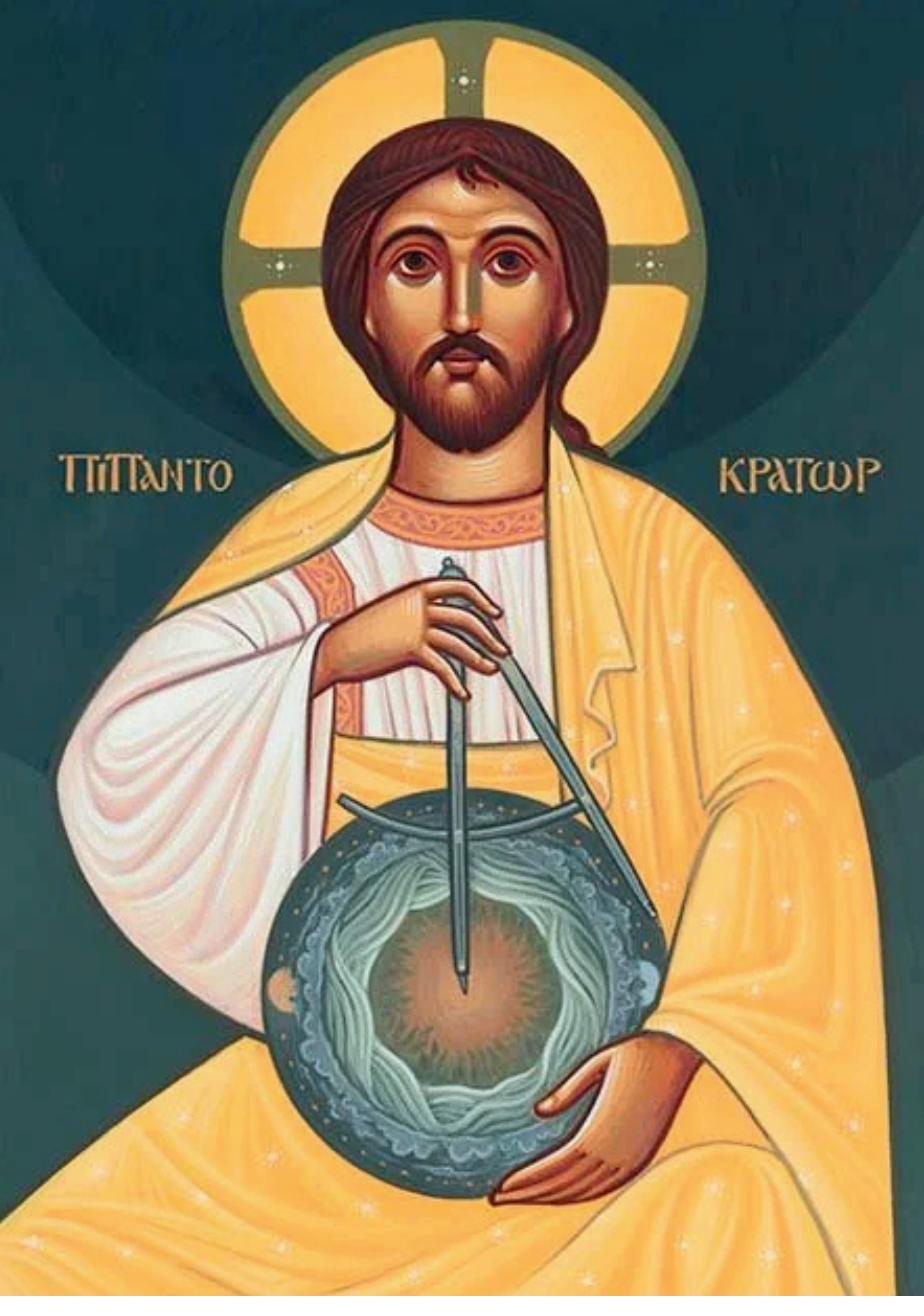
A movement has arisen in our generation that calls itself Christian, speaks with a reverential tone about Jesus, and even claims a love for the Scriptures, while quietly re-interpreting every central doctrine of the faith. It goes by several names — progressive Christianity, the emerging church, the reforming church — but at bottom it is an attempt to redefine what it means to be a Christian. It sounds like the real thing: the same vocabulary, some of the same hymns, often the same buildings that once housed a faithful, apostolic congregation. Strip away the vocabulary, though, and what is left is a fake representation of the true gospel, wearing the true gospel’s clothes.
You will meet this movement’s ideas before you ever meet its name — in a classroom, at work, scrolling through a friend’s feed, or from a pulpit that used to be trustworthy. Our Lord warned us plainly that wolves would come to us in sheep’s clothing, and the souls in your care are already touched by this movement’s teaching long before anyone hands them a book with “progressive Christianity” on the cover. This lesson sets out the movement’s self-description, walks doctrine by doctrine through what it has re-defined, and places each claim beside the apostolic and patristic faith of the Orthodox Church. The tone here is firm, because the stakes are exactly what the movement itself says they are: nothing less than who God is, what the Cross accomplished, and what a human being actually needs in order to be saved.
The Shape of the Movement
Progressive Christianity is, in a word, progressive. The adjective does the theological work: faith gets reframed as a journey of constant evolution, an ongoing search in which the old requirement of absolutes has quietly dropped away. Looked at this way, you’re encouraged to keep moving, keep re-interpreting, keep adapting doctrine to the surrounding culture as that culture itself moves. What was once confessed as revealed truth gets spoken of instead as one perspective among many — reverently held, and just as reverently revised whenever the moral imagination of the age changes.
The movement names its own animating impulse as inclusion. What it offers the seeker is a place at the table, a welcome that asks nothing to be surrendered: not a sexual practice, not a religious heritage, not a theological doubt. Scripture gets honored as one source of truth rather than the container of absolute truth, sitting alongside personal experience, reason, and the insights of other religions as co-equal voices in the conversation.
Stated in its own words, the program sounds humane and appealing. A typical self-description opens with a list of rejections: we aren’t fundamentalists; we don’t believe the Bible is inerrant; we don’t think creationism belongs in science classrooms; we don’t believe God hates gay people; we don’t believe people of other faiths are hell-bound unless they convert; we don’t deny a woman’s right to choose what happens to her body. Every clause reads as a release from something harsh, and the weary reader is invited to feel relieved.
But a movement defined mainly by what it refuses to believe eventually has to answer for what it still affirms. Examined doctrine by doctrine, a different picture emerges — one that isn’t a modest modernization of the apostolic faith but a substantively different religion wearing its clothes. That’s the examination this lesson makes, doctrine by doctrine, following the movement’s own list of departures.
1. We are Perfect
The first doctrine the movement offers is a strikingly simple one: you don’t need to repent, because you are perfect just as you are. It sounds like good news, and in a culture exhausted by shame, it’s meant to. But it rests on rejecting the doctrine of original sin altogether — the teaching that Adam’s fall introduced into the human race a real corruption, a real inclination toward evil, a real rupture with God. In its place, progressive Christianity offers what it calls original blessing. Progressives don’t usually deny that sin exists in some fashion; they deny that we inherit any sinful nature from our first parents. What separates you from God, on this account, isn’t real corruption but your own self-imposed shame, and the remedy isn’t repentance but self-acceptance. You were never actually separated from God, the teaching goes — you are beloved and accepted exactly as you are, and the only task left is to realize it.
The Orthodox doctrine of ancestral sin is more careful than the caricature either the old Reformers or the progressives now attack. We don’t teach, with St. Augustine’s Western successors, that infants bear personal guilt for Adam’s transgression. But we do teach what the Fathers taught and what Scripture plainly says: a corruption entered the race through Adam — a real inclination toward sin, a real bondage to death — which every person inherits and every person also personally ratifies by his own consent to sin. Baptism cleanses the nature and unites you to Christ; the life of repentance and the mysteries work that cleansing out progressively, over a lifetime. The doctrine of original blessing, by denying the inherited corruption, empties the meaning of Baptism, empties the meaning of repentance, and — worse, pastorally — leaves you with no honest account of the ugliness you already know is in your own heart.
The pastoral damage runs deep. When you’re told that your estrangement from God is only a misperception, and that the cure is simply to re-imagine yourself as already accepted, you’re handed a counterfeit peace. You can no longer cry out with the Publican, “God, be merciful to me a sinner” — because this gospel has already told you there’s no sinner there to be merciful to. In place of the Cross, you’re handed a mirror.
2. The Cross Is Cosmic Child Abuse
The second doctrine strikes directly at the Cross. In progressive teaching, the death of Christ is often called horrific or unnecessary — on the theory that he didn’t die for the salvation of the world at all, but simply to show us how to forgive our enemies by letting himself be crucified by angry people. The traditional teaching that the Father required the Son’s self-offering gets read as an indictment of God’s own character, turning him into a cosmic abuser. The phrase used in popular writing is blunt: cosmic child abuse.
This needs a careful answer. The objection fastens on one particular Western, juridical theory of the Atonement — penal substitution, as certain Reformed writers developed it — and attacks it as though it were the only Christian account of the Cross. It isn’t. The Orthodox doctrine of the Cross is ancient, rich, and entirely untouched by this caricature. We don’t teach that an angry Father punished an innocent Son to be placated. We teach that God himself, out of his own free love, took flesh in the person of the Son, descended to the place of human death and bondage, and there trampled down death by his own death: Christus Victor, the paschal victory, the self-offering of the Son who is one in essence with the Father and the Spirit. St. Irenaeus captured the whole logic of it in a single line:
“[He] did, through His transcendent love, become what we are, that He might bring us to be even what He is Himself.” — St. Irenaeus, Against Heresies V, Preface
The Father didn’t send a second person against his will into suffering. The Father, the Son, and the Spirit are one God, and the self-offering at Calvary is the self-offering of the one God for his creation. Rightly understood, the Atonement isn’t child abuse — it’s the deepest revelation of divine love: God himself bearing what we brought upon ourselves, and rising from under it. The progressive critique has mistaken one small Western setting for the jewel itself, and thrown out both together.
The Person of Christ: “Big Brother” in Place of the Son of God
A closely related move touches the person of Christ himself. In much progressive teaching, Jesus isn’t so much the divine Son of God as a moral example to follow — a kind of big brother who walked a path we’re now invited to walk too. The point of his life, on this reading, is to set a pattern. The divinity the Creed confesses — very God of very God, of one essence with the Father — gets quietly set aside, and what’s left is an exemplary teacher.
The apostolic confession knows no such Christ. St. John writes, “In the beginning was the Word, and the Word was with God, and the Word was God” (John 1:1). St. Thomas, before the risen body of the Lord, cries out, “My Lord and my God!” (John 20:28). St. Paul writes that in him dwells all the fullness of the Godhead bodily (Colossians 2:9). The Church at Nicaea, meeting while the living memory of the apostles was still only generations old, confessed him begotten, not made, one in essence with the Father. St. Athanasius put the weight of the whole doctrine in a single sentence:
“He, indeed, assumed humanity that we might become God. He manifested Himself by means of a body in order that we might perceive the Mind of the unseen Father. He endured shame from men that we might inherit immortality.” — St. Athanasius, On the Incarnation 54
If Christ is only a moral example, that sentence is nonsense. Only if Christ is God Incarnate can the Incarnation carry the weight the Fathers put on it; can it actually raise you from corruption, actually grant you participation in the divine nature, and actually open paradise to the thief on the cross. A merely exemplary Jesus can give you an ethic. He cannot save you.
Closely attached to this reduction of Christ’s divinity is a reduction of the Trinity itself. Some progressives go no further than denying the full deity of Christ; others go further still, embracing pantheism (the teaching that the universe itself is God) or panentheism, in which God is in all and all is in God in a way that makes God dependent on his own creation. Each of these departures sets aside the doctrine of the Holy Trinity the Church has confessed for two thousand years. A church that has lost the Trinity has lost the name of the Christian God.
3. Sexual Immorality Is Holy
The third doctrine covers a comprehensive shift on questions of sexuality and gender. There’s an almost universal acceptance of same-sex relationships and marriage, an affirmation of transgender identity as a valid expression of the self, and a rejection of what’s called cisgender normativity. One widely circulated statement of the position puts it this way: the idea that sex should be between one man and one woman within the covenant of marriage for life “was not just incorrect, but harmful. Christians should pursue sexual fulfillment as defined by the World Health Organization as being grounded in consent.” A Christianity that didn’t affirm these developments would, on the progressive account, be morally deficient.
Here you need to be both clear and kind at once. The Orthodox Church confesses with Scripture that God created humankind male and female in his own image (Genesis 1:27), that marriage is the one-flesh union of a man and a woman (Genesis 2:24; Matthew 19:4-6), and that the body isn’t a neutral vehicle for the will but a sacred part of the person, knit together in the womb by God (Psalm 139:13). The pastoral reality of human sexuality is vast and varied, and every parish holds souls who struggle with desires and identities the Church cannot bless. Your duty toward them is the same duty you owe every struggling soul: love them, walk with them, call them to chastity the same way the Church calls every unmarried Christian to chastity, and refuse to abandon the teaching of Scripture and the Fathers for the comfort of either the struggling person or the surrounding culture.
The progressive program asks for more than pastoral gentleness. It asks for the redefinition of marriage, doctrinal approval of same-sex sexual unions, and the affirmation of gender as self-chosen rather than given by God — a redefinition the apostolic Church has no authority to grant. This isn’t hard-heartedness toward anyone’s suffering; the Church has carried that suffering alongside strugglers for centuries. It’s simply that no servant of Christ has the standing to revise what Christ and his apostles delivered. A servant who loves the sheep will not feed them poisoned grass because they like the color.
4. The Bible Is an Ancient Story Book
The fourth doctrine concerns the Bible itself. One widely used framework for progressive Christian education describes Scripture as something closer to a book of suggestions and possibilities than an authoritative standard for truth. In progressive churches generally, the biblical writers get treated as well-meaning ancient people doing their best to understand God within the limits of their own times and cultures — voices worth hearing, but not necessarily speaking for God. On this account, the Bible is contradictory, not internally coherent, and not binding on the conscience of the contemporary Christian.
The apostolic answer is direct. St. Paul writes to Timothy that all Scripture is given by inspiration of God — the Greek word is theopneustos, God-breathed — and is profitable for doctrine, for reproof, for correction, for instruction in righteousness, so that the man of God may be complete, thoroughly equipped for every good work (2 Timothy 3:16-17). St. Peter writes that no prophecy of Scripture came by the will of man, but holy men of God spoke as they were moved by the Holy Spirit (2 Peter 1:21). The Orthodox Church has never taught a mechanical inerrancy of the kind certain Protestant fundamentalisms teach; we read Scripture within the mind of the Fathers, in the Liturgy, through the same Spirit who gave it. But we confess that the Spirit who moved the prophets and apostles still speaks through their words, and a church that treats the Bible as a travel journal will, before long, find itself writing a new journal of its own.
“If anyone preaches any other gospel to you than what you have received, let him be accursed.” Galatians 1:9
St. Paul’s solemn warning stands over this entire subject. A progressive Christianity that has reserved the right to revise the gospel it received is, by the apostle’s own measure, carrying a burden it hasn’t yet weighed.
5. Feelings Are Emphasized Over Facts
The fifth doctrine is more a method than a single teaching, and in some ways it’s the key that unlocks all the others. Personal consciousness, experience, preference, and opinion get valued over objective truth; a person’s feelings become the center of their motives and actions, and doctrine gets shaped to match. St. Augustine diagnosed exactly this move sixteen centuries ago, and the intervening centuries haven’t improved on his precision:
“For to believe what you please, and not to believe what you please, is to believe yourselves, and not the gospel.” — St. Augustine, Contra Faustum XVII.3
That’s the progressive method in a single sentence: sift the Gospel and keep whatever commends itself to the modern conscience, discarding the rest. The result isn’t an adjusted Christianity. It’s a religion of the self wearing Christian vocabulary. Our Lord foresaw this possibility and warned his disciples about it in the plainest terms:
“Beware of false prophets, who come to you in sheep’s clothing, but inwardly they are ravenous wolves.” Matthew 7:15
Feelings matter, the Church has never asked you to be a Stoic, but a feeling is not a fact, and a doctrine tested only against how it makes you feel has stopped being doctrine at all.
6. Christianity Is Not the Only Truth
The sixth doctrine gives up Christianity’s claim to be the only way to God. One popular defense of the position argues that “the power of the Christian faith to transform lives does not require it to be exclusively true. Exclusivity is born out of fear… We believe there are many trains and God welcomes them all.” This shows up in two related forms.
The first is universalism, or universal reconciliation. The dominant view of heaven and hell in progressive Christianity holds that no one will ultimately be punished, and that everyone — regardless of faith, repentance, or participation in the Church — will eventually be saved and restored to God. Some progressives still affirm that Jesus is the only way, but add that he’ll eventually save everyone by that way whether or not they ever come to know him. It’s a sentimental doctrine pastorally, but it can’t be squared with our Lord’s own plain words about the narrow way, the wide way, and the two ultimate destinies (Matthew 7:13-14; Matthew 25:31-46). The Orthodox hope for the salvation of the world is real, and it’s a real prayer — but it’s a hope that respects the freedom God has given, and so it can’t presume on a universal outcome that would empty that freedom of its meaning.
The second is religious pluralism, often summed up in the idea that everyone gets a seat at the table: all creeds are true in their own way, and everyone who holds one is equally accepted by God. Many progressives add pantheism, panentheism, and perennialism to this mix — perennialism being the teaching that different religions only look different on the surface, while sharing, at their core, the same truth and the same source, discoverable through mysticism and contemplative practice.
The apostolic witness is unambiguous. Our Lord said, “I am the way, the truth, and the life. No one comes to the Father except through Me” (John 14:6). St. Peter said before the Sanhedrin, “Nor is there salvation in any other, for there is no other name under heaven given among men by which we must be saved” (Acts 4:12). The exclusivity of Christ isn’t a later ecclesiastical boast — it’s the unbroken confession of the apostles, the martyrs, and the Fathers, and without it the whole missionary task falls apart. The pluralist consolation — that no one needs to convert, because every path leads equally to God — might sound pleasant at a university symposium, but it empties the Great Commission, empties the blood of the martyrs, and empties the Lord’s own words.
7. The Gospel of Social Justice
The seventh doctrine reframes the Gospel itself as social transformation. In progressive preaching, the Good News stops being the news that God has come to save sinners and reconcile them to himself in Christ; it becomes news of overturning unjust structures, lifting up the oppressed, and correcting inequities, with social justice issues becoming the heart of the message and what a person does mattering more than what they believe. The Orthodox Church has always taught that a faithful Christian life produces works of mercy, care for the poor, defense of the vulnerable, and a public witness for justice — the Fathers thundered against the exploitation of the poor long before any modern movement thought to. But when those works become the Gospel itself, and the world gets read entirely through a secular grid of oppressor and oppressed, the Cross and the empty tomb quietly disappear from the sermon. A Christianity with no Cross isn’t the faith once delivered. It’s a civic religion of activism with crosses hung on the walls for decoration.
Progressive Christianity in Action
All of this can sound abstract until you hear it in an ordinary conversation. It rarely announces itself as a doctrine — it shows up in a sentence, at coffee hour or in a text message: I disagree with St. Paul on that issue. The Bible “contains” the word of God. That verse doesn’t resonate with me. I thought homosexuality was a sin until I actually met and became friends with some gay people. I just can’t believe Jesus would send good people to hell. The church’s historic position on sexuality is archaic and needs to be updated for a modern framework. The Bible is a human book. God wouldn’t punish sinners — he is love. It’s not our job to judge others, just to love them. Sin doesn’t separate us from God — we’re made in his image, and he called us good. We don’t really need to preach the gospel — we just need to show love by bringing justice to the oppressed and provision to the needy.
Every one of these sentences sounds reasonable on its own, and some of them contain a fragment of truth badly applied. That’s exactly how the movement spreads: not through a manifesto handed to you all at once, but one plausible-sounding sentence at a time, each one quietly assuming that Scripture, the Fathers, and two thousand years of the Church’s discernment are less trustworthy than how a claim strikes you personally.
St. Augustine’s Diagnosis, and Ours
The problem underneath all seven doctrines was never really a list of individual errors. It’s a single method, and St. Augustine named it with a precision that sixteen centuries haven’t improved on: believing what you like in the Gospel and rejecting what you don’t is a way of believing yourself, not the Gospel.
Your task in this atmosphere isn’t to become suspicious of every unfamiliar idea, and it isn’t to weaponize the word heresy against every brother or sister who phrases something awkwardly. Your task is simply to know the faith — the faith received from the apostles, confessed in the Creed, unfolded by the Fathers, celebrated in the Liturgy — and to teach it clearly. A servant well-formed in the faith can sit across from a progressive friend in charity and in sober confidence, able to say what the Church teaches and why, able to listen without panic to what that friend is struggling with, and able, by the grace of God, to call the friend back to the one Gospel that doesn’t need revising — because it is the power of God for salvation to everyone who believes (Romans 1:16).