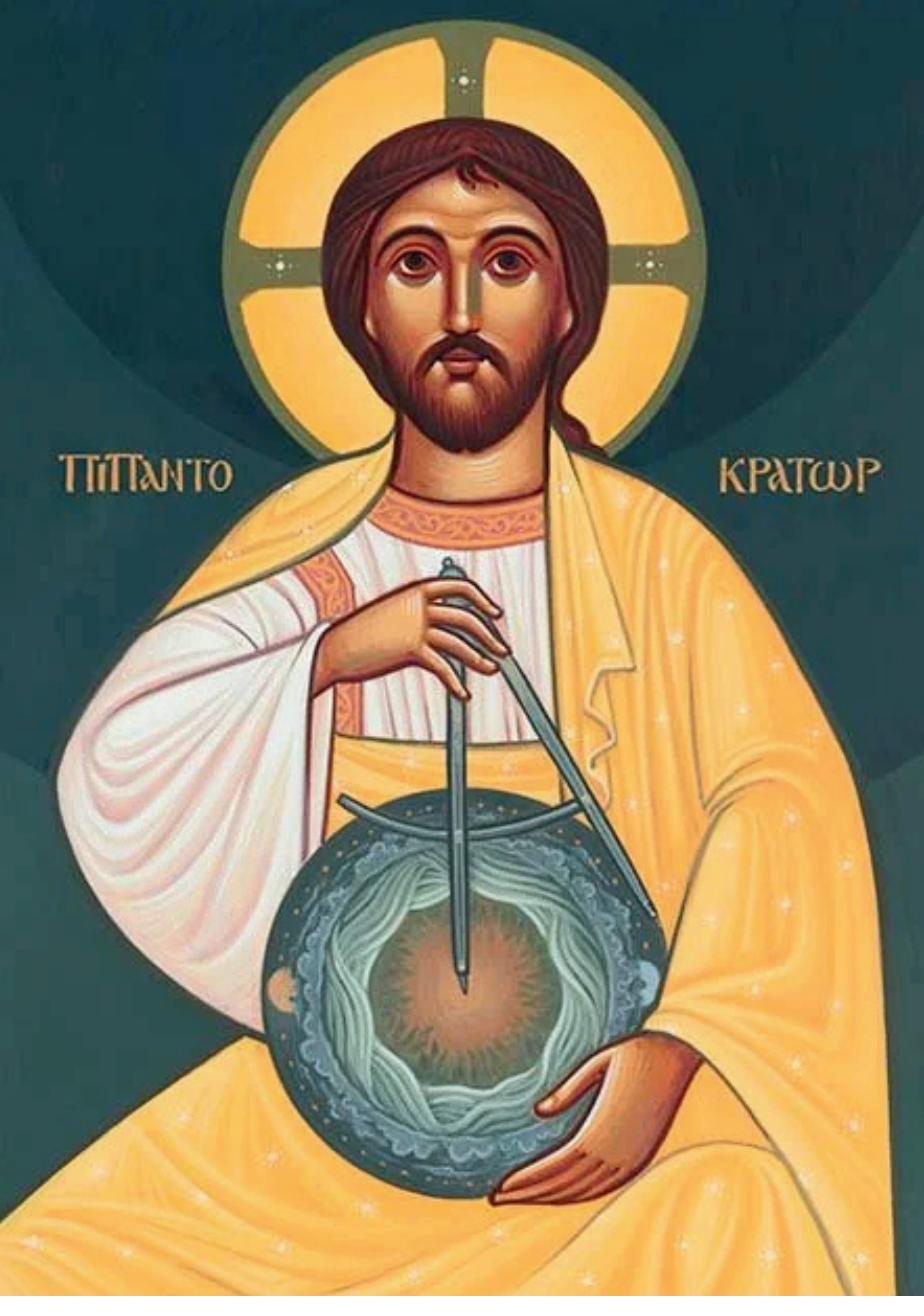
We turn now from groups that claim the name of Christ to worldviews that do not — or at least, worldviews that assign to Christ a place entirely foreign to the Gospel. Hinduism and Buddhism were born in India centuries before the Incarnation and remain dominant across Asia; humanism is a secular philosophy of the West with deep roots in the Renaissance and wide reach in our own cultural moment. The three are not neatly parallel. Hinduism is a vast and ancient family of religions without a single founder, creed, or scripture. Buddhism began in the sixth century before Christ as a reform within the Indian religious world. Humanism is not a religion at all but a philosophy that has seeped so thoroughly into modern life that many who hold it do not recognize it as a doctrine. Yet the three meet in the servant's path in similar ways: not usually through doctrinal confrontation, but through yoga studios and meditation apps, through the quiet premise that all paths lead to God or that no path is needed at all, through a culture that tells our young people they are the authors of their own meaning. The servant must learn to recognize these ideas when they appear in borrowed Christian vocabulary, to answer them charitably but firmly from Scripture and the Fathers, and to proclaim the Gospel of the crucified and risen Christ as the one way to the Father.
A subtle presence
A congregant of Coptic Orthodox Church is unlikely to be asked by a Hindu friend to debate the Vedas, or by a Buddhist monk to dispute the Four Noble Truths. The encounter is almost always quieter and more subtle. A child in the church's youth program will come home from school having been told that her yoga class teacher asked her to chant "namaste" to the divine within; a college student will hear from a philosophy professor that Christianity is simply one culturally conditioned path among many; a young professional will describe a mindfulness app whose meditations are framed as "spiritual but not religious." None of these moments announce themselves as theological confrontations. All of them are.
The three systems treated in this lesson differ in many respects, but they share three premises that collide with the Christian faith.
The first is that ultimate reality is either impersonal (Hinduism's Brahman, Buddhism's Nirvana) or simply absent (humanism's secular universe) — never the personal, self-revealing God of Abraham, Isaac, and Jacob.
The second is that salvation, if it is spoken of at all, is achieved by the effort of the seeker — through karmic merit, ascetic discipline, meditative insight, or human reason — never received as a gift from a God who acts first.
The third is that Jesus Christ, if He is acknowledged, is reduced to a teacher among teachers, an avatar among avatars, an enlightened one among the enlightened, a moral exemplar among moral exemplars — never confessed as the only-begotten Son of the Father, God of God, Light of Light, true God of true God, by whom all things were made.
It is that third premise which makes comparative theology at this point not optional but pastoral. The servants who will pass these traditions on to the next generation must first see where the Gospel is being quietly displaced in their own parishioners' lives. This lesson is written to help them see.
The Aryan Conquest
During the fourth century B.C., Aryans – the same people that developed Greek culture – conquered much of present-day India. Their pantheon of gods, similar to that of the Greeks, combined with indigenous Indian traditions of meditation to form a loose combination of beliefs and practices that came to be known as Hinduism. Hinduism is not really one religion, but many different religions that interact and blend with one another. There is no known founder and no creedal statements of faith. In fact, there is no agreed upon authority save the voluminous sacred body of texts, Vedas, which were written over 1400 year period. The contents of the Vedas are practically unknown to most Hindus and the texts are seldom drawn upon for information or advice. Interestingly, one can be a good Hindu and believe in one god, many gods, or no god at all!
For Hindus, contradictory ideas are not a problem as all reality is seen as “one” . There are, however, two foundational concepts that almost all Hindus believe: reincarnation and karma.
- Reincarnation: The process that the atman (soul) must endure on the wheel of samsara (thousands of lives of suffering though reincarnations) before reaching moksha. Moksha is when the soul reaches the infinite and no longer endures suffering. In some forms of hinduism, the soul may be reincarnated in plants, animals or objects.
- Karma: The cumulative value of one’s life is good minus bad, which determines your next life in the reincarnation cycle.
A growing popular idea in today's society comes from the Hindu’s Vedantic Motto: The world's religions offer varying approaches to God, each one true and valid, each religion offering the world a unique and irreplaceable path to God-realization.
Hinduism — Their gods
The Hindu Trimurti — Brahma the creator, Vishnu the preserver, Shiva the destroyer — presides over a pantheon of hundreds of thousands of gods and demigods, some of whom are not morally upright by any standard a Christian would recognize. Above the Trimurti stands Brahman, the impersonal all-pervading essence with which the atman (the true self) seeks to be reabsorbed. Salvation is not the healing of a broken relationship but the dissolving of individual identity into an ultimate oneness. The paths to this dissolution are usually grouped as three yogas:
- karma yoga – selfless action without attachment to results,
- jnana yoga – disciplined knowledge attained through meditation and the guidance of a guru, and
- bhakti yoga – devotion to a chosen deity.
How Hinduism Speaks of Jesus
Some Hindus treat Jesus with considerable reverence but always on their own terms. He is regarded as an avatar, one among many divine incarnations who descend to restore cosmic balance, or as a guru, a spiritual teacher of unusual wisdom. His teachings are prized, particularly those that can be rearranged under the category of non-violence (ahimsa) or inward enlightenment. What is refused is precisely what the Gospel insists upon: that this particular Galilean carpenter is the only-begotten Son of the living God, that He was born of a virgin in the flesh of our flesh, that He was crucified once for all under Pontius Pilate for the sins of the world, that He rose bodily from the tomb on the third day, and that He alone is the way, the truth, and the life.
A growing motto attributed to the Hindu Vedantic tradition captures the heart of the matter: "The world's religions offer varying approaches to God, each one true and valid, each religion offering the world a unique and irreplaceable path to God-realization." This motto sounds generous. In fact it empties the Gospel of its content, because the Gospel is the announcement not of a path but of a Person — and this Person will not consent to be one of many. "Jesus said to him, 'I am the way, the truth, and the life. No one comes to the Father except through Me'" (John 14:6). "Nor is there salvation in any other, for there is no other name under heaven given among men by which we must be saved" (Acts 4:12).
Answering Hinduism
We answer from four places at once: from the person of Jesus Christ, from the doctrine of creation, from the doctrine of the soul, and from the shape of time itself.
From Christ Himself
The very own words of Christ Himself forbid the Vedantic motto. He does not say "I am one of the ways" but "I am the way." He does not say "I offer one truth" but "I am the truth." He does not say "I show you a path to life" but "I am the life." Hinduism may honor Him as an avatar or a guru; Christianity cannot accept the honor on those terms, because the honor is diminishing. A man who claims to be the Truth is either the Truth or a blasphemer; He cannot be safely filed beside Krishna and the Buddha.
From the doctrine of creation
The Hindu imagination dissolves the boundary between Creator and creation: the atman is a spark of Brahman; the self is divine at its root. Genesis refuses this picture. God speaks and the world is called into being out of nothing; human beings are made in His image but are not pieces of His substance. We are creatures — glorious creatures, loved creatures, destined creatures — but creatures. "In the beginning God created the heavens and the earth" (Gen. 1:1); "Let Us make man in Our image, according to Our likeness" (Gen. 1:26). The distance between God and the soul is not an illusion to be overcome; it is the space in which communion is possible.
From the doctrine of the soul
The Hindu seeker wants to be absorbed into Brahman as a drop is reabsorbed into the ocean. The Christian hope is exactly the opposite: not the erasure of the self but its glorification. "Beloved, now we are children of God; and it has not yet been revealed what we shall be, but we know that when He is revealed, we shall be like Him, for we shall see Him as He is" (1 John 3:2). In heaven we shall not be less ourselves, but more — each one recognized, each one named, each one loved in a particularity no cosmic absorption could preserve.
From the shape of time
Reincarnation pictures time as a wheel turning endlessly toward moksha. Scripture pictures time as an arrow loosed toward judgment and resurrection. "It is appointed for men to die once, but after this the judgment" (Heb. 9:27). This single mortal life is not one of ten thousand rehearsals; it is the one arena in which we accept or refuse the grace offered in Christ. Because Christ has conquered death in His own flesh, we are not condemned to repeat the cycle; we are invited to enter, once, through the narrow gate of His Cross into an eternity that does not need to be earned and will not be exhausted.
Buddhism — Enlightenment Through the Middle Way
Buddhism emerged from the Hindu world in the sixth century before Christ, when a prince of the Shakya clan named Siddhartha Gautama left his palace life, attempted extreme asceticism, and at last found what he called the Middle Way between indulgence and self-mortification. Seated beneath the Bodhi tree, he attained what his followers would call enlightenment, and became the Buddha — the Awakened One. He preached for forty-five years and died around 483 B.C. What he taught is not a revelation received from a personal God; Buddhism has no Supreme Being in the Christian sense. The Buddha explicitly set aside questions about God as "not conducive to edification." His word to his hearers was: rely upon yourself, not upon any deity.
The whole of classical Buddhist doctrine hangs upon the Four Noble Truths.
- First, that all of life is suffering (dukkha) — not only overt pain, but the subtle ache of impermanence.
- Second, that the cause of suffering is craving (tanha) — our desperate attachment to things that must pass away.
- Third, that suffering can cease, through the extinction of craving; this cessation is Nirvana, a state not of personal immortality but of the quenching of the flame of self.
- Fourth, that the path to Nirvana is the Noble Eightfold Path: right view, right intention, right speech, right action, right livelihood, right effort, right mindfulness, and right concentration — a program of ethical conduct, mental discipline, and meditative insight.
Buddhism's view of the human person is the doctrine of anatta, no-self: there is no permanent unchanging soul, only a stream of fleeting mental and physical components (the skandhas) that are bundled together for a lifetime and dissolved at death, though the karmic momentum continues into another bundle. Jesus, when He is mentioned, is seen as a teacher who may have attained Buddhahood or at least a high measure of enlightenment — again, one of many, not the unique and eternal Son of God.
Solomon and the Buddha — Two Responses to Vanity
Five hundred years before Siddhartha Gautama sat beneath the Bodhi tree, another man surveyed the human condition and came to strikingly similar conclusions about its emptiness. King Solomon — whose wisdom, Scripture tells us, spread across the ancient world (1 Kings 4:31) — wrote in Ecclesiastes that all is "vanity of vanities" under the sun, that every toil is a chasing after wind, that wealth, pleasure, learning, and power alike cannot fill the human heart. To this point Solomon and the Buddha agree. The diagnosis is almost the same.
The prescription is utterly different. The Buddha concludes that the solution is the extinction of craving and eventually of the self itself: to stop desiring is to stop suffering. Solomon concludes otherwise. At the end of his long search he writes: "Let us hear the conclusion of the whole matter: Fear God and keep His commandments, for this is man's all" (Eccl. 12:13). His son's psalmist puts the Christian answer still more positively: "Delight yourself also in the Lord, and He shall give you the desires of your heart" (Ps. 37:4). The problem is not that we desire; the problem is that we desire the wrong things. St. Augustine — who had tasted every pleasure the Mediterranean world could offer — summarized the matter in the opening lines of the Confessions: "You have made us for Yourself, O Lord, and our heart is restless until it rests in You."
Where the Buddha teaches us to extinguish desire, Christ teaches us to reorder it. Where the Buddha offers release from suffering through detachment, Christ offers both a new kind of suffering — the carrying of the Cross in fellowship with Him — and a hope that the Buddha cannot give, namely, that this suffering will be swallowed up in resurrection. "I consider that the sufferings of this present time are not worthy to be compared with the glory which shall be revealed in us" (Rom. 8:18).
Answering Buddhism
The Buddhist diagnosis of suffering is more honest than most modern alternatives. It refuses to pretend that the world is well; it refuses to drown its sorrow in distraction. To this extent, the Christian can begin any conversation with a Buddhist in genuine sympathy. Where we must part company is in the account of the cause of suffering, in the nature of the self, and in the remedy.
The cause of suffering, for the Buddhist, is craving rooted in ignorance. For the Christian, it is sin rooted in a rebellion of the creature against the Creator — a personal rupture in a personal relationship. Suffering is not the fabric of existence; it is the wound of a good creation gone wrong. "For the creation was subjected to futility, not willingly, but because of Him who subjected it in hope" (Rom. 8:20).
The self, for the Buddhist, is an illusion to be dissolved. For the Christian, the self is a gift to be healed. Each soul is willed into being by God, stamped with His image, known by name, loved with a particular love, destined for a particular glory. To teach a child that the self is a bundle of impermanent skandhas to be extinguished is to teach her that the love of the Father is also an illusion — for love requires a beloved who persists.
The remedy, for the Buddhist, is the Eightfold Path — a disciplined climb by one's own effort toward a goal in which the climber himself is finally extinguished. The Christian remedy is the Cross: not our climb up toward God, but God's descent toward us. "For God so loved the world that He gave His only-begotten Son, that whoever believes in Him should not perish but have everlasting life" (John 3:16). The Christian walks a narrow way, too — but not alone; the Shepherd walks it with us, and at its end stands not Nirvana but the marriage supper of the Lamb.
Humanism — Man at the Center
Humanism is not an organized religion. It is a philosophical and ethical stance that places the human being at the center of its concern and appoints human reason and empathy as sufficient sources of meaning. Its classical genealogy is traced to the Renaissance recovery of Greek and Roman letters; its modern articulation is at home in the writings of Enlightenment rationalists, nineteenth-century scientific naturalists, and twentieth-century secular moralists. Its practical reach, however, is much wider than its manifestos. It has seeped into the ordinary air of modern Western life so thoroughly that most of those who breathe it cannot name it.
A humanist may be an atheist, an agnostic, or a deist; what unites humanists is the rejection of a personal God who intervenes in human affairs and the confidence that human reason, human empathy, and human science are sufficient to the tasks of ethics, meaning, and the good life. Scripture is not authoritative; tradition is not binding; revelation is not received; the cross is at best a noble symbol. Ethics are to be built from the ground up, on human welfare and human rights. Social justice is pursued — often admirably — as a human project without a transcendent anchor. Meaning is constructed by the individual, who must give his or her own life purpose in the absence of an afterlife or a divine plan.
In North America especially, humanism rarely presents itself by name. It presents itself as "You be you," as "Live your truth," as "Follow your heart," as "I'm spiritual but not religious," as "We don't need God to be good." These mottoes sit on coffee mugs and classroom walls and Instagram captions. They are a catechism.
Answering Humanism
We answer humanism at three points — the question of human dignity, the question of freedom, and the question of hope.
On Human Dignity
Humanists rightly insist that every human being is a subject of worth. They are, however, unable to account for this worth on their own premises. If human beings are only the present output of blind evolutionary processes, if the universe is indifferent to whether we rise or fall, if there is no Creator in whose image we are made, then the insistence on universal human dignity is a sentiment without a foundation. Christianity provides the foundation. "Then God said, 'Let Us make man in Our image, according to Our likeness'" (Gen. 1:26). Our dignity is not a fact we confer upon ourselves; it is a gift conferred upon us by the God who made us and is now working to glorify us: "When Christ who is our life appears, then you also will appear with Him in glory" (Col. 3:4).
On Freedom
Humanism presents itself as the great liberator, freeing the individual from the constraints of tradition, authority, and divine command. In practice it often produces the opposite — a humanity enslaved to its own appetites, to the marketing that shapes those appetites, to the ideologies that replace the faith it has rejected, to the addictions that are the wages of unbounded desire. The Christian answer is not less freedom but true freedom. "Stand fast therefore in the liberty by which Christ has made us free, and do not be entangled again with a yoke of bondage" (Gal. 5:1). The servant has learned in the lesson on free will that freedom is not the absence of limits; it is the power to become what we were made to be.
On Hope
Humanism pours all its energy into the pursuit of happiness in this life, because it believes there is no other. The accomplishment is real; the floor is thin. When illness, grief, betrayal, or simply old age arrive, humanism has nothing to offer but stoic acceptance. "I do not want you to be ignorant, brethren, concerning those who have fallen asleep, lest you sorrow as others who have no hope. For if we believe that Jesus died and rose again, even so God will bring with Him those who sleep in Jesus" (1 Thess. 4:13-14). Christian hope does not deny the pain of this world; it hands the sufferer a horizon beyond it.
Discerning Truth from Falsehood — A Rule for the Servant
Because Hindu, Buddhist, and humanist ideas usually arrive parishes not as whole systems but as isolated fragments — a yoga class, a meditation app, a college lecture, a self-help book — the servant needs a simple rule of discernment to carry into every conversation. St. Paul gives us the frame: "But even if we, or an angel from heaven, preach any other gospel to you than what we have preached to you, let him be accursed" (Gal. 1:8-9). He repeats it at Corinth: "For if he who comes preaches another Jesus whom we have not preached, or if you receive a different spirit which you have not received, or a different gospel which you have not accepted — you may well put up with it!" (2 Cor. 11:3-4).
Four questions form the servant's rule.
- Does the teaching in question honor Jesus Christ as the only-begotten Son of God, true God of true God, incarnate of the Virgin Mary, crucified and risen for our salvation — or does it reduce Him to one of many teachers, one of many avatars, one of many paths?
- Does it receive the Holy Scriptures as the inspired Word of God, not to be added to or taken away from — or does it supplement Scripture with a new revelation treated as superior to it?
- Does it confess that salvation is the gift of God's grace received in the Body of Christ — or does it teach that man can climb by his own effort into divinity?
- Does it honor the Church as the pillar and ground of the truth, bearing the apostolic faith across the centuries — or does it locate authority in a single modern founder, a single modern book, or the lone judgment of the individual conscience?
Where the answer to the first half of each question is yes, the servant is safe to engage freely. Where the answer is to the second half, the servant must be gentle in tone but unbending in substance. "There is a way that seems right to a man, but its end is the way of death" (Prov. 14:12).
Approaching Our Neighbors
We do not approach our Hindu neighbor as if his devotion to his tradition were contemptible; we recognize in his prayers, in his fasts, in his reverence for teacher and text, a hunger for the divine that Christ came to satisfy. We do not approach our Buddhist friend as if his search for release from suffering were shameful; we recognize in it a wound the Cross is shaped to heal. We do not approach our humanist colleague as if her concern for justice and human flourishing were a moral failing; we recognize that she is reaching for goods whose fullness is given in Christ. The servant's posture is that of the apostle Paul on the Areopagus: "Therefore, the One whom you worship without knowing, Him I proclaim to you" (Acts 17:23).
This charity is not a softening of the Gospel. It is the Gospel's native speech. "Sanctify the Lord God in your hearts, and always be ready to give a defense to everyone who asks you a reason for the hope that is in you, with meekness and fear" (1 Pet. 3:15). Meekness and fear — never contempt, never sarcasm, never the cheap triumph of scoring a point.
How to Form the Faithful
The servant who is forming the next generation against these particular currents has three tasks in the parish. The first is to catechize the household in the uniqueness of Christ before the world catechizes it in the interchangeability of saviors. A child who has memorized "I am the way, the truth, and the life" will not be disarmed by a friendly Instagram post about many paths up the mountain.
The second is to teach the difference between the practice and the worldview beneath it. Breathing exercises and stretching are not idolatry; a yoga class whose instructor opens with an invocation to Hindu deities is another matter. Mindful attention to the present moment is not heresy; a meditation app that teaches that the self is an illusion is another matter. The servant must help the faithful to receive the created gifts of the body and the mind — stillness, breath, attention, discipline — as the gifts of the Creator, while refusing the metaphysics that elsewhere comes bundled with them. Where a practice can be extricated from the worldview, it may be received with thanksgiving; where it cannot, it must be set aside.
The third is to cultivate a life of praise within the household, because praise is the deepest Christian answer to every alternative worldview. The humanist cannot praise, because there is no One to receive the praise. The Buddhist cannot praise in the Christian sense, because ultimate reality is impersonal. The Hindu offers devotion to a pantheon that cannot finally love him back. Christian praise knows itself to be received, heard, and returned in love. A household that sings "Holy, Holy, Holy" with its children has given them a defense the philosophers cannot touch.