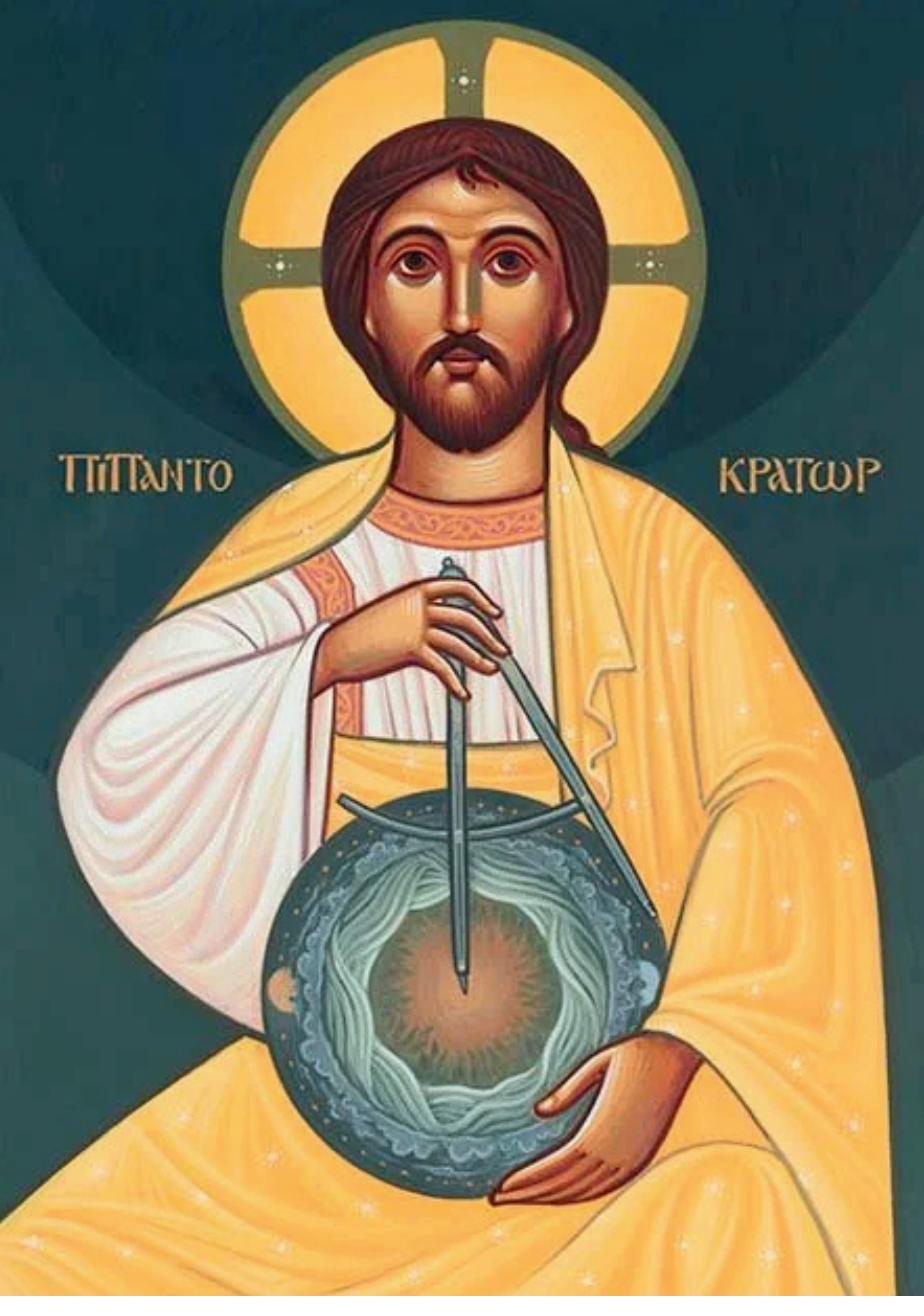
Comparative theology, rightly practiced, is not a contest. It is the work of knowing our own faith well enough to recognize what others hold, to honor what is true in them, and to name, with charity and precision, where they have departed from the Apostolic Tradition. This lesson begins with the nearest of our separated brethren — the Roman Catholic Church. The Roman communion preserves many treasures: the Scriptures, Trinitarian baptism, the creedal faith, the veneration of the Mother of God, the monastic heritage, and a profound witness to the dignity of the human person. The differences that separate us are real, however, and the servant must be able to identify them clearly. This is not for the purpose of polemic satisfaction; it is for the protection of the flock and the clarity of our witness. A servant should be able to explain the filioque, the Immaculate Conception, papal infallibility, purgatory, mandatory priestly celibacy, or the theory of doctrinal development to serve his people in an age of easy confusion.
The Creedal Frame
The Creed we pray every day places us within the One, Holy, Catholic, and Apostolic Church. "We believe in one God, the Father, the Pantocrator... And in the Holy Spirit, the Lord, the Giver of Life... And in One, Holy, Catholic, and Apostolic Church. We confess one baptism for the remission of sins." This is the measuring line by which every ecclesial claim must be tested.
Contemporary Christianity divides into four broad families: the Orthodox Church (itself comprising the Oriental Orthodox and the Eastern Orthodox), the Roman Catholic Church (including the many Eastern Catholic Churches in communion with Rome — Greek Catholic, Coptic Catholic, Maronite, and others), the Protestant communions that emerged from the Reformation, and the various sects and cults that have grown up outside historic Christianity altogether.
Our particular sorrow, as Orthodox, is that the Orthodox Church is itself divided between the Oriental Orthodox and the Eastern Orthodox families — a division rooted in the misunderstandings that surrounded the Council of Chalcedon in 451 AD. This lesson treats chiefly the separation between the Apostolic Orthodox Churches taken together and the Roman Catholic Church, a separation marked by the Great Schism of 1054 and by the doctrinal developments that followed.
The Great Schism of 1054
For the first few hundred years of Christian history, the great sees of the Church — Rome, Constantinople, Alexandria, Antioch, and Jerusalem — shared the same faith, celebrated the same sacraments, and held one another in communion. After Chalcedon, Rome and Constantinople grew in tensions over the next few centuries. Latin-speaking Rome and Greek-speaking Constantinople drifted linguistically and culturally apart. The Western Empire fell; the Eastern Empire continued. Theological disputes that had been discussed as open questions began to harden into fixed positions. The Bishop of Rome's pastoral authority over the West gradually became an insistence on authority over the whole Christian world.
Matters came to a head in 1053, when Patriarch Michael Cerularius of Constantinople ordered the closure of the Latin-rite churches in his city after Greek-rite churches in southern Italy had been forcibly Latinized. In 1054, legates from Rome entered Constantinople, excommunicated the Patriarch at the altar of Hagia Sophia, and were themselves excommunicated in return. The exchange was local; its consequences were catastrophic. The Schism settled slowly into the whole body of the Church. The Fourth Crusade in 1204, in which Latin Christians sacked Constantinople and defiled her churches, made reconciliation nearly impossible. Attempts at reunion over the following centuries — the Council of Lyons in 1274, the Council of Florence in 1439 — did not heal the wound.
The servant should know this history because the divisions of the Church are never only administrative. They issue, at last, in different accounts of the faith, and those differences affect the life of the faithful.
The Filioque
The most important of the doctrinal differences concerns the procession of the Holy Spirit. The original Nicene-Constantinopolitan Creed, composed by the first two Ecumenical Councils and received by the whole Church, confesses that the Holy Spirit "proceeds from the Father." The Western Church, from the sixth century onward in certain regions and universally by the eleventh century, added the phrase "and from the Son" — in Latin, filioque. The addition was made without a council and without the consent of the Eastern patriarchates.
The Orthodox objection is twofold. The first is procedural. The Creed was the conciliar possession of the whole Church; no local church, however venerable, may alter it by its own authority. The second is theological. The Lord Himself testifies:
"But when the Helper comes, whom I shall send to you from the Father, the Spirit of truth who proceeds from the Father, He will testify of Me" (John 15:26).
Christ speaks of Himself as the one who sends the Spirit in time, but attributes the Spirit's eternal procession to the Father alone.
Orthodox Triadology safeguards the delicate order of unity and distinction within the Trinity. The Persons share everything in the one divine essence — Godhead, eternity, uncreatedness, goodness, omnipotence — with only three exceptions. The Father alone is unbegotten; the Son alone is eternally begotten; the Holy Spirit alone proceeds. The Father is the one fountain ("monarchy") from whom the Son is begotten and from whom the Spirit proceeds. The filioque blurs this, giving two Persons a shared role that belongs to one, and by implication subordinating the Spirit to the Father and the Son as if He were a joint product of Their common action.
This is not a trivial difference. It changes the inner portrait of the living God. For the Orthodox, it is also an instance of the larger problem: the doctrine was added unilaterally, and once such additions are permitted, others — the Immaculate Conception, papal infallibility, and others — follow.
The Immaculate Conception
Both Orthodox and Catholic Christians honor the Virgin Mary as the Theotokos — the Mother of God — and confess her perpetual virginity before, during, and after the birth of Christ. Both ask her for her intercession. Both keep feasts in her honor. On these great matters we are together.
The division comes at the doctrine defined by Pope Pius IX on 8 December 1854 in the Bull Ineffabilis Deus: "We declare, pronounce and define that the doctrine which holds that the Blessed Virgin Mary, at the first instant of her conception, by a singular grace and privilege of Almighty God, in view of the merits of Christ Jesus the Saviour of the human race, was preserved free from all stain of original sin, is a doctrine revealed by God and therefore to be firmly and constantly believed by all the faithful." This is the doctrine of the Immaculate Conception.
The Orthodox Church does not accept this definition. Several reasons stand together. First, the doctrine has no explicit patristic consensus. It was developed in the Latin West, debated for centuries by Catholic theologians (with Thomas Aquinas himself rejecting it), and only defined in 1854. Second, St. Athanasius explains that when Adam and Eve sinned 'They came under the law of death and could no longer live in paradise, but outside of it, to remain in a state of death and corruption.' Since God is just, He is the Father of Truth, He would not go back upon His word regarding death. However, God in His ultimate mercy had no choice but to send His Only Begotten Son to save us. The Son incarnated and became man, surrendering His body to the curse of death in place of ALL, offering it to the Father. Because of His ultimate justice, God would not make ANY exception; otherwise He would be breaching His justice. If there was another way for salvation while keeping justice and truth, why go through all this predicament and hassle. Was this all a show?
Third, the doctrine, however well intended, obscures the Virgin's own witness. St. Mary herself says in the Magnificat: "My soul magnifies the Lord, and my spirit has rejoiced in God my Savior" (Luke 1:46-47). Christ is her Savior as He is ours. She was purified and sanctified by the Holy Spirit at the Annunciation, as the Fathers confess, but she was not of another lineage than the rest of Adam's children. Her holiness is the crown of what grace can do within a faithful human life — which is why she is properly the model of every Christian.
The Role of the Pope
The Roman Catholic Church holds that the Bishop of Rome, as the successor of St. Peter, is the visible head of the whole Church on earth and the Vicar of Christ. Rome appeals to the Lord's words to Peter: "You are Peter, and on this rock I will build My church" (Matthew 16:18). On the basis of that passage, refined over many centuries, Rome has defined the doctrine of Papal Infallibility. The definition of the First Vatican Council (1870) teaches that when the Pope speaks ex cathedra — from the chair of Peter — on matters of faith and morals, his definitions are protected by the Holy Spirit from error.
The Orthodox Church honors St. Peter and acknowledges his unique place among the Apostles. But Orthodoxy reads the Lord's words in their wider New Testament context. The "rock" upon which Christ builds His Church is most often read by the Fathers as Peter's confession, "You are the Christ, the Son of the living God" (Matthew 16:16), a confession that is the faith of every true bishop, not the private possession of one successor. St. Peter himself refers to Christ as the Chief Shepherd (1 Peter 5:4) and to all elders as fellow shepherds.
Orthodoxy teaches that every canonical bishop, when he speaks within the consensus of the Church and in communion with his brother bishops, stands as a "living icon of Christ" to his own people. St. Ignatius of Antioch gave the early form of this: "Wherever the bishop is, there let the people be, just as wherever Jesus Christ is, there is the Catholic Church." The bishops together, gathered in council, have preserved the faith. No single bishop, not even the bishop of the first and most honored see, may legislate infallibly for all of Christendom.
The practical difference is large. In the Roman system, development and definition can come from the chair of Peter. In the Orthodox system, the fullness of truth is preserved by the whole body and expressed through the conciliar action of the bishops in union with their clergy and laity. Both systems claim to preserve the apostolic faith; the Orthodox claim rests on the conviction that the faith was once delivered and must not be added to, not even by the holiest patriarch.
Purgatory
The Roman Catholic Church teaches the doctrine of Purgatory:
"All who die in God's grace and friendship, but still imperfectly purified, are indeed assured of their eternal salvation; but, after death they undergo purification, so as to achieve the holiness necessary to enter the joy of heaven. The Church gives the name Purgatory to this final purification of the elect, which is entirely different from the punishment of the damned" (Catechism of the Catholic Church §1030-1031).
Support is drawn from 2 Maccabees 12:44-46, in which Judas Maccabeus prays for the dead, and from Matthew 12:32, which speaks of a sin that will not be forgiven "either in this age or in the age to come."
The Orthodox Church does pray for the departed, believes that the prayers of the living benefit the departed, and teaches that the soul after death undergoes a particular examination and preparation. But the Orthodox tradition has never received Purgatory as a discrete third place with its specific sufferings, durations, and conditions. H.H. Pope Shenouda III raised a decisive pastoral question against the doctrine from 1 Thessalonians 4:16-17: "The dead in Christ will rise first. Then we who are alive and remain shall be caught up together with them in the clouds to meet the Lord in the air. And thus we shall always be with the Lord." Are the faithful who are alive on the Last Day, Pope Shenouda asks, exempt from Purgatory? Or does God show favoritism to the generation that happens to be alive at the Second Coming? The passage points us past a purgatorial mechanism to an eschatological encounter.
The Orthodox teaching is rather that the soul after death rests in the Lord, is assisted by the prayers and offerings of the Church, and awaits the final resurrection and the general judgment. The distinction between a purgatorial state that must be traversed and the rest of the saints in Christ is significant. The first is a doctrine requiring addition to revelation; the second is a confession of what has always been believed.
Mandatory Celibacy of the Priesthood
The Latin Church, since the eleventh and twelfth centuries and definitively since the Council of Trent, requires that its priests remain celibate. Celibate devotion has real theological beauty. A priest without the cares of family is, in certain measures, more free for pastoral availability, for prayer, and for counsel. St. Paul himself writes, "He who is unmarried cares for the things of the Lord — how he may please the Lord" (1 Corinthians 7:32), and the Church has always honored celibacy as a high calling.
The Orthodox Church, however, does not regard celibacy as a requirement for the presbyterate. Orthodoxy preserves the apostolic pattern: bishops are chosen from among the celibate monastics, but priests and deacons may be either celibate (usually monks) or married before ordination. This is the pattern of the apostolic Church. Many of the Apostles themselves were married (1 Corinthians 9:5 — "Do we have no right to take along a believing wife, as do also the other apostles, the brothers of the Lord, and Cephas?"). St. Peter had a wife whose mother the Lord healed (Matthew 8:14-15). St. Paul writes to Titus that a presbyter should be "the husband of one wife, having faithful children" (Titus 1:6), a direction that assumes a married clergy.
Married priests carry a distinctive pastoral gift. They have lived the realities their parishioners live — marriage, the raising of children, the pressures of household finance, the joys and sorrows of daily family life. Their counsel speaks from shared experience. Celibate priest-monks carry another gift — the witness of an undivided love for God and the flock. The Orthodox Church treasures both forms. What she does not do is make celibacy a universal requirement, because Scripture and the apostolic Tradition do not.
The Theory of Doctrinal Development
Perhaps the deepest difference underlying all the others is the Roman Catholic theory of doctrinal development. Popularized in the nineteenth century by John Henry Newman in An Essay on the Development of Christian Doctrine, and assumed in the teaching of the Second Vatican Council, this theory holds that Christ left His Church an original deposit of faith — a "seed" — which grows, matures, and unfolds new dogmas over time under the guidance of the Holy Spirit. On this view, later doctrines such as Papal Infallibility and the Immaculate Conception are not departures from the apostolic faith but its ripened fruit.
This framework explains much of modern Catholic theology. It provides the justification for defining new dogmas and for regarding scholastic and post-scholastic refinements as improvements upon the Fathers rather than as commentaries beneath them.
The Orthodox Church rejects this framework. The faith, St. Jude writes, was "once for all delivered to the saints" (Jude 3). The Apostolic deposit is complete. The Church grows in her understanding and articulation of the faith — answering new questions, refuting new heresies, producing new hymns and liturgies, canonizing new saints — but she does not acquire new dogmas. The Fathers are not a stage to be superseded. They are the enduring witnesses of the faith once given.
Everything external may change: vestments, languages, feasts, canons, and architectural styles. These are ways of carrying a single unchanging faith through new centuries. But the faith itself is one: "one Lord, one faith, one baptism" (Ephesians 4:5). A Christian in the twenty-first century should, when he prays the Creed, be confessing the same faith that St. Athanasius confessed in the fourth and St. Ignatius in the first.
Lesser but Telling Differences
Several smaller differences are worth noting, because they reveal the shape of the larger division.
Orthodox Christians pray facing East. The direction is not ornamental. It is tied to the birth of Christ in the East (Matthew 2:1-2), to the Garden in the East (Genesis 2:8), to the prophecy that the Son of Righteousness will come from the East at the end of the age (Matthew 24:27), and to the vision of Ezekiel of the gate facing East through which the Lord enters (Ezekiel 44:1-2). To face East is to orient the body toward Paradise and toward the returning Christ. Roman Catholic practice varies; Orthodox practice does not.
Orthodox baptism is, properly, by threefold immersion. The Greek word baptizō means "to immerse," and the New Testament descriptions — Christ coming "up from the water" (Matthew 3:16); Philip and the Ethiopian eunuch going "down both into the water" and coming "up out of the water" (Acts 8:38-39) — assume the practice. Immersion also preaches the sacrament: the Christian is buried with Christ in the water and rises with Him (Romans 6:4). Roman Catholic practice has increasingly relied on the sprinkling or pouring of water, which preserves the form but not the full image.
Orthodox Eucharistic bread is leavened; Roman Catholic bread is unleavened. The Orthodox see in the leaven a sign of the living, risen Christ and of the Church's continuity with the Passover of Israel and the new creation; the Latin West has preferred the unleavened wafer on the analogy of the Passover itself. The difference is not the decisive one, but it is one of the visible markers of different liturgical sensibilities.
These smaller points stand as reminders that the Orthodox faith is embodied in gesture, direction, substance, and word. The ecumenical instinct that says "we are almost the same" is only half-true. Where we are the same, we rejoice together. Where we differ, the differences are not trivialities to be dismissed, but testimonies to the fullness that the Orthodox Church has been given to preserve.
Communion and Ecumenical Relations
One practical question will arise often in the servant's ministry. May an Orthodox Christian receive Holy Communion at a Roman Catholic altar, or invite a Roman Catholic friend to receive at an Orthodox altar? The answer of the Church is no. Communion is the sign and the seal of full ecclesial unity in faith, sacraments, and governance, and that unity does not at present exist between the Orthodox and Roman Catholic Churches. Shared communion would proclaim a unity that is not there; it would be a lie expressed at the altar.
This does not mean coldness. The Orthodox Christian honors his Roman Catholic neighbor, respects the tradition that has shaped him, and prays earnestly for the day when all the baptized are gathered to one Lord's Table in one confessed faith. Dialogue has continued in recent decades through official commissions and local friendships. These conversations are valuable. They do not yet permit intercommunion.
The servant must know how to explain this to his people with both firmness and love. The firmness is the truth about sacramental communion; the love is for every sincere Christian reaching for Christ. A servant who treats the Roman Catholic Church as simply "another denomination" has underestimated her; a servant who treats her as enemy has underestimated Christ. The right posture is neither naive nor hostile.
Summary
The Roman Catholic Church preserves the Scriptures, Trinitarian baptism, the creedal faith in its essentials, the seven sacraments, a profound tradition of veneration for the Mother of God, a rich monastic and intellectual heritage, and a moral witness on many important questions of the age. We share much with her, and we mourn every point at which the shared inheritance has been obscured by later addition or by mutual alienation.
We differ from her on the filioque, on the Immaculate Conception, on the office of the Pope, on Purgatory, on the requirement of priestly celibacy, on the theory of doctrinal development, and on the practical consequences of these differences for communion and discipline. The servant must be able to name these differences clearly, explain them charitably, and defend the Orthodox position from Scripture and the Fathers.
The Lord prayed "that they all may be one, as You, Father, are in Me, and I in You" (John 17:21). This is the prayer of Christ, and the Church does not contradict her Head. But unity in the Lord's sense is unity in the truth, not the papering over of difference. The servant's work is to hold the truth in love, preserve the flock in the faith of the Apostles, and pray the Lord's prayer for unity with the humility of one who has first repented of his own uncharitable words and second insisted on the integrity of the faith once delivered.