- 1 Cappadocian Fathers
A Pillar of Christian Thought and Eloquence
St. Gregory the Theologian, also revered as St. Gregory of Nazianzus and St. Gregory the Younger, stands as a towering figure in the history of the Christian Church. Born in the 4th century, his influence as a great father and teacher of the Church remains profound.
Ordained as the Archbishop of Constantinople, St. Gregory possessed exceptional rhetorical skills, widely regarded as the most accomplished orator of the patristic age. His eloquent sermons and theological writings continue to inspire and captivate believers worldwide.
St. Gregory, alongside St. Basil the Great and St. John Chrysostom, forms the illustrious trio known as the Three Holy Hierarchs. These three Cappadocian Fathers played a pivotal role in shaping Christian thought and practice, leaving an indelible mark on the development of theology and spirituality.
St. Gregory's classical education as an orator and philosopher enabled him to infuse Hellenistic philosophy into the early Church. His ability to synthesize Greek thought with Christian theology laid the foundation for Byzantine theologians and church officials. He left an enduring legacy in the realm of Trinitarian theology, significantly influencing both Greek- and Latin-speaking theologians. St. Gregory, along with St. Basil and St. Gregory of Nyssa, earned the title of "Trinitarian Theologian" for their profound insights into the relationship among the three Persons of the Trinity.
Remarkably, much of St. Gregory's theological work remains influential in contemporary theological discourse. His exploration of the relationship between the Father, Son, and Holy Spirit continues to shape our understanding of the Trinity, providing a deep and meaningful framework for comprehending the nature of God.
St. Gregory the Theologian's contributions to the Church extend far beyond his theological writings. As a bishop, he tended to the spiritual needs of his flock with compassion and dedication. His commitment to social justice and his advocacy for the poor and marginalized earned him the respect and admiration of his contemporaries.
His Education
St. Gregory Nazianzus was born in Arianzus, Cappadocia, in 329 AD. His father, Gregory the Elder, became Bishop of Nazianzus, and his mother, Nonna, was a devout Christian. Both of his parents, as well as his brother Caesarius and sister Gorgonia, are recognized as saints by the Church.
St. Gregory's early education began in Caesarea of Palestine, where he studied rhetoric and philosophy. He then traveled to Alexandria, which was renowned for its philosophical and theological schools. In Alexandria, he delved deeper into the study of theology and came under the influence of the great Alexandrian teachers.
From Alexandria, St. Gregory set sail for Athens, the intellectual and cultural center of the ancient world. However, as his ship sailed across the Mediterranean Sea, a violent storm erupted. St. Gregory, who had not yet been baptized, feared for his life and salvation. In desperation, he cried out to God, promising to dedicate his life to Him if he was spared. Miraculously, the storm ceased, and St. Gregory was deeply moved by this experience.
Upon arriving in Athens, St. Gregory reunited with his childhood friend, St. Basil the Great. Their friendship blossomed into a lifelong bond of brotherly love and mutual respect. Another notable fellow student in Athens was the young Prince Julian, who would later become known as Julian the Apostate. Julian initially professed Christianity but later renounced his faith and actively promoted paganism during his reign as emperor. Even in Athens, before Julian's apostasy, St. Gregory recognized his unsettled mind and warned others about the potential danger he posed to the Roman State. Even in Athens, before Julian had thrown away his faith, St. Gregory saw what an unsettled mind he had, and said, "What an evil the Roman State is nourishing." (Orat. V, 24, PG 35:693) St. Gregory here clearly depicts the impacts of an environment to one’s thoughts and salvation.
Consecration and Bishopric
After completing their studies in Athens, Saint Gregory of Nazianzus became Saint Basil the Great's fellow ascetic, adopting the monastic lifestyle alongside him for a period within the remote hermitages of Pontus. Saint Gregory's father, also named Gregory, recognized his son's spiritual devotion and ordained him as a presbyter of the Church of Nazianzus. Subsequently, Saint Basil, in his capacity as Bishop of Caesarea, consecrated Saint Gregory as the Bishop of Sasima (or Zansima), which fell within the archdiocese of Caesarea.
However, this consecration proved to be a source of profound sorrow for Saint Gregory, leading to a period of misunderstanding between him and Saint Basil. Despite this temporary strain, Saint Gregory's unwavering love and admiration for Saint Basil remained unchanged. This love is evident in his moving Funeral Oration (Orat. XLIII) dedicated to Saint Basil, a testament to the enduring bond between these two remarkable figures.
St. Gregory in Constantinople
After the untimely demise of Valens, Theodosius, a staunch advocate of the Nicene Creed, assumed leadership. During this period, numerous local synods convened, and among the notable participants was St. Gregory of Nazianzus. In 375, St. Gregory had secluded himself within a monastery located in Seleukia, yet he agreed to actively engage in these discussions.
During his time attending these gatherings, St. Gregory's cousin, Theodosia, generously offered him a villa to serve as his residence. With characteristic zeal, St. Gregory promptly transformed a significant portion of the villa into a church, which he named Anastasia, a symbolic representation of "a scene for the resurrection of the faith." It was from this modest chapel that St. Gregory delivered five impactful discourses expounding on the doctrines of the Nicene Creed, meticulously elucidating the nature of the Holy Trinity and emphasizing the unity of the Godhead.
Emperor Theodosius, steadfast in his resolve to eradicate Arianism, took decisive action by expelling Bishop Demophilus from his position. Subsequently, St. Gregory the Theologian, a prominent figure revered for his theological prowess, was elevated as Archbishop of Constantinople. In 381, Theodosius convened the Second Council of Constantinople, over which St. Gregory presided. During this council, Macedonius, who had previously served as Archbishop of Constantinople, was condemned as an adversary of the Holy Spirit, a grave offense that could not be tolerated. The council's deliberations and decisions played a pivotal role in shaping the theological landscape of the time, solidifying the Nicene Creed as the orthodox standard and further marginalizing Arianism and other dissenting views.
Two years elapsed, and when St. Gregory departed from Constantinople, the once-flourishing Arian sect, which espoused a heretical understanding of Christ's divinity, found itself utterly vanquished within the city's walls. Not a single Arian church remained standing, a testament to the transformative power of St. Gregory's teachings.
St. Gregory diligently guided the Church until the year 382, when he delivered his farewell address, known as the Syntacterion. This momentous speech, witnessed by an august assembly of 150 bishops and graced by the presence of Emperor Theodosius the Great, served as a resounding affirmation of the divinity of the Son. With profound humility, St. Gregory requested permission to retire from the See of Constantinople, a request granted by all in attendance. In a humble expression, St. Gregory, never having desired the responsibility and wanting to escape it like Jonah, boldly and humbly proclaimed: "Let me be as the Prophet Jonah! I was responsible for the storm, but I would sacrifice myself for the salvation of the ship. Seize me and throw me... I was not happy when I ascended the throne, and gladly would I descend it."
Returning to his beloved Nazianzus, St. Gregory spent the remainder of his days in contemplation and reflection. He continued to minister to his flock, offering spiritual counsel and guidance. At the age of 62, in the year 391, St. Gregory of Nazianzus passed from this earthly realm, leaving behind a legacy that would forever shape the course of Christian thought and practice.
Liturgical Works
St. Gregory the Theologian, a prominent figure in the Coptic Church, is renowned for his masterful composition of the Divine Liturgy to the Son. This liturgy holds a special place in the Coptic liturgical calendar and is celebrated primarily during the Major Feasts of our Lord. St. Gregory's exceptional eloquence and breadth of learning are evident in his extensive writings, which encompass both prose and poems in various forms.
The beauty of his writings surpasses that of the Greek writers of antiquity, earning him the surname "Theologian." Moreover, St. Gregory is particularly acclaimed as the "Trinitarian Theologian" due to his frequent references to the Trinity and the singular essence and nature of the Godhead in his sermons.
Some of the following excerpts show the beauty of his poetical style and eloquent display of theological knowledge. St. Gregory states in the liturgy that: “Ineffable is the power of Your wisdom, and no manner of speech can measure the depth of Your love toward mankind. You, as Lover of Mankind, have created me, as man. You had no need of my servitude, but rather I had need of Your lordship. Because of the multitude of Your tender mercies, You have brought me into existence when I was not. You have raised heaven as a roof for me, and established the earth for me to walk upon…You have not left me in need of any of the works of Your honor.” Additionally, he mentions that: “You, O my Master, have turned for me the punishment into salvation.” Furthermore, he states: “For my sake, O my Master, You have not hidden Your face from the shame of spitting.” Moreover, St. Gregory includes this: “You have come to the slaughter as a sheep, even to the Cross.” Also, he mentions that: “I offer You, O my Master, the symbols of my freedom. I write my works according to Your sayings.”
St. Gregory's theological knowledge and poetic style shine through in several excerpts from his works. In the liturgy, he extols the ineffable power of God's wisdom and the immeasurable depth of His love for humanity. He acknowledges that God, as a Lover of Mankind, created him as a man, not out of necessity but out of His tender mercies. St. Gregory marvels at God's creation, acknowledging that He has provided a roof (heaven) and a foundation (earth) for him to dwell upon, leaving him in need of nothing.
“Ineffable is the power of Your wisdom, and no manner of speech can measure the depth of Your love toward mankind. You, as Lover of Mankind, have created me, as man. You had no need of my servitude, but rather I had need of Your lordship. Because of the multitude of Your tender mercies, You have brought me into existence when I was not. You have raised heaven as a roof for me, and established the earth for me to walk upon…You have not left me in need of any of the works of Your honor.”
Furthermore, St. Gregory emphasizes God's transformative power, stating that He has turned punishment into salvation for him, underscoring the depth of God's love and sacrifice: “You, O my Master, have turned for me the punishment into salvation … For my sake, O my Master, You have not hidden Your face from the shame of spitting.”
Similarly another excerpt, St. Gregory draws a parallel between Christ's journey to the Cross and the sacrifice of a lamb, highlighting Christ's willingness to endure suffering for the sake of humanity. “You have come to the slaughter as a sheep, even to the Cross.” Accordingly, all these meditations lead us to surrender to Him, and thus, he proclaims: “I offer You, O my Master, the symbols of my freedom. I write my works according to Your sayings.”
These excerpts illustrate St. Gregory's deep theological understanding and his ability to express it in a poetic and eloquent manner, demonstrating his reverence for God and his profound appreciation for His grace and mercy. His writings continue to inspire and uplift, offering insights into the beauty of God's love and the transformative power of faith.
Writings
St. Gregory's preserved works encompass a collection of sermons, appropriately termed orations, as well as an extensive array of letters. These writings provide valuable insights into his theological thought, his personal life, and his interactions with contemporaries. His writings also include a lengthy autobiographical poem, commonly known as "Carmen de se ipso" or "Song Concerning One-self," along with numerous shorter poems, primarily focused on religious themes.
St. Gregory's body of work, known as the "Gregorian corpus," encompasses a rich and multifaceted collection of texts that provide invaluable insights into his theological thought, personal life, and interactions with his contemporaries. At the core of his preserved works are a series of sermons, aptly named orations. These masterful discourses, numbering around forty-five, cover a wide range of topics, from spirituality and morality to historical events and ecclesiastical affairs.
| Type | Description | |
|---|---|---|
| De Fuga (Oration 2) | Justifying his flight from priesthood. |
| Orations of Individuals | For Athanasius, Basil, Georgine, etc. |
|---|---|
| 5 Theological Orations (Orations 27 to 31) | Gregory's most significant theological contributions arose from his defense of the doctrine of the Trinity. |
| Festal Orations (1,38,39,40,41,45) | Pascha, Nativity, Theophany, Baptism, Pentecost, another on Pascha. |
| ~250+ Letters/Epistles | The letters offer a glimpse into his personal life, his relationships with other individuals, and the challenges he faced as a bishop |
| Autobiography | nearly 2,000 lines (commonly referred to as Carmen de se ipso, “Song Concerning One-self ”) |
| 100 other shorter poems | These poems, which number around 100, showcase St. Gregory's poetic skills and his ability to express theological concepts in a creative and lyrical manner. |
The Five Theological Orations
Among the orations, St. Gregory's defense of the doctrine of the Trinity stands out as one of his most significant theological contributions. His profound understanding of the relationship between the Father, the Son, and the Holy Spirit is evident in his detailed arguments and eloquent language. He is particularly noted for his contributions to the field of pneumatology, which focuses on understanding the nature and role of the Holy Spirit.
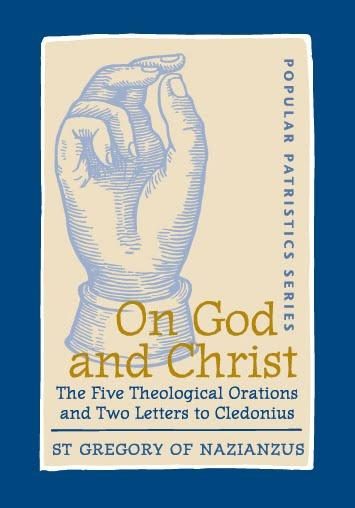
In the bustling city of Constantinople in the year 380 AD, St. Gregory of Nazianzus delivered a series of five sermons, known as the "Theological Orations" or "Orationes Theologicae." These influential discourses served as a steadfast defense of Trinitarian theology, fervently opposing the heretical teachings of Arianism, Eunomianism, and Apollinarianism.
The Theological Orations, numbered 27 to 31, each address a specific aspect of the Trinity.
| Oration | Topic | Key Points |
|---|---|---|
| 27 | The Character of a Theologian | Outlines the virtues and qualifications required to engage in theological discourse. |
| 28 | God the Father | Explores the concept of the uncreated and eternal being, the source and origin of all creation. |
| 29 | God the Son | Presents philosophical arguments in support of the divine nature of Jesus Christ, emphasizing the unity and equality of the Son with the Father. |
| 30 | Challenging Passages from Scripture | Provides exegetical insights, clarifying the meaning of these texts and defending the orthodox understanding of the Son's deity. |
| 31 | God the Holy Spirit | Emphasizes the Holy Spirit's role as a distinct person within the Trinity, co-equal and co-eternal with the Father and the Son. |
In the 1st of five sermons, Oration 27 , Saint Gregory first of all defines the characteristics of a theologian, and who may theologize, thus setting stage for proper refutation. Only those who are experienced can properly reason about God, those who are successful at contemplation and, most importantly, who are pure in soul and body, and utterly selfless. He is clearly calling for holiness as a prerequisite for discussing theology. It is not meant to just have random and meaningless debates and dialogues, but it is fully in respect to our pursuit of love of God. We must first approach it with humility and respect. It is like St. Paul when he says: “And I, brethren, could not speak to you as to spiritual people but as to carnal, as to babes in Christ. I fed you with milk and not with solid food; for until now you were not able to receive it, and even now you are still not able; for you are still carnal.” 1 Cor 3:1-4
To reason about God properly is possible only for one who enters into it with fervor and reverence. It is also critical to know the ineffability of God, that is, to discuss only aspects within our grasp.
“Discussion of theology is not for everyone, I tell you, not for everyone—it is no such inexpensive or effortless pursuit. Nor, I would add, is it for every occasion, or every audience; neither are all its aspects open to inquiry. It must be reserved for certain occasions, for certain audiences, and certain limits must be observed. It is not for all people, but only for those who have been tested and have found a sound footing in study, and, more importantly, have undergone, or at the very least are undergoing, purification of body and soul. For one who is not pure to lay hold of pure things is dangerous, just as it is for weak eyes to look at the sun’s brightness.”
In Oration 28, St. Gregory the Theologian delves into Scriptural passages that describe the nature of God. One such passage states that "God fills heaven and earth" (paragraph 8). While our minds may interpret this as God physically occupying space, St. Gregory reminds us that God is immaterial and transcends physical dimensions. Therefore, these biblical passages serve as mental tools to help us comprehend God's incomprehensible essence. Human language falls short in describing God, but we must attempt to do so nonetheless. St. Gregory emphasizes that God has concealed His true essence from humanity. Furthermore, he asserts that individuals bound by physical bodies cannot perceive abstract concepts without incorporating corporeal elements.
“He can only be incorporeal. But the term “incorporeal,” though granted, does not give an all-embracing revelation of God’s essential being. The same is true of “ingenerate,” “unoriginate,” “immutable,” and “immortal,” indeed of all attributes applied, or referred, to God…The point of this is that comprehension of the object of knowledge should be effected both by negation of what the thing is not and also by positive assertion of what it is.”
To understand God, St. Gregory suggests we use two approaches:
- Cataphatic Theology (Positive Theology)
- Describes the attributes of God, such as His love, wisdom, and power.
- It helps us understand what God is like by describing His qualities.
- Apophatic Theology (Negative Theology)
- Describes what God is not, rather than what He is.
- It emphasizes that God is beyond our limited human understanding and language. We can't fully describe or comprehend Him.
St. Gregory believes that combining these approaches is essential because God's nature is
infinite and incomprehensible. Using both positive and negative theology helps us appreciate the
greatness and mystery of God.
In the third and fourth theological orations, Oration 29 and 30, is dedicated to God the Son.St.
Gregory addresses 10 Arian Philosophical arguments for the creation of the Son. He presents
philosophical arguments in support of the divine nature of Jesus Christ, emphasizing the unity and
equality of the Son with the Father. For example, in the following excerpt, he addresses the eternal
characteristic of the Son and the relation between God and the Logos.
So when did these last two originate? They transcend “whenness,” but if I must give a naive answer—when the Father did. When was that? There has not been a “when” when the Father has not been in existence. This, then, is true of the Son and of the Holy Spirit. Put another question and I will answer it. Since when has the Son been begotten? Since as long as the Father has not been begotten.
Can anyone be a “father,” without beginning to be one? Yes, one who did not begin his existence. What begins to exist begins to be a father. He did not later begin to be Father—he did not begin at all. He is “Father” in the true sense, because he is not a son as well. Just as the Son is “Son” in the true sense, because he is not a father as well.
Finally, in Oration 31, he turns his attention to God the Holy Spirit. St. Gregory emphasizes the
Holy Spirit's role as a distinct person within the Trinity, co-equal and co-eternal with the Father and
the Son. He argues against the Apollinarian heresy, which denied the full humanity of Jesus Christ. He
is the first to use the idea of procession to describe the relationship between the Spirit and the
Godhead.
“The Holy Spirit which proceeds from the Father.”25 Insofar as he proceeds from the Father, he is no creature; inasmuch as he is not begotten, he is no Son; and to the extent that procession is the mean between ingeneracy and generacy, he is God.” (P8)
While St. Gregory did not fully develop upon the concept, the idea of procession would significantly impact subsequent thinking about the Holy Spirit. He additionally declared the eternality of the Holy Spirit, noting that His actions were somewhat obscure in the Old Testament but became much more evident after Jesus' ascension into Heaven and the descent of the Holy Spirit during the feast of Pentecost.
Staying humble
In his Concluding Oration 31, St. Gregory addresses crucial theological concepts to safeguard the distinctness of the three hypostases (Father, Son, and Holy Spirit) and warns against mischievous theological deviations that could lead to the erroneous division of the three hypostases: “The aim is to safeguard the distinctness of the three hypostases within the single nature and quality of the Godhead. The Son is not Father; there is one Father, yet he is whatever the Father is. The Spirit is not Son because he is from God; there is one Only-begotten. Yet whatever the Son is, he is. The three are a single whole in their Godhead and the single whole is three in personalities. Thus there will be no Sabellian “One,” no three to be mischievously divided by our contemporaries.”
St. Gregory associates mischievousness with theological error because it involves attributing more significance to human words and opinions than to the divine revelations expressed in Scripture. This reminds us to be cautious against elevating personal interpretations above God's teachings, as this undermines the authority of divine truth.
Furthermore, this stresses the importance of vigilance and correctability for those who engage in theological discussions. A teacher of theological matters should be open to correction and should not merely express personal opinions. Theology, as a discipline, is not suitable for everyone, and it is crucial for individuals, particularly servants, to discern whether they possess the necessary aptitude and commitment to engage in theological discourse. It is to be noted that all lessons, to some degree, have theological matters and that the purpose of preparatory programs is to precisely alleviate such mischievousness.