HIST201 - Heresies & Schisms
What Are Canons?
The term "canon" originates from the Greek word "kanon," which translates to "rule" or "standard." Within the context of the Church, canons represent a set of generally accepted rules and regulations that guide ecclesiastical conduct and governance. Similar to how laws establish order and structure within a country, canons fulfill a comparable role for the Church. Canons are often reactive in nature, meaning they are typically formulated in response to specific historical events or issues that have arisen within the Church. By studying canons, one can gain valuable insights into past events and the challenges faced by the Church throughout history.
The necessity of church canons is evident when considering the need for a cohesive and organized community. Just as individuals must adhere to the laws of their country, or the rules to join a community in order to maintain order and harmony, members of the Church are expected to comply with its canons. By doing so, they demonstrate their commitment to the beliefs, values, and traditions of the Church. The comparison between hospital rules and church canons is illustrative. In a hospital, patients are required to follow specific regulations to ensure their well-being and the smooth functioning of the facility. Similarly, canons serve as guidelines for believers, helping to maintain discipline, unity, and spiritual growth within the Church.
The process of canon formation is guided by the Holy Spirit and involves thoughtful deliberation and collaboration among Church leaders. When an issue emerges, the Church, or more specifically, a Synod, gathers to discuss and address it. Through prayer, reflection, and discernment, a resolution is reached, and a new canon may be established to provide guidance and direction for future generations.
Overview of Canons
| Theology | Rites (Liturgical Worship) | Clerical/Monastic Life & Lay People |
|---|---|---|
| Dealing with heresies. | On conditions for ordination, ranking, marital life, and priorities. | On prayer, fasting, and giving. |
| Dealing with persecution/ persecutors - on those, (priests vs. paymen,) who were tortured/ imprisoned, and denied Christ. | Clerical excommunications, deprivations, and separations. | On safekeeping, partnership, extortion, buying/ trading, loans, and rentals. |
| vs. paymen,) who were tortured/ imprisoned, and denied Christ. | On baptism, feasts, deacon roles, (7 orders,) hourly prayers, etc. | On slavery, fortune tellers, etc. |
| "If anyone confesses that he is a Christian, he shall be put to death, without further trial, as a convicted enemy of mankind,“ (on Nero.) | On crossing oneself, prayer on the dead, etc. | On spiritual cleanness, (physical relations and struggles.) |
| death, without further trial, as a convicted enemy of mankind,“ (on Nero.) | On the altar, church reverence, (speaking, prostrations,) kiss of peace, etc. | On abortion, homosexuality, and communion. |
- Some of these canon subjects are by Awlaad Al-Assal, who is of a wealthy Coptic family who lived in the 13th century, AD The Church does not accept all the statements in the book but is looked at for historic record and information.” There are canons of different types and subjects. This is one proposed breakdown to conceptualize.
Theology
Theology encompasses a diverse array of canons that guide interactions with individuals who have engaged in heresies, partaken of heretical beliefs, or seek to return from their heretical ways. These canons also extend to situations involving persecution. However, a fundamental question arises: What transpires when an individual denies the faith? Does the process of returning to the faith differ depending on the circumstances surrounding the denial? For instance, consider an individual who denies the faith due to imprisonment but later recants their denial. How does this scenario compare to someone who denies the faith under torture and subsequently recants? Theologians and religious scholars have proposed varying responses to these complex questions.
Moreover, the canons address the actions of individuals who actively persecute others or proclaim heretical beliefs. These individuals pose a unique challenge to religious communities, as their actions can have far-reaching consequences. The canons provide a framework for discerning the appropriate response to such individuals, balancing the need for compassion and understanding with the imperative to uphold the integrity of the faith.
Theological discussions surrounding these issues often delve into the nature of faith, the role of free will, and the concept of repentance. Theologians consider the psychological and emotional factors that might influence an individual's decision to deny or renounce their faith, seeking to understand the complexities of human nature and the potential for redemption.
Ritual/Liturgical Worship
In the liturgy, the deacon prays for the seven orders of the Church. Have you ever wondered what those seven orders are? The canons, which serve as the governing laws of the church, specify the seven orders within the church as dictated in the liturgy. These orders are:
- Bishop: The highest-ranking member of the clergy, responsible for overseeing the spiritual and administrative aspects of a diocese or region.
- Presbyter: Also known as a priest, responsible for leading worship services, administering sacraments, and providing spiritual guidance to the faithful.
- Deacon: Assists the priest in liturgical functions and serves as a liaison between the clergy and the laity.
- Sub-deacon: Assists the deacon in liturgical functions and prepares the altar for worship services.
- Reader: Proclaims the scriptures during worship services and may also lead prayers and hymns.
- Chanter: Leads the singing of hymns and other musical pieces during worship services.
- Doorkeeper: Responsible for guarding the entrance of the church and ensuring that only authorized individuals enter.
The canons help clarify many rituals of worship. Regarding the eligibility of candidates for the priesthood, the canons specify that only men who meet certain criteria can be considered. One of the requirements is that the candidate must be unmarried or have been married only once. Therefore, someone who has been married twice would not be eligible for the priesthood.
The canons also address the issue of priests having side jobs for income purposes. While the canons do not explicitly prohibit priests from having secular employment, they strongly discourage it. A canon says that a priest should not have worldly dealings, what does this imply? Canons provide answers to questions such as these.The canons emphasize that priests should focus on their spiritual duties and that engaging in worldly pursuits could compromise their ability to serve the church effectively.
In terms of church reverence, the canons provide specific guidelines to ensure that worship services are conducted in a reverent and respectful manner. These guidelines include prohibitions on speaking during worship services and requirements for prostrations of reverence at certain points in the liturgy. Additionally, the canons outline various ecclesiastical punishments that can be imposed on
individuals who violate church laws or engage in inappropriate behaviors. These punishments include excommunication, deprivation of communion, and separation or suspension from the church.
People/Individual Oriented Canons
The canons serve as a guide for both clergy and the laity within the Church. For instance, fasting is a choice aimed at directing one's spiritual life and the canons underscore its significance and the manifold benefits it offers. The act of giving, its various forms, and the profound implications it carries are also emphasized within the canons.
Ibn Al Assal's writings offer a rich tapestry of insights into a variety of interactions and practices. It's important to note that his works sometimes include personal opinions, serving as valuable historical references rather than official canonical pronouncements.
The Church's stance on critical moral issues is unequivocal. Abortion is unequivocally condemned as an act of murder, and the canons impose corresponding consequences. Similarly, homosexuality is deemed contrary to the Church's teachings. These positions underscore the Church's long-standing commitment to upholding these moral principles, even in the face of shifting societal norms. The Church's teachings have consistently stood as a beacon, guiding its followers towards righteous conduct and spiritual growth.
The canons, therefore, play a pivotal role in shaping the spiritual and moral landscape for individuals within the Church. They provide a framework for understanding and practicing the faith, fostering a deeper connection with the divine and promoting a life of virtue and righteousness.
Canon Law vs Secular Law
Canon law and secular law are two distinct legal systems that govern different aspects of society. Canon law is the body of ecclesiastical laws and regulations that govern the Church, while secular law is the body of laws that govern civil society. But they also greatly differ in their sources, their goals, and their behavioral impact. Canon law is spiritual, leading to salvation. Secular law, on the other hand, aims for earthly order. The goal of canon law is to promote the salvation of souls and to maintain the unity and order of the Church. The goal of secular law is to maintain peace and order in society and to protect the rights of individuals.
Similarly, canon law governs the moral and spiritual conduct of believers, while secular law governs the external behavior of all citizens. Canon law may impose penalties such as excommunication or interdict - all with the objective of impacting the internal. Secular law may impose penalties such as fines, imprisonment, or even death in order to direct conduct. The internal is not the objective as long as the law is followed.
The following table compares the key features of canon law and secular law:
| Feature | Canon Law | Secular Law |
|---|---|---|
| Sources | Scriptures, Church Fathers, church councils, papal decrees | Constitutions, statutes, regulations, court decisions |
| Goals | Salvation of souls, unity and order of the Church | Peace and order in society, protection of rights |
| Behavioral Impact | Governs internal moral and spiritual conduct of Catholics | Governs external behavior of all citizens |
| Penalties | Excommunication, interdict | Fines, imprisonment, death |
Canon Examples
Let us examine examples in the history of the Orthodox Church where canons were imposed. One notable example is Canon 58 attributed to St. Basil the Great, which deals with the penance for adultery. This canon illustrates the process of repentance and the importance of reverence toward the Holy Eucharist.
According to this canon, a person guilty of adultery is to be excluded from partaking in the Holy Communion for a period of fifteen years. “These fifteen years shall be allotted to him in the following manner, to wit: For four years he shall keep weeping; for five years, listening; for four years, kneeling; for two years, co-standing without the Holy Communion.” (St. Basil Canon 58) This exclusion is structured into four distinct phases:
- Four Years of Weeping:
During this phase, the individual is expected to engage in deep sorrow and remorse for their actions. They are to lament their sin and seek forgiveness from God through prayer, fasting, and other forms of spiritual discipline.
- Five Years of Listening:
In this phase, the person is to dedicate themselves to listening attentively to the teachings of the Church and the guidance of their spiritual father. They are to immerse themselves in the Holy Scriptures, the writings of the Church Fathers, and the lives of the saints to gain wisdom and understanding.
- Four Years of Kneeling:
This phase involves physical prostration as a sign of humility and repentance. The individual is to kneel in prayer, asking for God's mercy and seeking His grace to overcome their weakness.
- Two Years of Co-standing without the Holy Communion:
During this final phase, the person is allowed to stand alongside the faithful during the Divine Liturgy but is not permitted to receive Holy Communion. This serves as a reminder of their unworthiness and a motivation to continue their journey of repentance.
While Canon 58 may not be executed in such a manner today, it provides a structured path for repentance, it is important to recognize that each case is unique. What may be appropriate for one individual might not be suitable for another. The ultimate goal is always unity with God through reverence, discipline, and a sincere desire to turn away from sin and live a life in accordance with God's commandments.
In the case of St. Moses the Black, a notorious bandit, his journey to repentance and sainthood is a testament to God's boundless mercy and the transformative power of repentance. While Canon 58 might not have been applied verbatim in his case, the principles of repentance, humility, and spiritual discipline played a crucial role in his transformation.
The canons of the Church serve as valuable guidelines for spiritual growth and healing. They remind us of the importance of acknowledging our sins, seeking forgiveness, and turning away from them. By embracing the process of repentance and striving for unity with God, we can experience the transformative grace that leads to spiritual renewal and eternal life.
History of Canons, (the Holy Bible)
The roots of Canons, as we understand them today, stretch back to the very origins of Christianity. While the term "canon" itself might not have been explicitly used in the early Church, the concept was certainly present. The teachings and practices of Jesus Christ, as recorded in the New Testament, laid the groundwork for the development of a structured set of guidelines and principles.
The Levitical Canon, established in the Old Testament, provided a framework for religious observance and practice. However, it was the Scribes and Pharisees who, over time, developed a more rigid and legalistic interpretation of these laws. This interpretation often focused on external adherence to the letter of the law rather than its spirit.
In contrast to the Levitical Canon and the Scribes and Pharisees' application, the New Testament Canons were instituted by Jesus Christ himself. Christ's teachings and actions established a new set of guidelines and principles for his followers to follow. These canons were not explicitly declared or written down by the disciples but emerged organically as responses to specific situations and challenges. His teachings and actions served as a model for the early Christians, who sought to follow in his footsteps. The apostles, guided by the Holy Spirit, continued to interpret and apply these teachings to the growing Christian community.
One notable example of this process is recorded in Acts 15. Faced with the issue of whether Gentile converts to Christianity should be required to follow Jewish dietary laws and customs, the early church leaders gathered in Jerusalem to discuss and resolve the matter. The result of this council was a decision that freed Gentile believers from the burden of observing Jewish ceremonial laws while affirming the importance of moral and ethical conduct. This decision, which was later communicated to the churches, can be seen as a canonical moment, establishing a new rule or guideline for the Christian community.
Moreover, Christ's teachings to his disciples, such as the command to baptize in the name of the Father, the Son, and the Holy Spirit, can also be considered a canon. This directive provided a clear and authoritative framework for the disciples to carry out their mission of spreading the gospel.
Are Canons Necessary for Salvation?
In the Gospel of Matthew, Jesus invites all who are weary and burdened to come to Him for rest and relief. “Come to Me, all you who labor and are heavy laden, and I will give you rest. Take My yoke upon you and learn from Me, for I am gentle and lowly in heart, and you will find rest for your souls. For My yoke is easy and My burden is light.” (Matthew 11:28-30) He offers His yoke, which represents His teachings and commandments, as a means to find peace and fulfillment. However, Jesus also emphasizes that this yoke is not intended to be oppressive or overwhelming, but rather gentle and light. He urges His followers to learn from Him, for He is humble and meek in heart.
The context of this passage is significant. Jesus was addressing the Scribes, a group of religious leaders who were known for their strict adherence to the Law of Moses. They believed that salvation could only be achieved through meticulous observance of all the regulations and rituals prescribed by the Law. However, Jesus challenges this notion, arguing that while the Law is important, it should not become the sole focus of religious practice.
Jesus' words in Matthew 11:28-30 suggest that the Scribes had lost sight of the true purpose of the Law. They had become so preoccupied with the external requirements and regulations that they had neglected the inner transformation and spiritual renewal that the Law was intended to promote. Jesus reminds them that the Law is a means to an end, not an end in itself.
Furthermore, Jesus' statement, "not leaving the others undone," signifies that He did not intend to abolish the Law but rather to reframe its significance. He emphasized the need for a holistic approach to spirituality, one that balances the external requirements of the Law with the internal transformation of the heart.
Jesus' teaching in this passage underscores the importance of understanding the proper framework and thought process when it comes to religious observance. While the Law is essential, it should be approached with humility, gentleness, and a focus on the deeper spiritual principles that it embodies. Salvation, therefore, is not solely dependent on strict adherence to laws but rather on a genuine transformation of the heart and a personal relationship with Christ guided by the Law. “For the commandment is a lamp, And the law a light” (Proverbs 6:23 NKJV)
History of Canons, (Councils)
The Role of the Early Church Councils
As the Church expanded and encountered new challenges, the need for clear guidelines and unified practices became increasingly apparent. This led to the convening of Church Councils, where bishops and other Church leaders gathered to discuss and resolve doctrinal and practical issues. The Council of Jerusalem, described in Acts 15, is a prime example of this process. The council addressed the question of whether Gentile converts to Christianity needed to adhere to Jewish laws, such as circumcision. After much deliberation, the council reached a decision, guided by the Holy Spirit, that these laws were not necessary for salvation. This decision was communicated to the churches through a letter, which served as an early form of canonical guidance.
While the term "canon" was not explicitly used in these early councils, the decisions they made and the guidelines they established laid the foundation for the development of a more formal canon of Church law.
The Emergence of the Word "Canon"
The term "canon" itself, derived from the Greek word "kanon," meaning "rule" or "standard," began to be used more explicitly in the 4th century AD. The Council of Laodicea in 363 AD, for example, used the term to refer to the list of books that were considered to be part of the authoritative Scriptures. By the 5th century AD, the concept of a canon of Church law was well established. This canon encompassed a wide range of topics, including Church governance, liturgy, sacraments, and moral conduct. It provided a framework for the organization and functioning of the Church, as well as a guide for Christian living.
The Impact of Canons on Society
Throughout history, Canons have not only shaped the internal life of the Church but also exerted a significant influence on society as a whole. In many instances, Canon law served as a basis for the development of secular laws and legal systems. The "Blue Laws," mentioned in the original
text, are a clear example of this influence. These laws, which restricted certain activities on Sundays, were often rooted in the Church's teachings on the Sabbath day of rest. While the specific application of these laws varied across different regions and time periods, their underlying principles can be traced back to the Church's Canons.
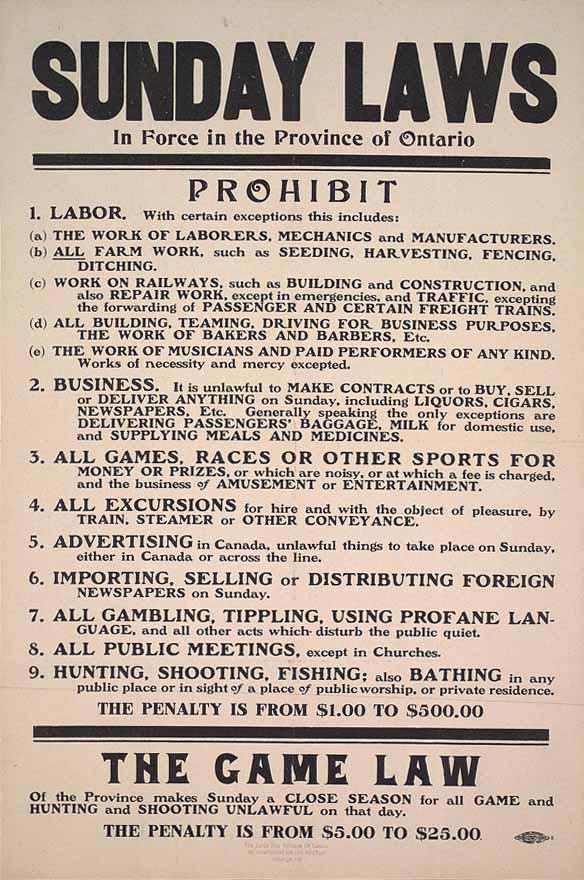
Beyond the realm of law, Canons have also shaped social norms, values, and cultural practices. The Church's teachings on marriage, family, and social justice, for example, have profoundly influenced the development of Western civilization.
Consequences of Non-Compliance
A pertinent question arises: What happens when these canons are not upheld? Unlike secular laws, which are
enforced through a formal judicial system with prescribed punishments, the Church's approach to discipline is more nuanced. The responsibility of upholding the canons typically falls upon the bishop or priest, who acts more as a spiritual physician than a judge. The primary consequence for violating Church canons often involves restrictions on participation in the Eucharist, the central act of Christian worship. This is not intended as a punitive measure but rather as a remedial action aimed at guiding the individual back to spiritual health. It underscores the Church's understanding of its laws as tools for spiritual growth and healing rather than instruments of punishment.
While canons provide a framework for Church discipline, their application is not rigid or mechanical. A key aspect of the Church's approach is the emphasis on discernment and individual pastoral care. The final decision regarding the appropriate course of action for a believer who has transgressed the canons rests with the spiritual father or, in more serious cases, the ruling bishop of the diocese. This ensures that the response is tailored to the individual's circumstances and spiritual needs.
This raises another question: Is it necessary for the average layperson to be well-versed in the intricacies of Church canons? While a deep understanding of canon law is not expected of every believer, a basic awareness of the Church's moral and disciplinary guidelines is beneficial. This enables individuals to participate more fully in the life of the Church and make informed decisions about their spiritual journey.
Some Interesting Scenarios
Imagine a woman is pregnant and wanting to be baptized. Is the child then considered baptized? This question was addressed by the Council of Neocaesarea in 315 AD. The Council's response was that the child is not automatically baptized simply because the mother is baptized. Rather, the child must undergo its own baptism when it is born.
Let us consider another scenario posed by St. Timothy of Alexandria. “Question: if a woman gives birth on Easter, does she have to fast, and not to drink any wine, or is she released from the fasting and from the obligation not to drink any wine, on account of her having given birth to a child?” The answer, he explains, is that fasting was devised in order to humble the body. If, therefore, the body is already in a state of humbleness and illness or weakness, the person ought to partake of as much as he or she may wish and be able to get along with food and drink. (St. Timothy of Alexandria)
What did the canon say about theft? According to one of the canons, a thief who voluntarily repents is excluded from Communion for 49 days, while a thief who has been detected and exposed is excluded for six months. However, if a person falls into the sin of fornication, the punishment is more severe. A monk or layman who has committed fornication is excluded from Communion for two years, provided they consent to submit to xerophagy (a strict fast) after the ninth hour and to do 250 metanias (prostrations). If they neglect to do so, they must fulfill the whole term of exclusion fixed by the Fathers.
These scenarios provide a glimpse into the complex and nuanced world of early Christian thought. They demonstrate that the early Church had a well-developed understanding of sin and repentance and that the punishments for sin were tailored to the specific circumstances of each case.
Fasting Wednesday and Friday
Fasting on Wednesdays and Fridays was clearly a significant practice observed by early church. From the canons we observe a variety of canons with regards to fasting. Wednesday is practiced to commemorate the day that Judas Iscariot, one of Jesus Christ's disciples, betrayed him, leading to his crucifixion. Friday, on the other hand, marks the day of Christ's crucifixion and death. By observing fasting on these days, believers honor and remember these significant events.
Fasting on Wednesdays and Fridays is not merely about abstaining from physical sustenance. It is a time for spiritual reflection, introspection, and self-purification. It provides an opportunity for individuals to examine their actions, thoughts, and intentions, seeking forgiveness for past sins and committing to a more righteous path. The act of fasting is seen as a way to humble oneself before God, acknowledging one's dependence on divine grace and mercy.
The canons on various occasions clarify and demonstrate the purpose, the exception and the mindset the Church maintains towards its practice:
- (Apostles 49): One who does not the holy forty (lent) , or Friday, or Wednesday he should be cut off unless he has a physical reason like sickness.
- 1. Fasting is to abstain from eating for a specified period as the law commands in obedience to Him who made the law. Fasting gives us the opportunity to examine our sins and reap our good rewards.
- 2. The purpose of fasting is to weaken the power of desire in order for the body to obey the spirit.
- 10. No abstention on Sundays or Saturdays.
- 21. If Wednesday or Friday is a feast, you go for prayer (liturgical) and communion and communion breaks the fast, so no abstaining.
- 23. A priest (clergy) who does not fast the lent and Wednesday and Friday should be excommunicated (‘Youktaa’) and the lay person who does likewise should be separated (‘Youasaal’) – Ibn El Assal
Finding the Canons
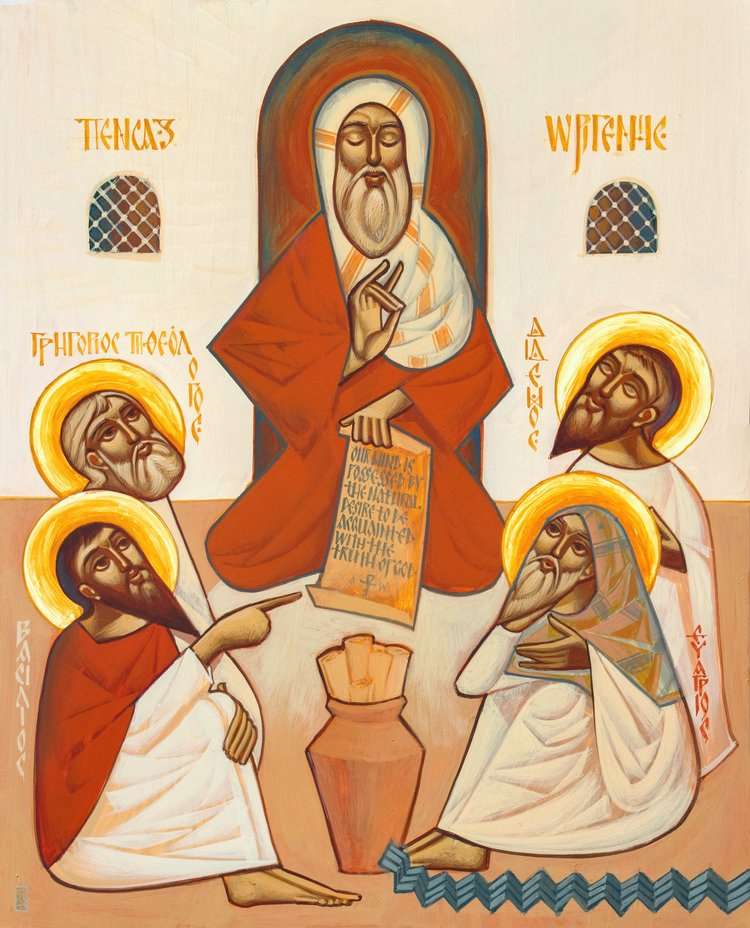
The canons help the individual understand and direct them towards a way of life that glorifies God. By studying the history, the response of the fathers, the impact of canons, one can try to acquire the mind of the father and live as our Lord intended us to. The canons can be found in the minutes of the three Ecumenical councils (Council of Nicaea (A.D. 325), Council of Constantinople (A.D. 381). Council of Ephesus (A.D. 431)), and by reading the canons of local councils such as: The Council of Carthage during Cyprian, The Regional Council of Ancyra, Council of Neocæsarea (AD 315) - Fathers of the Church, Synod of Gangra, Synod of Antioch in Encaeniis (A.D. 341), Synod of Laodicea (4th Century), Council of Sardica (A.D. 344), Council of Carthage (A.D. 419) as well as the Canons of the Holy Fathers. Saint Dionysius, St. Gregory of Neocaesarea, St. Peter, Archbishop of Alexandria, St. Athanasius the Great, St. Basil the Great, Canons of Saint Gregory of Nyssa, Saint Gregory the
Theologian, St. Timothy of Alexandria, Theophilus of Alexandria, St. Cyril of Alexandria all have
canons to be read.