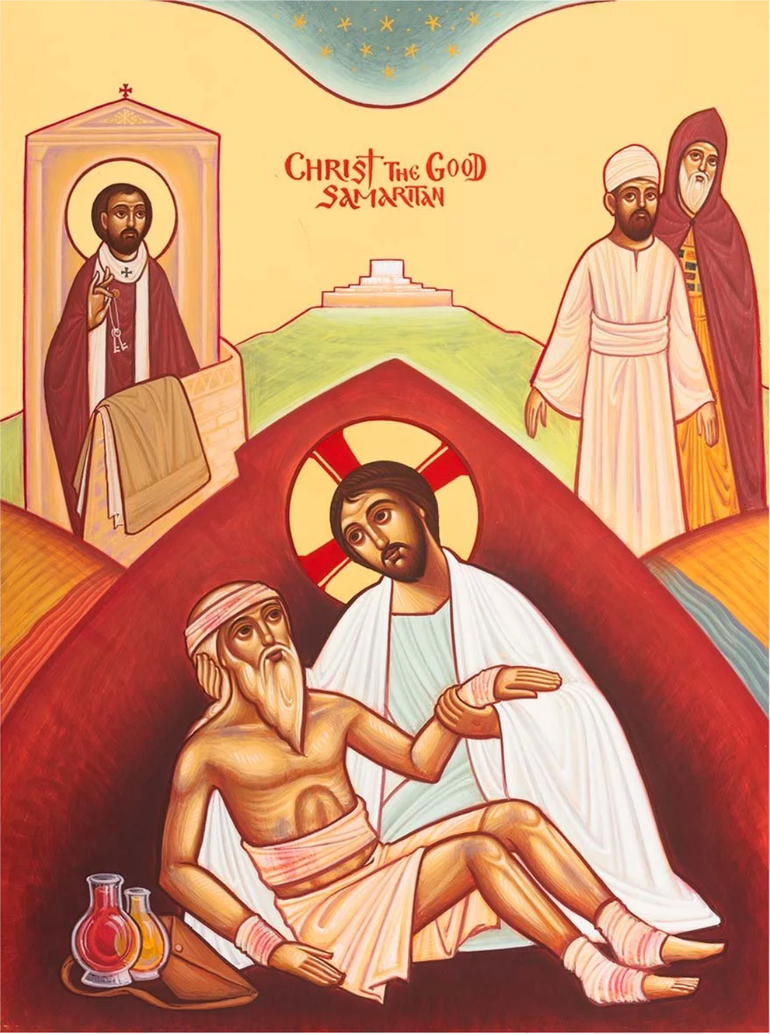
Every servant, sooner or later, has had the quiet experience of wondering why the fire of ministry has grown dim even though nothing obvious has changed. The prayer rule is still kept. The Liturgy is still attended. The service is still offered. And yet, something underneath has cooled. Almost always, the answer is not some new spiritual discipline the servant has not yet discovered. The answer is a familiar Mystery that has been gently set aside: the Sacrament of Confession. In our tradition it is called the Second Baptism, because it returns to the soul the same grace the first baptism once gave. Confession is not a duty the Church has burdened us with; it is one of the kindest gifts our tender God has placed into the life of every Christian, and the servant who keeps it alive keeps himself alive for a long ministry. In this lesson we will sit with the Lord's own institution of this Mystery, listen to the Fathers who discovered its healing power, and see why the vitality of the servant's inner life so often rises and falls with the vitality of his confession.
A Gift Christ Placed into the Hands of His Church
Confession is not a later invention of the Church. It is a Mystery our Lord instituted with His own lips on the evening of His resurrection. Scripture records the scene with a stillness that matches the stillness of the upper room that night:
“So Jesus said to them again, 'Peace to you! As the Father has sent Me, I also send you.' And when He had said this, He breathed on them, and said to them, 'Receive the Holy Spirit. If you forgive the sins of any, they are forgiven them; if you retain the sins of any, they are retained.'” (John 20:21–23, NKJV)
Read every phrase. Peace to you — the first gift of the risen Lord to His Church is peace. As the Father has sent Me, I also send you — the apostolic mission begins in the same breath as the gift of forgiveness. He breathed on them — the word is the same word used in Genesis for the breath of life breathed into Adam. This is a new creation. Receive the Holy Spirit — the authority about to be given is not human; it flows directly from the Holy Spirit who rests upon the ordained hand. If you forgive the sins of any, they are forgiven them — this is not a future promise; it is a present authority handed, on Easter evening, to the men who would stand in the Church as shepherds after Him.
Those same men handed the authority on to their successors, and those successors to theirs, in an unbroken line of laying-on of hands that reaches down to the bishop and priest who hears our confession tonight. When we kneel before the priest, we are kneeling before a descendant of the breath of Christ. The hand that pronounces absolution is, in a mysterious but real sense, the hand of the Lord Himself, reaching into our souls across twenty centuries to speak the word He had already spoken on the night He rose.
St. John Chrysostom, writing on this very passage, said it with characteristic tenderness:
“Great is the dignity of the priesthood that the Lord has given His own authority to forgive to men made of dust. What the angels in heaven cannot do, He has entrusted to His ministers, so that the penitent soul might not despair of pardon but find, in the hands of a brother, the very mercy of Christ.” — St. John Chrysostom, On the Priesthood, III
The very mercy of Christ, in the hands of a brother. This is the Mystery. It is not a psychological debrief. It is the Lord Himself, extending pardon through the ordained hand He has anointed for the purpose.
The Second Baptism
The Fathers have called Confession the Second Baptism, and the name is tender and exact. At our first baptism, the Lord washed us clean and clothed us in the white garment of His righteousness. We left the font a new creation. But we all know what has happened since. The garment has been stained. Sometimes lightly, sometimes deeply. Sometimes by small carelessnesses, sometimes by decisions we have come to regret in the quiet of the night. The question has always been: what do we do with the garment we were given?
The ancient Church was not without answer. St. Paul, writing to Christians who were struggling with their own shortcomings, wrote plainly:
“If we confess our sins, He is faithful and just to forgive us our sins and to cleanse us from all unrighteousness.” (1 John 1:9, NKJV)
If we confess. The condition is simple. The result is total — forgiveness and cleansing, not partial, not probationary, not on a sliding scale. And the reason is not our worthiness; it is God's character. He is faithful and just. Our confidence in confession rests not on how well we do it but on Who is receiving it.
The Council Fathers of the fourth century, when they spoke about the penitential life of the Church, used language that reminds us how seriously they took this renewal of baptismal grace:
“The tears of the penitent are the laver of the second baptism. What the water first accomplished, the tears now renew. Let no Christian despair of his fall, for the Lord has given us a second font, drawn from our own repentance and sealed by the priest's hand.” — St. Gregory of Nazianzus, Oration 39
A second font. Every Confession is a return to the waters we first walked out of as infants. The white garment is washed. The seal is re-applied. The soul stands again in the dignity it was given at its first baptism, not because the stains never happened, but because the blood of Christ has passed over them one more time. This is the whole glory of the Mystery, and it should never grow old to us.
Why Confession Must Be Spoken
A question that rises honestly in many hearts is this: if God is everywhere and knows everything, why do we have to speak our sins out loud to a priest? Why is it not enough to confess privately, heart to heart, to the Lord who already knows all things?
The Church has not been shy about answering this question, and the answer is beautifully pastoral. God already knows, yes. He does not need our speech in order to be informed. But we need our speech, in order to be healed. The act of saying a sin out loud — specifically, concretely, to a human priest acting as Christ's representative — does something inside us that silent regret alone cannot do.
First, it defeats the shame that loves darkness. Sins that stay hidden grow comfortable. They begin to feel normal. They develop rationalizations. The moment we say them out loud, even once, the rationalizations die. Light destroys what only darkness could preserve.
“But everything exposed by the light is made manifest, for whatever makes manifest is light. Therefore He says: 'Awake, you who sleep, arise from the dead, and Christ will give you light.'” (Ephesians 5:13–14, NKJV)
Second, spoken confession breaks the pride that would otherwise simply talk to itself. A soul that confesses only in its own head is still at the center of its own story. A soul that kneels before a priest and says the words out loud has, by the act of kneeling, admitted that it is not the final authority on its own condition. That admission, small as it seems, is itself a piece of healing.
Third, the spoken confession receives a spoken absolution. This is not a small thing. Our Lord could have set up His mercy to be communicated silently, by feelings alone, but He did not. He set it up to come through a voice we can hear with our ears. The words, 'I, the unworthy priest, by the authority given to me, forgive you your sins in the name of the Father and the Son and the Holy Spirit,' are words the enemy cannot easily erase from our memory. Months later, when shame whispers that we were never really forgiven, we can answer the whisper with a remembered sentence — actual words, in an actual voice, from an actual moment when Christ spoke through His ordained hand.
St. James, writing to the early Church about this practice, simply assumed it:
“Confess your trespasses to one another, and pray for one another, that you may be healed. The effective, fervent prayer of a righteous man avails much.” (James 5:16, NKJV)
That you may be healed. James does not say, 'that God may be informed.' He knew God was informed. He says that our healing is what is at stake — and that healing comes through spoken confession and the intercessory prayer of a brother. That sentence alone would be enough to establish the practice if no other verse existed.
The Father of Confession
The ancient Church, in her wisdom, knew that Confession would work best when each Christian made it regularly to the same priest over a long period of time. She called such a priest the penitent's spiritual father, and the relationship between a soul and its father of confession remains, to this day, one of the most tender gifts the Church can give any Christian — and especially any servant.
What is a father of confession? He is not a therapist, though the conversation is often therapeutic. He is not a friend, though the relationship grows, over years, into a deep friendship. He is not a boss, though his counsel is to be heeded seriously. He is a father, in the spiritual sense — a man who, by his prayers and his counsel and his steady fidelity, is helping to raise a soul into the likeness of Christ. The servant who has such a father is a servant with a kind of safety net few other Christians possess.
The importance of this figure is not a recent development. It runs all the way back through the desert. Abba Moses, in the Sayings of the Fathers, gave this counsel to a young monk, and the counsel applies just as well to a young servant:
“Go and sit in your cell, and your cell will teach you everything — but first, find a father, open your heart to him, and do nothing without his prayer. A ship without a pilot wanders; a Christian without a father, in time, wanders even more.” — Sayings of the Desert Fathers, Abba Moses 6
The counsel is not about dependency; it is about humility. A servant who answers to no one on earth about the state of his soul is a servant in great spiritual danger, not because he is worse than anyone else but because the ordinary graces of correction, encouragement, and pattern-recognition have been closed off from his life. A servant who answers regularly to a beloved father of confession, on the other hand, has access to a kind of wisdom and care that cannot be gotten any other way.
St. John Climacus, who spent his life forming monks at Sinai, said it with the weight of long experience:
“The man who has set his foot on the ladder of the divine ascent without a father to guide him will either fall quickly or climb slowly and unsurely. The man who climbs under obedience will reach heights his own strength could not have carried him to.” — St. John Climacus, The Ladder of Divine Ascent, Step 4
The Rhythm of a Living Confession
How often should a servant confess? The Church has not laid down an absolute rule, because different seasons and different temperaments need different cadences. But the general wisdom of our tradition, handed down through many generations of pastoral fathers, is this: a servant should confess often enough that no sin takes root in him, and at least often enough that the Church's great feasts find him cleansed.
For most servants, this means confession at least before each of the four great fasts — the Nativity Fast, the Great Fast (Lent), the Apostles' Fast, and the Fast of the Theotokos — and more frequently in seasons of particular struggle. Many faithful servants find it helpful to confess monthly. In times of specific temptation or spiritual dryness, even more often is often the right answer.
What the servant wants to avoid, above all, is the slow drift by which months become a year, and a year becomes two, and the soul forgets what it felt like to stand up from the stole absolved. That drift is how the vitality of the inner life begins to fade without the servant being able to say why. The quiet of a clean conscience, the specific consolation of a recent absolution, the habit of honest self-examination that a regular confession trains — all of these are what keep a servant's flame from guttering over the long years of ministry.
St. Paul wrote to the Corinthians a sentence that the Church has folded, ever since, into her understanding of regular confession:
“But let a man examine himself, and so let him eat of the bread and drink of the cup.” (1 Corinthians 11:28, NKJV)
Self-examination before the Eucharist is not meant to terrify us out of communicating; it is meant to prepare us for communicating worthily. The servant who has made a habit of bringing his self-examination all the way to the priest, rather than keeping it only in his own head, comes to the Chalice with a cleanness he would not otherwise possess. And that cleanness is not a burden he carries; it is the garment in which his Lord has insisted on dressing him.
St. Theophan the Recluse, writing to a layman who asked him directly about the frequency of confession in modern life, answered with his usual warmth:
“Confess often, and not formally. If you have truly sinned, confess it at the first opportunity and do not let it sit on the soul. If you have not, still come, for the prayer of the stole is a cleansing breath even where no great sin is named. This is not obsession; it is respiration. The soul that stops breathing, dies.” — St. Theophan the Recluse, Letters on the Spiritual Life
Respiration. That is the gentlest and truest image for the rhythm of a living confession. In and out, in and out, across the long years of a servant's life — each confession a cleansing breath, each absolution the oxygen that keeps the soul alive for the next stretch of the road.
Bringing the Mystery Home
Here, at the close of this lesson, is the quiet invitation every servant needs to hear again: the vitality of our ministry rises and falls with the vitality of our confession. When our confession is regular, honest, specific, and brought to a trusted father, the strength of our service is supplied by the very Lord whose pardon keeps our soul clean. When our confession has drifted, the strength of our service begins to be supplied by ourselves, and we are all, in the end, too small for that weight.
So let us return, if we have drifted. Let us not let shame keep us from the very Mystery that was instituted to deliver us from shame. The priest who will hear us is not shocked by anything. The Lord who will forgive us is not hesitant. The absolution that awaits us has already been prepared, and it has our name on it. The only thing left is for us to come.
There is a tender scene at the end of the Gospel of John that the Church has always read as a picture of the restoration of a fallen servant. Three times Peter had denied the Lord before His passion; and three times, around a charcoal fire on the shore of the Sea of Tiberias, our risen Lord asked him gently whether he loved Him. With each affirmation, the Lord restored Peter to the service he had forfeited — feed My lambs, tend My sheep, feed My sheep. The restoration was total. Peter walked away from that charcoal fire not merely forgiven but re-commissioned, and the Church has never forgotten it.
Every Confession is a little version of that charcoal fire. The Lord stands there, asking us quietly whether we love Him. We answer Him — sometimes tearfully, sometimes plainly, sometimes wordlessly. And He restores us, each time, not merely to forgiveness but to the service that the sin had tried to steal from us. The servant who stays close to Confession stays close to that fire, and the fire keeps him warm for the whole of the long ministry that lies ahead.
May our tender Lord keep the stole of His priest always within reach of our hearts. May He teach us to speak the sins we would rather hide, and to receive without flinching the forgiveness we have already been given. May the Second Baptism be, for each of us, a font we return to often, gratefully, and without fear — and may the clean conscience of an absolved servant be the quiet atmosphere in which the whole of our service is done, from this year until our last.