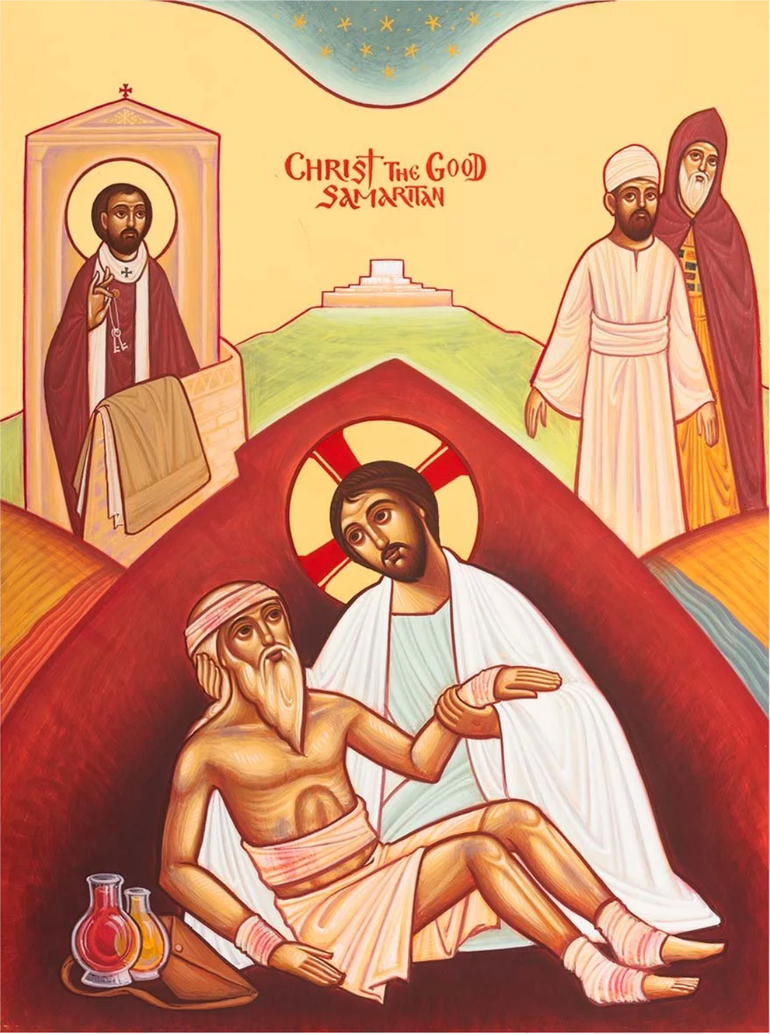
For the servant, time is not a neutral resource to be optimized. Time is the medium in which the Lord has chosen to work out our salvation and the salvation of those we serve. Every hour given to us is an hour the Father has measured out with care. How we handle that measure — what we keep, what we give away, what we let slip through our fingers in distraction — is itself a spiritual question. This lesson looks at time management not as a productivity technique borrowed from the business world, but as a discipline of love. We will examine what Scripture and the Fathers say about the shape of a Christian day, the place of priorities, the sickness of hurry, the gift of rest, and the quiet practices that let a servant come to the end of his week with both the work done and the soul kept.
Time as a Gift
The Psalmist gives us a posture toward time that most modern habits have forgotten.
“So teach us to number our days, that we may gain a heart of wisdom.” Psalm 90:12, NKJV
Notice that the Psalmist does not ask for more days. He asks to be taught how to count the ones he has. The presupposition is that our days are finite and therefore precious — that they are given, not earned, and that a wise heart is grown in the honest recognition of this.
St. Paul carries the same thought into the life of the Christian community:
“See then that you walk circumspectly, not as fools but as wise, redeeming the time, because the days are evil.” Ephesians 5:15–16, NKJV
'Redeeming the time' — the Greek word exagorazomai means to buy back, to purchase out of the market. In a world whose hours are easily spent on small and empty things, the servant is asked to redeem them, to buy them back for the kingdom, one by one.
St. Basil writes with warmth on this:
“The Lord hath given us the same measure of time that He gave the prophets and martyrs and saints. They filled their hours with Him; we fill ours with little things and complain of shortness. Let us therefore examine, not how many our hours are, but what we are giving them to.” St. Basil the Great, On the Hexaemeron I.2 (paraphrased)
The Shape of a Christian Day
The Church, across twenty centuries, has handed to us a simple shape for the day. Morning prayer to consecrate the day to the Lord; short prayers at the hours or before meals to remember Him mid-stream; evening prayer to hand the day back to Him before rest; and a compline or before-sleep prayer to entrust our soul to Him through the night. This rhythm is not ornamental. It gives a day its backbone. The work of the hours fits around it, not the other way around.
“Evening and morning and at noon I will pray, and cry aloud, and He shall hear my voice.” Psalm 55:17, NKJV
A servant who does not keep a minimum rhythm of prayer will find that the demands of the day quickly dictate the day's meaning. A servant who keeps even a short rhythm — five minutes in the morning, a sentence before lunch, five minutes in the evening — will find that the Lord remains, perceptibly, the author of the day's events.
Within this rhythm, work is not the enemy of prayer. St. Paul's 'pray without ceasing' (1 Thessalonians 5:17) is lived out by servants who have learned to pray in the car, at the counter, between classes, during the washing of dishes. The prayer of the heart — a short and repeatable sentence, such as the Jesus Prayer — is the great gift the Church has given for this very purpose. It turns the ordinary minutes of a day into a conversation.
Priorities — The First Discipline
Time management is almost always, at root, a question of priorities. Two people may have the same twenty-four hours, and one will finish the day at peace and the other exhausted and behind, simply because the first put first things first.
“But seek first the kingdom of God and His righteousness, and all these things shall be added to you.” Matthew 6:33, NKJV
Our Lord's word is not a promise of magical efficiency. It is a statement of order. When the kingdom is sought first, the other necessities fall into their right place. When the other necessities are sought first, the kingdom struggles to find any place at all.
For a servant, the concrete shape of this is well known, though rarely practiced with discipline: prayer before meetings, Scripture before screens, family before ministry, rest before collapse. A servant who has decided, in advance, what his first things are, does not need to decide again at every fork in the day. The decisions have already been made.
Our Lord Himself kept this order. 'Now in the morning, having risen a long while before daylight, He went out and departed to a solitary place; and there He prayed' (Mark 1:35). The One whose day included the healing of crowds began the day with the Father. If He needed the solitary place, how much more do we.
The Sickness of Hurry
There is a particular sickness of our age that a servant must learn to resist: hurry. Hurry is not the same as diligence. A servant can be diligent and unhurried; he can also be frantic and undone. Hurry is the state in which we move through the hours without attending to them, driven by an inner pressure that treats every task as a thing to be finished so we can get to the next thing to be finished.
“Be still, and know that I am God.” Psalm 46:10, NKJV
Stillness is the opposite of hurry. It is not inactivity; it is a quality of presence in whatever we are doing. A servant who has learned stillness can speak to a grieving mother without scanning the room for the next appointment; can teach a slow student without sighing; can sit with the dying without calculating the clock.
The desert Fathers had a short and famous prescription for the hurry of the soul:
“Go, sit in your cell, and your cell will teach you everything.” Abba Moses, Apophthegmata Patrum (Sayings of the Desert Fathers)
Our 'cell' today is the quiet corner of a room, the car turned off for five extra minutes before we go into the house, the early morning before the phone wakes up. These small cells teach us, every day, the grammar of unhurried presence.
The Gift of Sabbath
One of the most countercultural disciplines of time a servant can keep is sabbath — a weekly day on which the work pauses. This is not optional refinement; it is one of the ten commandments, given to us before we had asked for it.
“Remember the Sabbath day, to keep it holy. Six days you shall labor and do all your work, but the seventh day is the Sabbath of the Lord your God. In it you shall do no work.” Exodus 20:8–10, NKJV
The Christian Church has moved the celebration to the Lord's Day, the day of the Resurrection, but the wisdom of a rest-filled day every seven has remained. A servant who works seven days a week is not more spiritual; he is usually exhausted, subtly proud (assuming his absence would harm the work), and gradually estranged from his own family.
Sabbath is a confession of trust. When we stop working for a day, we are quietly saying that the world does not depend on us, that our Father is awake even while we rest, and that the ministry will still be there on Monday. Every weekly sabbath is a small rehearsal for the final rest.
For most servants, a practical sabbath looks like this: one day a week with no work email, no ministry planning, no classes, no pastoral visits unless there is a genuine crisis. Instead: long liturgy, a shared meal, time with family, a walk, a nap, a book read for love. It is not wasted time. It is the time the Lord gives back to us what the week has taken.
Practical Habits of the Well-Kept Hour
A few practical habits, gathered from the experience of many servants, are worth naming.
First, plan the week on Sunday evening. A quiet fifteen minutes with the calendar, asking where the Lord is placing His claims on the coming week, saves hours of reactive scrambling later. A servant who does not plan is planned upon.
Second, protect the first hour of the day for prayer and Scripture. Emails and messages will rush to fill it if we let them. They can wait an hour. The Lord, who was there first, should have what is first.
Third, say yes carefully and no kindly. An over-committed servant eventually serves no one well. Most good servants need to learn to say, 'I would love to, but I can't take this on right now.' This is not unspiritual; it is honest.
Fourth, put margins around the hard things. Do not schedule a difficult pastoral visit immediately before a class; give ourselves the space to arrive as a whole person, not as someone still processing the last hour.
Fifth, end the day deliberately. A short prayer at bedtime, naming the day's gifts and failures, hands the day back to the Lord and frees the mind for rest. A servant who cannot sleep often has not yet handed the day back.
Sixth, take short seasons of retreat. Once or twice a year, two or three days at a monastery or in a quiet house, with the phone off and the Gospel open, are worth more than many weeks of tired service.
May the Lord who made the evening and the morning, the week and the year, teach us to number our days. May He deliver us from the hurry that looks like holiness, from the over-commitment that empties rather than gives, and from the quiet idolatry that makes our ministry seem to depend on us. May He bless the small rhythms by which servants have always been kept — morning and evening prayer, the weekly sabbath, the annual retreat, the thoughtful Sunday-evening look at the week. And may we come to the end of our days having redeemed them, hour by hour, for the kingdom whose time is not measured in minutes but in love.