- 1 God and the Supernatural
Perception of Miracles
The renowned British novelist, essayist, poet, and Christian apologist, C.S. Lewis, astutely observed that if one begins by ruling out the existence of the supernatural, they will consequently perceive no miracles. "If you begin by ruling out the supernatural, you will perceive no miracles.“ (CS Lewis) This sentiment underscores the fundamental connection between Christianity and the belief in miracles.
The life of Jesus Christ stands as the central tenet of Christianity, and it is replete with supernatural events from His miraculous birth to His death and resurrection. Christ's birth itself was a miraculous event, as He was conceived by the Holy Spirit in the womb of the virgin Mary. His life was marked by numerous miracles, including healing the sick, raising the dead, walking on water, and multiplying food to feed the multitudes. The culmination of His earthly ministry was His sacrificial death on the cross, followed by His glorious resurrection three days later. These events form the bedrock of the Christian faith, providing irrefutable evidence of Christ's divinity and His triumph over death.
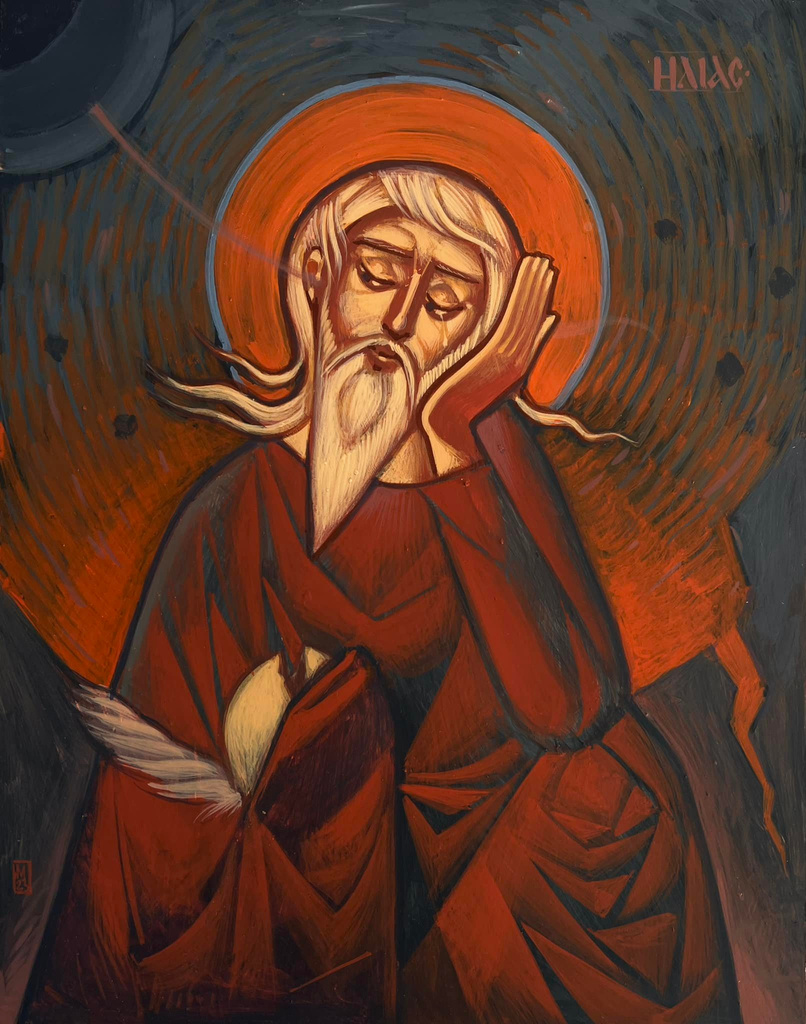
The Old Testament is replete with accounts of God's supernatural interventions throughout history. From the very beginning, the creation of the world is presented as a miraculous act, with God speaking the universe into existence. The story of Noah and the flood stands as a testament to God's judgment and His preservation of the righteous. The life of Samson, with his God-given strength, showcases God's empowerment of individuals for specific purposes. The prophet Elijah, through his miraculous works, demonstrated the power of God over nature and false prophets. The story of Jonah, who was swallowed by a large fish and later vomited out alive, serves as a reminder of God's ability to deliver from seemingly impossible situations. These and numerous other miracles recorded in the Old Testament require faith in the supernatural to be fully understood and appreciated.
The acceptance of miracles is not merely a matter of blind faith but is supported by compelling evidence. The historical evidence for the life and times of Jesus Christ is substantial, with numerous non-Christian sources corroborating the existence of a Jewish teacher named Jesus who performed miracles and was crucified. The fact that Christianity spread rapidly throughout the Roman Empire in the face of intense persecution is a testament to the compelling nature of the eyewitness accounts of Christ's miracles.
While the belief in miracles may challenge the prevailing naturalistic worldview, it finds resonance in the human experience. People from all walks of life have reported miraculous occurrences, such as inexplicable healings, answered prayers, and profound spiritual experiences. These personal testimonies, coupled with the historical evidence and the teachings of Christianity, provide a compelling case for the reality of miracles.
C.S. Lewis's observation highlights the inextricable link between Christianity and belief in miracles. The life of Christ, from His miraculous birth to His resurrection, forms the cornerstone of the Christian faith. The Old Testament abounds with accounts of God's supernatural interventions in human history. The acceptance of miracles is not only supported by evidence but also resonates with the human experience. Embracing the reality of miracles enriches our understanding of the world and opens us up to the awe-inspiring power of the divine.
Faith Leading to Miracles
The Bible calls upon us to embrace faith in the extraordinary works of God, assuring us that we can personally experience His supernatural power in our lives. The Gospel of Mark emphasizes that "all things are possible to him who believes," reminding us that what may seem unachievable to humans is within reach with God's intervention. The passage from Mark 10:27 further reinforces this concept, stating that "with men it is impossible, but not with God; for with God all things are possible."
In the New Testament, believers are encouraged to have faith as small as a mustard seed, which, despite its size, possesses the strength to accomplish the improbable. As illustrated in Matthew 17:20, with such faith, believers can command mountains to move and overcome seemingly insurmountable obstacles: “if you have faith as a mustard seed, you will say to this mountain, ‘Move from here to there,’ and it will move; and nothing will be impossible for you.” (Matthew 17:20) This passage serves as a testament to the transformative power of faith, empowering individuals to embrace the impossible and witness the extraordinary workings of God in their lives.
The Bible's emphasis on faith in the supernatural is a testament to the boundless love and grace of God. It invites us to trust in His ability to intervene in our lives, to heal us, to provide for us, and to guide us through life's challenges. By embracing faith, we open ourselves up to the limitless possibilities that come from relying on a power greater than ourselves.
Arguments Against Miracles
Science is a powerful tool that has helped us understand the world around us in extraordinary ways. It has allowed us to make incredible progress in fields medicine, technology, and many others. However, there are still many things that science cannot explain. For example, some people believe that certain events in the past, present, and future are not explainable without the knowledge of science and that as science evolves, it will debunk what was once considered miracles.
While science has indeed debunked some events, like lightning and thunder, it has not been able to explain all supernatural healings or miracles attributed to God. For instance, the Virgin Birth, the resurrection, and the feeding of the 5,000 remain unexplained by science. As philosopher Peter Kreeft rightly points out, "what science will do tomorrow, no one knows today, and we cannot argue scientifically from what is not known."
It's important to recognize that science does not tell us what always happens or what is possible or impossible. Scientific laws are merely generalizations based on our observations of how nature usually works. They do not rule out the possibility of exceptions. In fact, exceptions are simply additions to the natural process, and they do not diminish the validity of science or nature.
Myth and Symbols
Individuals' interpretation of the Bible is often influenced by their personal beliefs. If a person does not believe in miracles, they may interpret biblical accounts of miraculous events as myths or symbols rather than as literal truths. This approach allows them to reconcile their beliefs with the biblical text without rejecting it outright as false. However, it is important to distinguish between interpretation and belief. Interpretation involves seeking to understand the meaning of a text within its historical and cultural context, taking into account the author's intent and the intended audience. Belief, on the other hand, is a subjective acceptance of a proposition as true regardless of evidence or logical reasoning.
Confusing interpretation with belief can lead to the imposition of one's personal views on the text. This is a common mistake made by many modern-day biblical scholars who approach the Bible with a predetermined set of beliefs and then interpret the text in a way that confirms those beliefs. Arrogance plays a role in this mistake as it reflects a belief that one's own understanding of the Bible is superior to that of the author or the intended audience. It is important to recognize the limitations of one's own perspective and to be open to the possibility that the text may have multiple meanings and interpretations.
A more humble and open-minded approach to biblical interpretation involves seeking to understand the text on its own terms, without imposing external beliefs or assumptions. This requires a willingness to set aside one's personal biases and to engage with the text in a respectful and critical manner.
Religion Requires Miracles
The significance of miracles in religion can vary greatly depending on the specific faith. While some religions may not require a belief in miracles as a fundamental tenet, Christianity stands apart in this regard. For Christians, faith in miracles is essential to their religious beliefs.
Christianity's core teachings revolve around the Incarnation, Atonement, and Resurrection of Jesus Christ. These events are considered to be miraculous in nature, as they involve divine intervention and supernatural occurrences. The Incarnation, for instance, refers to the belief that God became human in the form of Jesus Christ. The Atonement encompasses Jesus' sacrifice on the cross to redeem humanity from sin. And the Resurrection signifies Jesus' victory over death and his subsequent bodily resurrection. These miraculous events hold profound theological significance for Christians. They serve as the foundation for the Christian faith and provide believers with hope and assurance of salvation. Without faith in these miracles, the central tenets of Christianity would be undermined, and the religion would lose its unique identity.
It is worth noting that not all religions view miracles in the same way as Christianity. In some faiths, miracles may be considered rare or extraordinary occurrences that are not essential to religious practice. In religions like Islam, Hinduism, Buddhism, and Confucianism, this is true. In contrast,
Christianity emphasizes the importance of miracles as integral to its teachings and as evidence of God's power and grace. Ultimately, the necessity of belief in miracles depends on the specific religion and its theological beliefs. For us Christians, miracles are not merely optional or peripheral elements; they are fundamental to the very core of their faith.
Why Do Miracles Happen?
Throughout history, there have been numerous accounts of miracles that have left people in awe and wonder. But why do miracles happen?
One reason why miracles happen is to display the glory of God. In the Bible, we see many instances where miracles are performed to demonstrate God's power and majesty. For example, in the Old Testament, God parted the Red Sea to allow the Israelites to escape from Egypt. This miraculous event showed God's sovereignty over nature and His ability to intervene in human affairs. Similarly, in the New Testament, Jesus performed many miracles, such as healing the sick and raising the dead. These miracles revealed Jesus' divine nature and His authority over life and death. It brings mankind to a point where it proclaims with King David saying: “I will praise You, O Lord, with my whole heart; I will tell of all Your marvelous works.” (Psalm 9:1)
Another reason why miracles happen is to provide comfort and reassurance to believers. In times of trouble or distress, miracles can serve as a reminder of God's presence and His love for His people. For example, in the book of Exodus, God led their way through the wilderness: “and the Lord went before them by day in a pillar of cloud to lead the way, and by night in a pillar of fire to give them light, so as to go by day and night. He did not take away the pillar of cloud by day or the pillar of fire by night from before the people.” (Exodus 13:21-22) He also provided the Israelites with manna and quail in the desert to sustain them during their journey. These miracles shows God's faithfulness and His provision for His people. Similarly, in the book of Acts, the apostles performed many miracles, such as healing the sick and casting out demons. These miracles brought comfort and hope to the early church and helped to spread the gospel message.
Miracles can also be used to answer the prayers of those who have faith. In the Bible, we see many instances where people's prayers are answered in miraculous ways. For example, in the book of 1 Kings, Elijah prayed for rain, and God sent a torrential downpour that ended a severe drought. Similarly, in the New Testament, Jesus healed the centurion's son in response to the man's faith: “then Jesus said to the centurion, “Go your way; and as you have believed, so let it be done for you.” And his servant was healed that same hour.” (Matthew 8:13) These miracles demonstrate God's willingness to answer the prayers of those who trust in Him.
While miracles do not seem like a common occurrence, they do happen. When they do, they serve as a reminder of God's power, His love, and His faithfulness. Miracles can bring comfort to believers, strengthen faith, and even lead people to salvation.
Belief
In the realm of miracles, faith stands as a pivotal element. Without it, the very essence of divine intervention remains elusive. It was a deficiency in faith that prompted Christ to perform extraordinary signs and wonders. Conversely, it is the absence of faith that often hinders believers from witnessing the miraculous. The gospels provide numerous instances where Jesus emphasized the significance of faith in receiving healing and experiencing the power of God.
In the case of the blind man in Luke 18:42, Jesus declared, "Receive your sight; your faith has made you well." This statement underscores the transformative power of faith in initiating the healing process. Similarly, in Luke 17:19, Jesus instructed the ten lepers who were cleansed of their disease, "Arise, go your way. Your faith has made you well." Here again, faith is presented as a catalyst for miraculous healing. Furthermore, in Matthew 9:22, Jesus addressed a woman who had been suffering from hemorrhages for twelve years, saying, "Be of good cheer, daughter; your faith has made you well." These words illustrate how faith can bring about healing and restoration even in seemingly hopeless situations.
On the other hand, Matthew 13:58 reveals the sobering truth that a lack of faith can hinder the outpouring of God's miraculous power. In this passage, Jesus laments, "Now He did not do many mighty works there because of their unbelief." This verse highlights the crucial role of faith as a conduit through which God's miraculous intervention flows. In Mark 9:23-24, the father of a demon-possessed boy approached Jesus with a plea for help. Recognizing the interplay between faith and miracles, Jesus responded, "If you can believe, all things are possible to him who believes." The father's immediate response, "Lord, I believe; help my unbelief!" poignantly captures the human struggle with faith and the desire to overcome it.
It is worth noting that God's miraculous works can serve both as a response to faith and as a means to foster faith. While many miracles require faith as a prerequisite, there are instances where God performs miracles to inspire faith and draw people closer to Him. In both cases, faith is an integral part of the miracle experience, either preceding it or resulting from it.
Faith and miracles are inextricably linked. Faith acts as a bridge between the human realm and the realm of the miraculous. It opens the door for God's intervention and transforms the impossible into the possible. As believers, we are invited to embrace faith, not only as a means to receive miracles but also as a way to deepen our relationship with the God who performs them.
Faith and Humility
In our spiritual journey, humility plays a vital role alongside faith. While intellect can guide us toward faith, it is faith that transcends our understanding and opens the door to the supernatural realm. If we rely solely on our intellect and neglect the significance of faith, we may find ourselves questioning and doubting the existence of the divine. The world around us presents countless phenomena that defy easy explanation. Space travel, for instance, is a testament to humanity's ingenuity and our ability to venture beyond the boundaries of our planet. Despite our limited understanding of the vastness of the universe, we embrace the reality of space exploration. Similarly, faith invites us to accept truths that may not be fully comprehensible to our finite minds.
The apostle Paul reminds us in Romans 12:3 that we should not think more highly of ourselves than we ought but rather cultivate a mindset of humility: “for I say, through the grace given to me, to everyone who is among you, not to think of himself more highly than he ought to think, but to think soberly, as
God has dealt to each one a measure of faith.” (Romans 12:3) Arrogance and self-importance can hinder our spiritual growth and make us resistant to the working of the supernatural. A humble heart, on the contrary, is receptive to the wonders of God's grace and the mysteries of faith.
Jesus, in Matthew 11:25, speaks of how God reveals hidden truths to the "babes." Here, "babes" symbolizes those who are simple in understanding and pure in heart. It is not intellectual prowess or worldly wisdom that grants access to the profound mysteries of faith but rather a humble and receptive spirit. In our quest for spiritual understanding, it is essential to strike a balance between faith and intellect. While our intellect can provide a foundation for belief, it is faith that takes us into the realm of the supernatural and allows us to experience the transformative power of God's love and grace. May we embrace humility, surrender our pride, and open our hearts to the wonders that faith reveals.
The Ultimate Faith
Faith is a personal and profound connection between an individual and God. It is a journey of trust built on the belief in things that transcend the limitations of our physical senses. The biblical verse from Hebrews 11:1 provides a powerful definition of faith: "Now faith is the substance of things hoped for, the evidence of things not seen." It highlights that faith is not merely a passive acceptance of beliefs but a dynamic force that gives substance to our hopes and provides evidence for the unseen. It is not something anyone else can provide or teach.
In the account of Thomas, as described in John 20:29, we witness the struggle of a disciple who could not believe in Christ's presence until he saw physical proof. Jesus' response to Thomas offers a profound insight into the nature of faith: "Blessed are those who have not seen and yet have believed." This verse emphasizes that true faith does not rely solely on visible evidence but on a deeper connection with the divine. The Kingdom of Heaven is an embodiment of this principle. It cannot be perceived by the naked eye, yet millions of believers around the world have faith in its existence. Similarly, miracles are not confined to the realm of the visible as described in 2 Corinthians 4:18: “while we do not look at the things which are seen, but at the things which are not seen. For the things which are seen are temporary, but the things which are not seen are eternal.” (2 Corinthians 4:18). Miracles require a belief in things that are unseen and eternal.
In Christianity, faith and miracles are inextricably linked. They go hand in hand, reinforcing each other in a virtuous cycle. Faith provides the foundation for our belief in miracles, while miracles, in turn, strengthen our faith. To cultivate a strong faith, we must embrace simplicity of heart, mind, and soul. This means shedding preconceptions, biases, and distractions that may hinder our spiritual growth. A simple heart is open to the possibility of the unseen, allowing faith to take root and flourish.
Faith is not a static state but a continuous journey of exploration and discovery. It evolves and deepens as we navigate life's challenges and blessings, always seeking a deeper understanding of our connection with God.