- 1 On Humanity
APOLOGETICS
What Happens After Death?
In the poetic and profound words of Ecclesiastes 12:7, we find a fundamental truth about the human experience: "Then the dust will return to the earth as it was, and the spirit will return to God who gave it." This verse suggests that at the end of our earthly journey, our physical body, akin to dust, will return to the earth from which it came. Simultaneously, our spirit, the essence of our being, will make its way back to the divine source from which it originated—God.
St. Augustine, a revered theologian, further expounds on this concept in his writings. He posits that even after death, the spirit of the departed retains a strong connection to its earthly body. Though disembodied, the spirit maintains a semblance of its physical form, creating a sense of familiarity and self-recognition: “the man himself who is in such a state, though it be in spirit only, not in body, yet sees himself so like to his own body that he cannot discern any difference.” This enduring link between the spirit and the body suggests that our spiritual existence is not entirely divorced from our physical experience.
Our ultimate goal, as Christians, is to achieve reunification with God after our earthly existence. St. Irenaeus, another esteemed theologian, affirms the continuous existence of souls beyond death. He emphasizes that the soul does not engage in a cycle of transmigration from one body to another. Instead, the soul retains the same form as the body to which it was initially adapted. “The Lord has taught with very great fullness that souls continue to exist. They do not do this by passing from body to body. Rather, they preserve the same form as that of the body to which they were adapted.” This notion underscores the enduring nature of our identity and the significance of our earthly embodiment in shaping our spiritual essence.
The understanding of the afterlife as a journey of the spirit, rather than a mere transition from one physical form to another, provides comfort and hope. It suggests that our spiritual existence transcends the limitations of our mortal bodies and that our connection to God endures beyond the confines of earthly life. As we strive to live lives guided by faith and love, we can find solace in the knowledge that our spirits will find their true home in the eternal presence of the Divine.
What will rise?
Within the realm of the afterlife, as depicted in Mark 12:25, individuals who have risen from the dead transcend the earthly customs of marriage. “For when they rise from the dead, they neither marry nor are given in marriage, but are like angels in heaven.” (Mark 12:25) In this celestial realm, they exist in a state akin to that of angels in heaven. This vision of eternity aligns with our spiritual aspirations, as we yearn to spend our everlasting existence in the company of the divine and among the highest ranks of the Kingdom of Heaven.
Scripture further elaborates on this concept in Luke 20:35-36, indicating that those deemed worthy of attaining the resurrection from the dead will neither marry nor be given in marriage. “But those who are counted worthy to attain that age, and the resurrection from the dead, neither marry nor are given in marriage; nor can they die anymore, for they are equal to the angels and are sons of God, being sons of the resurrection.” Moreover, they will be exempt from the cycle of death, achieving a state of equality with the angels and becoming "sons of God." This suggests that after death, those who have repented and lived a virtuous life undergo a spiritual rebirth, granting them the privilege of eternal communion with the divine.
The apostle Paul provides insights into the nature of this transformation in 1 Corinthians 15:42-45. He compares the resurrection of the dead to the planting of a seed, which undergoes a process of transformation and renewal. The physical body, sown in corruption and dishonor, is raised in incorruptibility and glory. It is sown in weakness, but raised in power: “so also is the resurrection of the dead. The body is sown in corruption, it is raised in incorruption. It is sown in dishonor, it is raised in glory. It is sown in weakness, it is raised in power. It is sown a natural body, it is raised a spiritual body. There is a natural body, and there is a spiritual body.” (1 Corinthians 15:42-45) This transformation signifies the transition from a natural body to a spiritual body, transcending the limitations and imperfections of earthly existence.
World Views on Life After Death
Regarding a materialistic lifestyle, it is often argued that nothing survives after death, and as such, it presents a limited view of existence. However, various religious and philosophical beliefs offer alternative perspectives on the afterlife.
One such belief is Paganism, which embraces the idea that a ghost survives after death. In this worldview, the spirit or essence of a person continues to exist in a disembodied form. This concept is often associated with the veneration of ancestors and the belief in the interaction between the living and the dead. Another belief is reincarnation, which asserts that after death, an individual's consciousness or soul is reborn into a new physical body. This cycle of rebirth is often seen as a means of spiritual evolution and learning. Eastern religions such as Hinduism and Buddhism emphasize the concept of reincarnation, believing that the quality of one's actions in this life will determine the circumstances of their next life.
Pantheism, on the other hand, takes a unique stance by suggesting that death changes nothing. According to Pantheism, the universe is a manifestation of a single, all-encompassing divinity. As such, death is merely a transition from one form of existence to another within the larger cosmic consciousness. Perhaps the most heretical belief is the concept of Immortality, which proposes that the soul survives but not the body. In this view, the soul is an eternal essence that transcends physical death and continues to exist in a non-corporeal form.
Finally, Resurrection maintains that the soul separates from the body at death and will be reunited with a new, immortal, and resurrected body at the end of the world. This belief is associated with the idea of eternal life and the promise of salvation. In contrast to these beliefs, the idea that nothing survives after death suggests that at the moment of death, the individual's consciousness and identity cease to exist entirely. This view, often associated with materialism and atheism, emphasizes the transient nature of life and the finality of death. Rebutting the idea that nothing survives after death, upon which we will set our focus on, requires engaging with philosophical and theological arguments as well as considering evidence from near-death experiences and reports of past-life memories.
Evidence of Life After Death
Undoubtedly, the prospect of life after death has captivated the imaginations of people for eons. Scripture, particularly the resurrection of Jesus, provides compelling evidence for those who seek it. The resurrection account recounts how Jesus rose from the dead, interacted with others, spoke, ate with his disciples, and performed various actions after his crucifixion. This profound event, as explicated in the Resurrection section, rules out alternative theories such as hallucinations, conspiracies, myths, or swoon theories.
Nevertheless, one must also consider the numerous accounts of resuscitation and life after death experiences. While these experiences may be subjective and susceptible to deception or mental hallucinations, their sheer volume cannot be entirely dismissed. Although the value of individual accounts may be debatable, the collective weight of these experiences suggests a potential reality beyond our mortal existence.
In the realm of materialism, death is perceived as a tragic end, a permanent cessation of consciousness. However, in the context of resurrection, death takes on a different meaning. It becomes a transformative gateway, marking the beginning of a remarkable journey. Death is not merely the end; it is a transition to a new and everlasting phase of existence. The idea of life after death offers solace and hope in the face of mortality. It suggests that our earthly existence is but a chapter in a grander narrative, a prelude to an eternal adventure.
General Objections of Materialist
To survive death, consciousness must survive post brain-death. Consciousness has generally been associated with brain activity. Death, by destroying the brain, removes that which processes our experiences. There is an impossibility of distinguishing disembodied souls. In Orthodoxy and Christianity in general, God places within each person, at conception, a spirit which gives them a unique personality: “before I formed you in the womb, I knew you.” (Jeremiah 1:5)
God places within each prenatal person at conception a spirit that makes each individual a unique personality. Zechariah 12:1 observed that God “forms the spirit of man within him.” Our spirits are what makes each one of us a distinct entity, a person that will survive physical death and live on immortally throughout eternity.
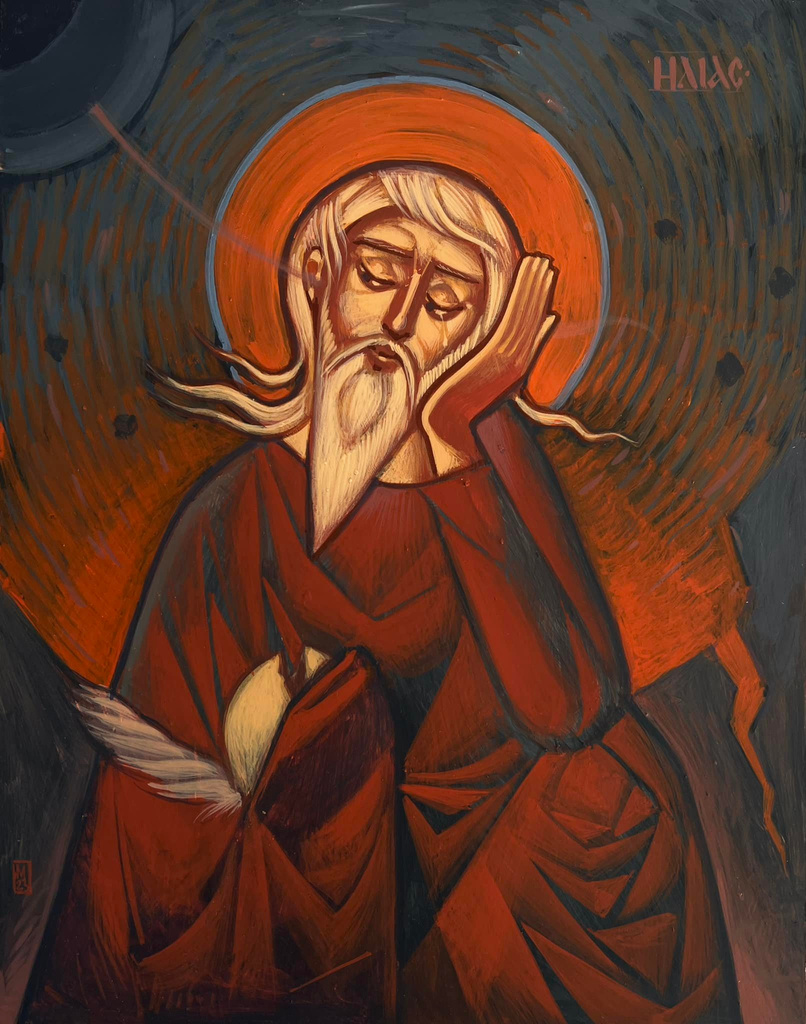
According to scripture, and in the eyes of God, there is a clear distinction between the person and the body. Identity is not related in any fashion to the body. Suppose an individual, John Doe, is a victim of a gruesome fire that severely burns him head to toe, yet his life is preserved. He may no longer be recognizable, yet is he no longer John Doe? An individual is not identified by their height, weight, race, facial features, and whatnot. There are merely characteristics of an individual, but it does not reach the intrinsic core of a person. It is unclear how our souls are identified, as it is immaterial, but nonetheless very real and evident much like love and peace are. We see this in scripture as Elijah prays on the dead child saying: “let this child’s soul come into him again…and the soul of the child came into him again, and he revived.” (1 Kings 17:21-22) Recall as well in James 2:26, “the body without the spirit is dead.” In other words, the separation of one’s spirit from one’s body results in physical death. Thus, there is a physical death, (spirit exits body,) and a spiritual death, (spirit separated from God due to sin.)
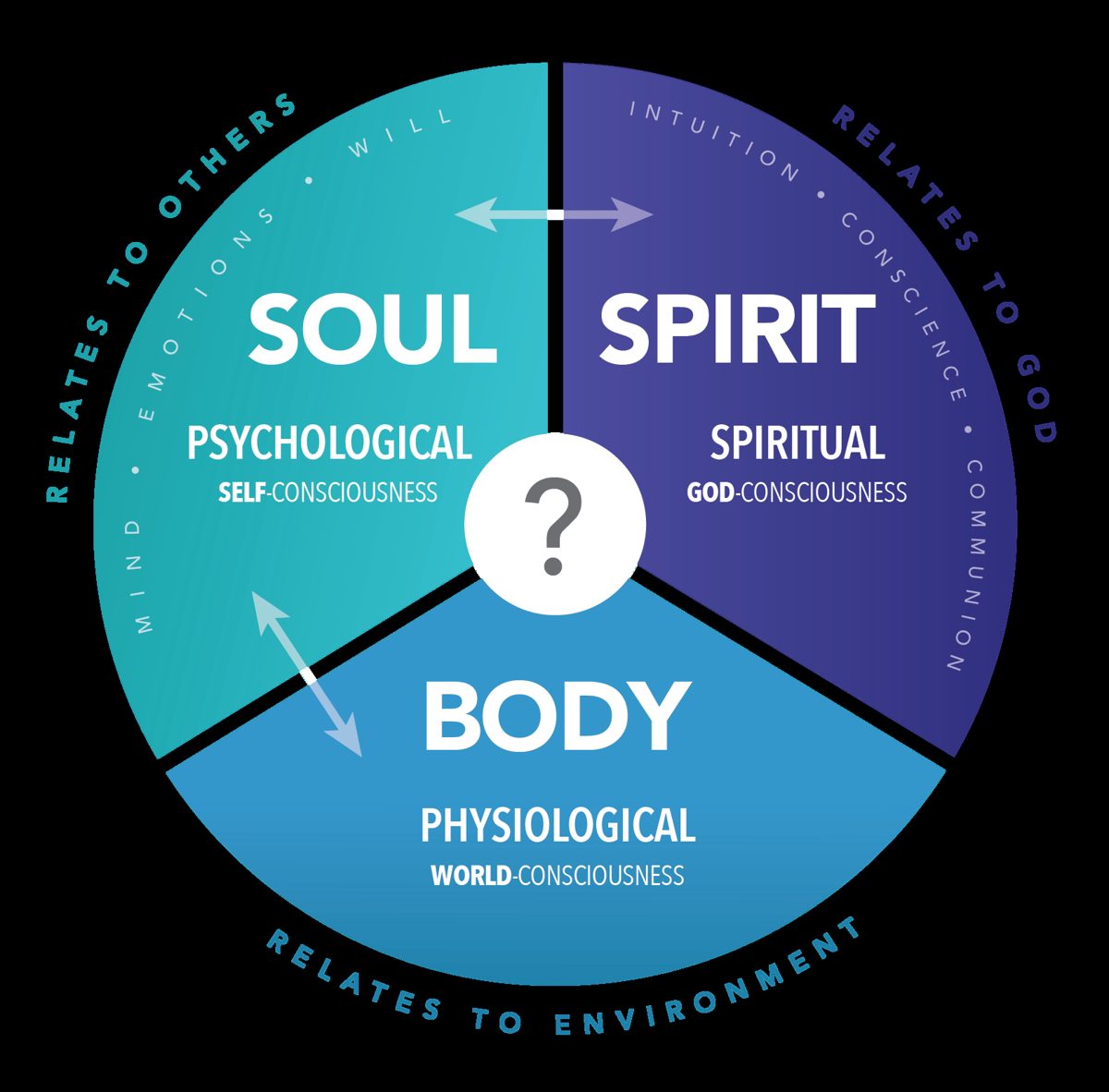
There is a differentiation between body, soul, and spirit. In 2017, scientists now doubt the interdependence of body and consciousness. While medically an individual is proclaimed dead after 15 minutes of no heartbeat, there has been sufficient evidence in the studies of Dr. Sam Parnia, to
suggest that life continues after physical death. In fact, in many situations, a person has been proclaimed physically dead, yet after their physical death, resuscitation was made possible. An assumption of separation between body and consciousness is thus made by Dr. Sam Parnia. Given that the primary premise of materialism is no longer true, and science does acknowledge a separation of body and consciousness, it does indeed, to the very least, leave the very plausible clause of a life after physical death. That is not to say that human beings are essentially immaterial souls, there is a mystical union of matter and spirit. Our spirit rises with a true spiritual body. Therefore, can the soul really survive death and live eternally?
Immortality of the Soul
There is an argument regarding the law of conservation of energy: the principle of the conservation of energy states that physical energy is never created or destroyed. If, to some degree, matter is immortal. Why not the immortality of the soul?
- Matter is Never Destroyed, Only Transformed:
- The Law of Conservation of Mass states that the total mass of a closed system remains constant, regardless of the changes that occur within the system.
- This means that matter can neither be created nor destroyed but can only be transformed from one form to another.
- For example, when wood burns, it undergoes a chemical reaction with oxygen to produce carbon dioxide, water, and heat. The total mass of the wood,
oxygen, carbon dioxide, water, and heat is the same before and after the reaction.
- It is More Likely that Spirit is Not Destroyed Than that Matter is Not:
- While matter is subject to the laws of physics and can be transformed from one form to another, the nature of spirit is less well-understood.
- Some people believe that spirit is a non-physical entity that exists beyond the material world and is not subject to the same laws as matter.
- If this is the case, then it is possible that spirit could exist even after the physical body has died.
- Therefore It is Very Likely that Spirit is Not Destroyed:
- The fact that matter is never destroyed, only transformed, suggests that spirit may also be indestructible.
- If the total amount of matter in the universe remains constant, then it stands to reason that the total amount of spirit in the universe also remains constant.
- This would mean that spirit cannot be destroyed, only transformed from one form to another.
Argument From Design
The existence of creation, with its intricate natural designs and apparent purpose, suggests that there is a greater meaning and goal to the cosmos. This purpose seems to culminate in the emergence of human consciousness, a unique and remarkable phenomenon. The very fact that we possess consciousness implies that it serves a purpose within the grand scheme of things.
However, if human consciousness were to end forever, with death being the ultimate conclusion, then this purpose would be rendered meaningless and in vain. The idea of a "cosmic abortion," where consciousness arises only to be extinguished eternally, poses a profound existential dilemma. It challenges our understanding of the inherent value and significance of consciousness itself.
Therefore, the logical conclusion is that consciousness does not simply cease to exist after death. Death may mark the end of our physical form, but it does not necessarily signify the end of our consciousness. The concept of an eternal afterlife, where consciousness continues in some form beyond our mortal existence, offers a more coherent and meaningful explanation for the emergence and purpose of human consciousness within the larger cosmic design. In this perspective, death is not the final word, and our consciousness transcends the limitations of our physical bodies.
Argument From Simplicity
If souls die, they must die either by decomposition or by annihilation. What is not composed cannot be decomposed. Whatever is composed of parts can be decomposed into its parts: a molecule into atoms, a cell into molecules, an organ into cells, a body into organs, a person into body and soul. What is not composed of parts cannot be taken apart. The soul is not composed of parts. It has no countable, quantifiable parts as the body does. You can cut a body in half but not a soul; you can't have half a soul. You do not cut an inch off your soul when you get a haircut. Therefore souls cannot decompose.
And nothing is annihilated as a whole. Therefore souls are not annihilated as a whole. Thus souls do not die either by decomposition or annihilation, and souls do not die.
Why Not Reincarnation?
Reincarnation and karma, while initially captivating, are riddled with deep intellectual flaws. Both Hinduism and Buddhism reject the idea of a personal creator and designer, which raises significant challenges for their accounts of karma and reincarnation.
Karma is often presented as the moral engine of reincarnation. It is a law that records and assesses moral actions and assigns corresponding results in future lives. However, for karma to function effectively, it requires moral knowledge and evaluation to ensure fair placement of an entity in its next life. Crucially, karma lacks these essential elements, as it operates impersonally, excluding moral knowledge and evaluation. This contradiction undermines the moral coherence of reincarnation, which depends on karma for its justification.
Another challenge arises from the vast scope of karma, which purports to administer moral results for all individuals across lifetimes. Such a comprehensive administration requires a powerful agent to bring about these results. However, karma is not depicted as an agent capable of administering rewards and punishments but rather as an automatic and impersonal system. This discrepancy casts doubt on the feasibility of karma's purported moral administration.
Non-dualistic Hinduism poses a further challenge to reincarnation and karma. This worldview denies the existence of finite, individual selves, asserting that all is one. Reincarnation and karma, however, require the existence of finite, individual selves for their operation. Given the non-dualistic perspective, the concepts of reincarnation and karma become untenable.
Buddhism, which teaches that humans are aggregations of changing parts and lack an enduring soul, also faces difficulties in upholding karma and rebirth. An enduring self is necessary to establish continuity between one lifetime and another, providing a foundation for karma to attach. Without an enduring self, Buddhism lacks a basis for affirming karma and rebirth, undermining one of its defining doctrines.
In conclusion, despite their initial allure, reincarnation and karma are undermined by substantial intellectual flaws. The absence of a personal creator and designer in Hinduism and Buddhism complicates their accounts of karma and reincarnation. The impersonal nature of karma, the lack of a powerful agent to administer moral results, the incompatibility with non-dualistic Hinduism, and the problematic notion of an enduring self in Buddhism all contribute to the intellectual challenges facing these concepts.