BIBL104 - Kings & Leaders
Introduction: Leadership When God Appears Silent
The Book of Esther presents one of the best biblical examples of God’s hidden work in history. Unlike many other books of Scripture, God’s name is never explicitly mentioned. Yet His presence governs every event. This silence is intentional. It teaches us that when God appears quiet, He is often working most powerfully behind the scenes.
At the heart of this story stands Mordecai, a man with no throne, no title, and no public authority, yet whose faithfulness became the means through which God preserved His people. Mordecai’s life reveals how God forms leaders not through power, but through obedience, humility, and steadfast faith.
Who is Mordecai?
Mordecai is introduced by carefully listing his lineage, reminding us that identity matters deeply in God’s economy. Mordecai is not an isolated individual; he belongs to a covenant people with a shared history of suffering, promise, and hope.
Before examining Mordecai’s actions, we must first understand who he is and where he comes from:
- Son of Jair, Son of Shimei, Son of Kish of the tribe of Benjamin
- 4th generation of the Jews who were taken captive by the Babylonians
- Captivity was about 48–70 years long, until Persia overtook Babylon under King Cyrus and let the Jews free
- Mordecai’s family decided not to go back to Jerusalem and stayed instead in the land of Persia and Media
These details are not incidental. Mordecai belongs to a generation that had grown up in exile. Although the opportunity to return to Jerusalem existed, his family remained behind. This decision caused many Jews who returned to look down upon those who stayed, often viewing them as spiritually inferior or compromised. In this sense, Mordecai lived as a rejected Jew, dwelling among foreign people, carrying both the pain of exile and the misunderstanding of his own community.
Service begins before the Spotlight
Scripture then draws our attention to Mordecai’s personal life, revealing that his leadership began not in public action, but in private faithfulness:
“And Mordecai had brought up Hadassah, that is, Esther, his uncle’s daughter, for she had neither father nor mother. The young woman was lovely and beautiful. When her father and mother died, Mordecai took her as his own daughter.” (Esther 2:7)
This verse reveals the heart of Mordecai. He did not simply care for Esther temporarily; he took her as his own daughter, assuming lifelong responsibility for her spiritual and emotional growth. Long before Esther would stand before a king, she was shaped by the faithfulness of a servant. He brought her up in the fear of the Lord.
Mordecai later convinced Esther to enter the king’s “beauty pageant.” This decision was not motivated by ambition or desire for status, but by spiritual discernment. Although neither Mordecai nor Esther could yet see God’s full plan, they acted faithfully with what they had been given.
God often prepares deliverance quietly, long before crisis arrives.
Faithfulness Without Immediate Reward
Mordecai’s service extended beyond his household into the public life of the kingdom:
“In those days, while Mordecai sat within the king’s gate, two of the king’s eunuchs, Bigthan and Teresh, doorkeepers, became furious and sought to lay hands on King Ahasuerus. So the matter became known to Mordecai, who told Queen Esther, and Esther informed the king in Mordecai’s name. And when an inquiry was made into the matter, it was confirmed, and both were hanged on a gallows; and it was written in the book of the chronicles in the presence of the king.” (Esther 2:21–23)
Through attentiveness and integrity, Mordecai uncovered a plot to assassinate the king. He immediately reported it through Esther, thereby saving the king’s life. The conspirators were executed, and the event was recorded in the royal chronicles.
Yet Mordecai received no reward.
This moment is critical. God allows Mordecai’s faithfulness to remain unrewarded for a time, teaching us that obedience is not always followed by immediate recognition. Heaven records what earth forgets.
Faithfulness Under Pressure
The crisis deepens when Mordecai refuses to bow before Haman:
“When “When Haman saw that Mordecai did not bow or pay him homage, Haman was filled with wrath. But he disdained to lay hands on Mordecai alone, for they had told him of the people of Mordecai. Instead, Haman sought to destroy all the Jews who were throughout the whole kingdom of Ahasuerus—the people of Mordecai.” (Esther 3:5–6)
At this point in history, the rise of new political powers often included the rise of new gods. Bowing was not merely political obedience; it was an act of worship. Mordecai’s refusal mirrors the faithfulness of the three youths in Babylon and Daniel in the lions’ den.
This temptation did not end in ancient times. Today, we are also pressured to bow:
- to work
- to school
- to stress
- to pressure
- to admiration from others
- to certain vices
Mordecai teaches us that faithfulness may come at great cost, but compromise always costs more.
Faithfulness Expressed in Action
Mordecai’s service unfolds through a series of faithful choices:
- He took care of his orphaned cousin
- He protected the king without requesting a reward or glory
- He refused to bow down to anybody but God
- He pleaded on behalf of the Jewish people to Esther
Each of these actions appears small on its own. Together, they reveal a life completely surrendered to God. Mordecai does not act impulsively or arrogantly; he responds to crisis with prayer, fasting, and trust in God’s providence.
True leadership is often exercised quietly, consistently, and without applause.
Sweating the Small Stuff
Unlike many other books of Scripture, Esther does not explicitly mention God’s name. This section of the story teaches us to pay attention to what may seem insignificant or coincidental. What appears small, delayed, or forgotten in human eyes is often central in God’s plan.
The sequence unfolds carefully and deliberately:
- Haman’s pride is injured because Mordecai wouldn’t bow
- A decree is written to destroy all the Jews
- Mordecai can’t sleep
- The king can’t sleep
- The history books are read
- They find the record of Mordecai’s faithfulness
- The king cannot rest until Mordecai is rewarded
Each step builds upon the previous one. Haman’s wounded pride escalates into genocidal hatred. Mordecai’s faithfulness, which once seemed to bring only danger, now becomes the very reason God intervenes. The king’s sleeplessness, an event that appears trivial, becomes a turning point of the Israelites.
There is an irony that the king’s conscience is awakened not by divine vision, but by a simple reading of forgotten records. What humans forgot, God preserved. What was unrewarded, God refused to leave unresolved.
Remember who this king truly was:
- He partied for 180 days
- He removed his queen in anger
- He lived for pleasure and pride
This contrast is stark. If even such a king, who is morally unstable, self-indulgent, and impulsive, cannot rest until justice is done for a faithful servant, how much more will God remember His faithful servants?
God Has a Sense of Humor: Esther 6
In Esther 6, God’s justice is revealed through irony rather than force. At this point in the story, the plans of heaven and the plans of evil collide:
- Haman plans Mordecai’s execution
- The king plans Mordecai’s honor
- Haman designs the honor thinking it is for himself
- The king commands him to give it to Mordecai
The irony is complete.
Pride Exposed, Faithfulness Vindicated
Driven by pride, Haman cannot imagine honor being granted to anyone but himself. When the king asks:
“What shall be done for the man whom the king delights to honor?” (Esther 6:6, NKJV)
Haman’s heart answers before his lips ever do.
“Now Haman thought in his heart, ‘Whom would the king delight to honor more than me?’” (Esther 6:6, NKJV)
What follows is the full exposure of Haman’s inner world. He does not suggest an act of service, charity, or humility. Instead, he describes royal imitation, such as robes, crown, horse, public proclamation, everything that mirrors kingship itself:
“For the man whom the king delights to honor, let a royal robe be brought which the king has worn, and a horse on which the king has ridden… Then let this robe and horse be delivered to the hand of one of the king’s most noble princes, that he may array the man whom the king delights to honor. Then parade him on horseback through the city square, and proclaim before him: ‘Thus shall it be done to the man whom the king delights to honor!’” (Esther 6:7–9, NKJV)
Haman’s proposal reveals his deepest desire. Not to serve the king, but to be seen as equal to the king. Pride always reaches for glory it has not been given.
Divine Reversal
Then comes the turning point—the sentence that collapses Haman’s world:
“Then the king said to Haman, ‘Hurry, take the robe and the horse, as you have suggested, and do so for Mordecai the Jew… Leave nothing undone of all that you have spoken.’” (Esther 6:10, NKJV)
The persecutor becomes the herald. The schemer becomes the servant. The proud man must publicly exalt the one he intended to destroy.
“So Haman took the robe and the horse, arrayed Mordecai and led him on horseback through the city square, and proclaimed before him…” (Esther 6:11, NKJV)
God does not merely stop injustice—He inverts it.
This moment reveals something essential about God’s dealings with His faithful servants. God’s care for Mordecai reaches a point where it must overflow into public vindication. Justice delayed is not justice denied; it is justice perfected in God’s timing.
The honor intended—by pride—for the persecutor is given instead to the faithful servant.
What unfolds silently in Esther 6 is later spoken plainly by Christ Himself:
“For whoever exalts himself will be humbled, and he who humbles himself will be exalted.” (Luke 14:11, NKJV)
And again:
“Whoever exalts himself will be humbled, and whoever humbles himself will be exalted.” (Matthew 23:12, NKJV)
Mordecai never asked for honor. He never demanded recognition. He simply remained faithful.
Haman grasped at glory—and lost everything.
The Kingdom of Persia
The Book of Esther unfolds entirely within the Kingdom of Persia. Persia represents a worldly kingdom driven by pleasure, power, image, and pride. By observing the king and his officials, we gain insight into the character of the ruler shaping the culture beneath him.
Haman emerges as the embodiment of this kingdom:
- hungry for wealth
- desperate for recognition
- demanding submission
Haman’s obsession with honor and control reflects the values of the world he inhabits. He cannot tolerate refusal, humility, or resistance but is always seeking glory that does not belong to him.
In contrast, Mordecai stands as a quiet witness to righteousness:
- refusing compromise
- resisting temptation
- remaining faithful despite danger
This reveals two opposing kingdoms: one built on pride and domination, the other on faithfulness and obedience. The same contrast exists today. We still live in worldly systems that demand our allegiance, our compromise, and our worship.
The question remains timeless: Who will we bow to?
Mordecai as a Symbol of Christ
The Rejected Savior
Through the book of Esther, Mordecai becomes a powerful foreshadowing of Christ Himself, revealing how God saves through rejection rather than acceptance, humility rather than power.
Mordecai reflects this pattern clearly:
- rejected by his people
- persecuted by evil
- humbled in sackcloth
- honored through suffering
- victorious through the instrument meant to destroy him
Mordecai’s humiliation precedes his exaltation, just as Christ’s suffering precedes His glory. Mordecai is raised up through the very gallows prepared for his death. Likewise, Christ defeats the devil through the Cross raised to destroy Him.
This pattern is central to God’s redemptive work: what evil intends for destruction, God transforms into victory.
The Rejected Stone Becomes the Chief Cornerstone
God often chooses what the world rejects in order to accomplish salvation.
God uses:
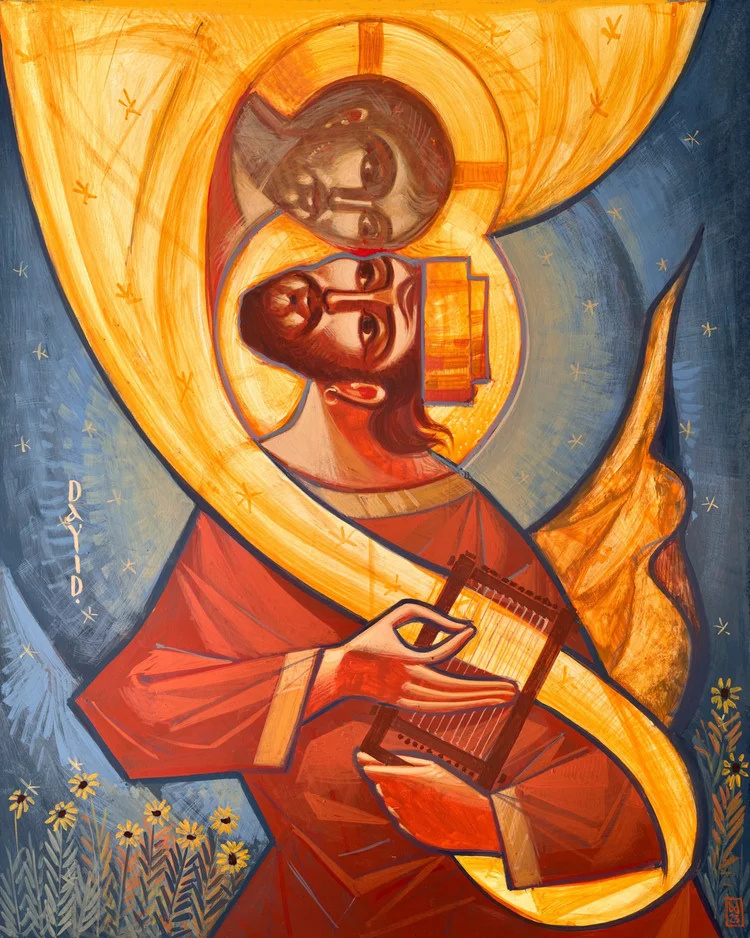
- David, overlooked and too young
- Joseph, betrayed and imprisoned
- Moses, hidden and exiled
- the fishermen, uneducated and dismissed
- Mordecai, rejected and overlooked
Through these servants, God demonstrates that true worth is not defined by human approval. Mordecai receives royal honor not because he sought it, but because he was faithful without it.
In the same way, God bestows royalty upon us—not because we deserve it, but because He adopts us as His children. As heirs of the King, we are called to live with faithfulness, humility, and courage.
One day, God will honor His faithful servants before all heaven. Until then, Mordecai’s life teaches us to remain steadfast, trusting that God sees, God remembers, and God rewards.