Divine Providence and Theodicy
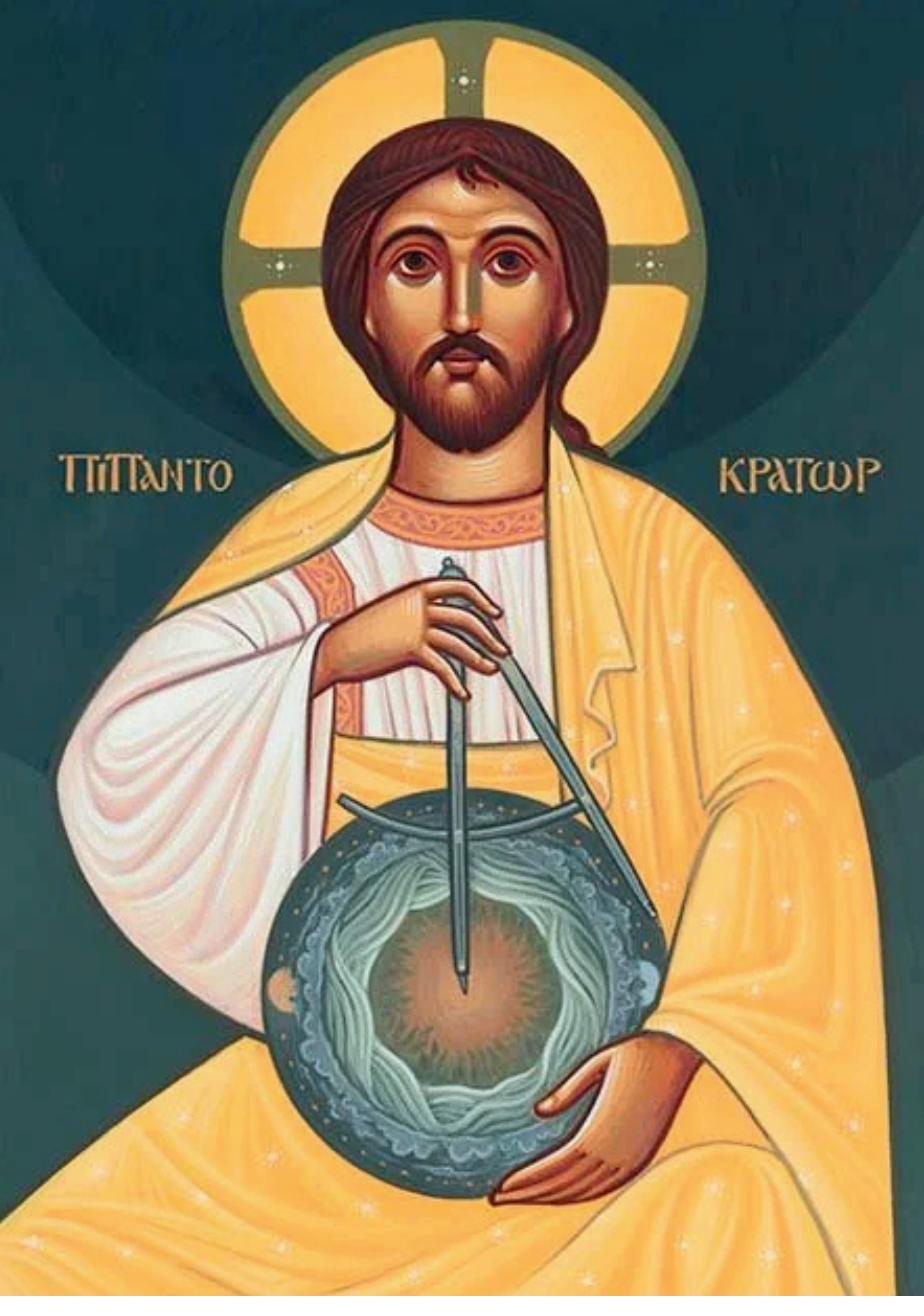
God actively cares for, guides, and oversees the world He created. He, in His love for His creation, provides. This is Divine Providence, which teaches us that God is not distant from human life, nor is He uninvolved in what happens to us. Instead, God is present, attentive, and working wisely, even when His work is not immediately visible.
To understand divine providence, it helps to begin with how God acts in real human situations, not with abstract ideas. One clear example is Christ’s encounter with the woman caught in adultery (John 8:1–11). This was a moment filled with danger, injustice, fear, and human cruelty. The woman was surrounded by accusers and faced certain death according to the law as it was being used against her.
Christ’s response shows divine providence in action. He does not react impulsively. He does not deny justice, nor does He abandon mercy. Through wisdom, silence, and authority, He guides the situation toward repentance and life rather than condemnation and death. The outcome is not accidental. It is the result of God’s wise and deliberate involvement in a human crisis.
This example helps us understand an important truth: divine providence is not simply about God controlling events from a distance. It is about God guiding situations toward what leads to life, even when circumstances seem chaotic or unjust.
Once we see providence at work in concrete situations, deeper questions naturally arise. People often ask:
- If God is guiding the world, how do our choices still matter?
- If God is good, why does He allow suffering and injustice?
- If God already knows everything, does prayer truly make a difference?
These questions are not signs of weak faith. They are honest questions that arise from real life. Divine providence does not ignore these questions, nor does it give shallow answers. Instead, it teaches us how to live faithfully while holding together two truths at the same time: God is in control, and human responsibility is real.
The Church therefore teaches divine providence in a balanced way. God does not force human beings to do good, nor does He abandon the world to chance. He governs wisely, patiently, and lovingly, working even through human weakness and failure, without becoming the cause of evil Himself.
At its core, divine providence answers a very practical question: How should we live, knowing that God is present and active, even when we do not fully
understand what He is doing?
Is God in Control?
After understanding that God is actively involved in human life, a natural question follows: Is God in control of everything? This question matters because it shapes how we understand responsibility, suffering, prayer, and trust.
Many people imagine God’s control in an extreme way. They picture God directing every moment like a pilot steering an airplane, controlling every turn, every movement, and every outcome. If this were true, human freedom would be only an illusion, and personal responsibility would have little meaning.
One helpful distinction is between sustaining and micromanaging. God is the Sustainer of creation. He upholds existence itself and preserves the order of the world He created. At the same time, God has granted human beings real freedom and responsibility within that created order.
God is truly in control, but His control is not the same as constant interference. God created the world with order, purpose, and structure, and He continues to sustain it at every moment. Nothing exists apart from Him. At the same time, God has given human beings real freedom. Our choices are not imaginary. They shape our lives and affect others in serious ways.
This relationship can be described through analogy. God is like a perfect engineer who designs and sustains a system with wisdom and purpose. Human beings operate within that system, making real choices that can either align with or deviate from the Creator’s design. When we live according to God’s design, life grows healthier and more ordered. When we reject it, confusion and harm follow, not because God has lost control, but because freedom has been misused.
This explains why consequences exist. If a person repeatedly makes harmful choices, the damage that follows is not proof that God is absent. It is proof that freedom is real. God allows human beings to experience the weight of their choices, while still remaining present and able to guide, correct, and restore.
Several important clarifications help prevent misunderstanding:
- God’s control does not mean He approves of everything that happens
- Human freedom does not mean life is random or outside God’s care
- God remains able to bring good even out of human failure
Divine providence teaches that God governs wisely, not forcefully. He does not remove freedom in order to prevent every mistake. Instead, He patiently works within history and human lives, guiding all things toward what leads to life.
This understanding protects us from two dangers. It protects us from blaming God for evil, and it protects us from believing that everything depends entirely on us. God is in control, yet our choices matter. Both truths stand together.
God’s Guidance, Prayer, and Our Response
If God is present and involved in our lives, then prayer naturally becomes important. Prayer is not a way to give God information He does not have, and it is not a method for forcing God to do what we want. Instead, prayer is how we learn to listen, to trust, and to respond to God’s guidance.
God knows our needs before we speak, yet He still calls us to pray. This shows that prayer is not mainly about changing God, but about changing us. Through prayer, our hearts become more open to God’s wisdom, and our choices become more aligned with His will.
Scripture expresses this relationship clearly:
“In all your ways acknowledge Him, And He shall direct your paths.” (Proverbs 3:6, NKJV)
This verse does not promise that life will be easy or free of difficulty. It promises direction. Acknowledging God means seeking Him before acting, trusting Him during uncertainty, and returning to Him when we fall.
When prayer is neglected, life does not suddenly stop working. People may continue their routines and responsibilities. However, over time, life becomes disconnected from its deeper purpose. Confusion increases, peace decreases, and decisions are made without spiritual clarity. This does not happen because God has withdrawn His care, but because the person has stopped listening.
It is important to clarify what prayer does and does not do:
- Prayer does not force God to change His plan
- Prayer does not remove human responsibility
- Prayer does not guarantee immediate solutions
At the same time:
- Prayer opens the heart to God’s guidance
- Prayer strengthens us to endure what we cannot change
- Prayer helps us recognize when God is calling us to act
God’s providence does not depend on human prayer in order to function. God is always at work. Yet God chooses to involve us in what He is doing. When we pray, repent, and seek His will, we become willing participants in His guidance rather than resistant ones.
Divine providence, then, is not fate. It is a living relationship. God guides, and we respond. God calls, and we choose whether to listen. Prayer is where this relationship becomes real in daily life.
St. Augustine Regarding the Wholehearted Confession
Trust in divine providence is most severely tested in the presence of suffering. St. Augustine addresses this challenge by linking faith in providence with wholehearted confession. To doubt God’s providence in particular circumstances is, for Augustine, to hold a divided heart.
“Whoever entertains doubts about God's providence in any particular way does not confess to God with a whole heart. Wholehearted confession is, rather, the mark of the person who already discerns the hidden things of the wisdom of God, and how great is His invisible reward, the person who says, 'We even rejoice in our sufferings.' Such people understand that all the hardships that are imposed on the body either offer training to those who have turned to God, or warn them to turn or else prepare the stubborn for the final and just judgment; and so they see that all things that the foolish think happen somehow by chance and at random, without any divine direction, are to be referred to the guidance of divine providence.” St. Augustine
St. Augustine teaches that those who truly trust in God’s providence learn to interpret suffering within a larger framework of divine wisdom. He echoes the apostolic teaching:
“We even rejoice in our sufferings.” (Romans 5:3, NKJV)
This rejoicing does not deny pain or trivialize loss. Rather, it expresses confidence that suffering is not meaningless. St. Augustine explains that hardships serve different purposes depending on the spiritual condition of the person:
- For the faithful, suffering may function as spiritual discipline
- For the wavering, it may serve as a call to repentance
- For the stubborn, it may prepare for just judgment
In every case, he insists that events are not governed by chance. What appears random to human perception is, in fact, ordered within divine providence, even when its purpose remains hidden.
A vivid illustration of this trust is the priest who must proclaim the resurrection while grieving the loss of his own child. Such an act does not erase grief, but it anchors grief in hope. The doctrine of providence moves from theory to lived confession in precisely these moments.
Divine providence, therefore, does not promise the absence of suffering. It promises that suffering is never outside God’s wise governance. This conviction forms endurance, humility, and hope, and it guards believers from both despair and accusation against God.
God or Chance?
If God is sovereign, is anything by chance? What about coincidences? The Gospel's answer is unmistakable: God is passionately involved in the details of our lives.
“Are not two sparrows sold for a copper coin? And not one of them falls to the ground apart from your Father's will. But the very hairs of your head are all numbered. Do not fear therefore; you are of more value than many sparrows.” Matthew 10:29-31, NKJV
A second passage drives the point still deeper. When the collectors of the temple tax approached Peter, the Lord anticipated the need even before Peter spoke of it, and He ordered a detail so small and so specific that it could only belong to the realm of providence:
“Nevertheless, lest we offend them, go to the sea, cast in a hook, and take the fish that comes up first. And when you have opened its mouth, you will find a piece of money; take that and give it to them for Me and you.” Matthew 17:27, NKJV
Nothing is by chance. All things have reason. We must not reduce events that appear to be luck to mere accident without recognizing divine purpose or future implications. Consider a person who walks along and notices a hundred-dollar bill on the ground. To one mind, this is only luck. To one who has the word of God ingrained in his heart, this finding comes with purpose - perhaps to return it to its rightful owner, perhaps to give it to the Church, perhaps to support someone in need. Or consider a more common occurrence: a person sees an accident and thinks, 'Thank God, I am so fortunate, while that person is so unfortunate.' Yet perhaps the Lord is calling that witness to be a good Samaritan.
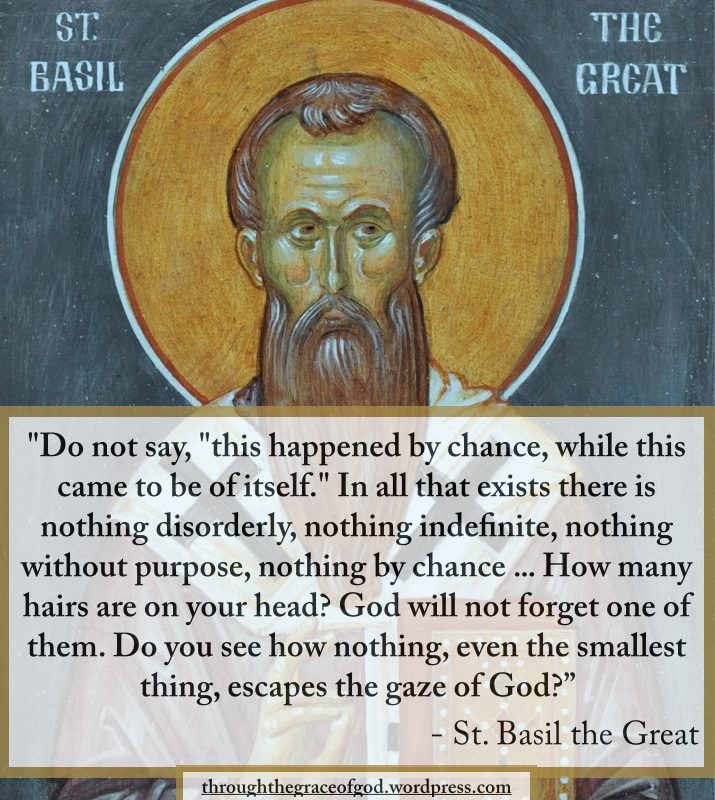
Divine providence does not erase chance by denying human freedom; it shows that what human beings call chance is in fact woven into a divine purpose. The belief in providence does not flatten the mystery of our existence. It invites us to discern God's presence in everyday experiences and to respond with faith, compassion, and a sense of purpose. Each detail of our lives — the interruption, the encounter, the lost item found, the unexpected call — may be the very place where God is at work.
Cause of Evil/ Tribulations
There are three causes for the afflictions we meet on earth: ourselves, God, and the devil. There is a story that is said of the Desert Fathers, regarding how not to blame the devil for everything that happens. A novice monk during the Great Fast was bound by the rule to keep the fast, but he decided instead to break it by boiling an egg in secret. He hid in his cell, took a candle and an egg, placed the egg on a spoon, and held it over the flame to cook it so that no one would notice. At that very moment another monk passed by, saw him through the window, and entered the cell to speak with him. Caught in the act, the novice reflexively claimed the devil had made him do it.
The story says that the devil himself then appeared to both monks and declared, 'I am innocent of this sin. I am actually standing here learning from him, so that I may tempt other monks in the same way, that they too may fall during the Great Fast.' The moral is clear: we cannot always blame the devil or our circumstances. Each person makes his own decisions, and we are responsible for our own choices. If we cannot shift blame to others, we must acknowledge and own our faults.
This tripartite understanding of causality gives us a framework for interpreting events and actions within a spiritual context. It acknowledges both divine and demonic influences while emphasizing the central role of human free will.
- Us — the significance of personal agency and the capacity to make choices that either align with or deviate from the life of grace. •God — the divine presence and the possibility of guidance, consolation, and correction in human life. •The Devil — the reality of temptation and the existence of forces that seek to lead souls astray.
Every effect follows from a previous action. Lung cancer is most often caused by smoking. Unhealthy diets lead to heart disease and diabetes. The most common cause of liver cirrhosis is alcohol consumption. Environmental hazards spring from reckless behavior. These consequences happen because of disordered choices, and our bad choices help the enemy's warfare against us without him having to work very hard. Other calamities, however, may simply be tests of faith.
“For You have given us the authority to tread on serpents and scorpions and upon all the power of the enemy.” Prayer of Thanksgiving (cf. Luke 10:19, NKJV)
This powerful petition is an antidote to every pain and affliction we may encounter, whether instigated by the enemy's envy or permitted by God as a summons to return. If we turn to God in such moments, we will endure and overcome.
St Basil says “it is impious to say that evil has its origin from God, because nothing contrary is produced by the contrary. Life does not generate death, nor is darkness the beginning of light, nor is disease the maker of health … Accordingly, they say, if it is not uncreated, nor created by God, whence does it have its nature? No one who is in this world will deny that evil exists. What, then, do we say? That evil is not a living and animated substance, but a condition of the soul which is opposed to virtue and which springs up in the slothful because of their falling away from good.”…Evil is not a living and animated substance, but a condition of the soul which is opposed to virtue. (St Basil the Great – Hexaemeron, Homily 2:4-5)
Did God Create Evil?
Having seen that we must take honest stock of our own responsibility, the next question demands an answer: what, then, is evil, and where does it come from?
God does not interfere with our abuses of the freedom He has given us. He has granted us the ability to choose between what is of Him, and therefore good, and what is not of Him, and therefore evil. Evil is real. Suffering is real. Death is real. These are all part of the world in which we live. We do not yet dwell in the Kingdom of Heaven in its fullness; we live in a world where evil, sin, and death are a regular part of our experience.
The Church, through St. Basil the Great, teaches a doctrine that protects us from two errors at once — blaming God for evil, and imagining evil as a rival creation standing over against Him.
“It is impious to say that evil has its origin from God, because nothing contrary is produced by the contrary. Life does not generate death, nor is darkness the beginning of light, nor is disease the maker of health... No one who is in this world will deny that evil exists. What, then, do we say? That evil is not a living and animated substance, but a condition of the soul which is opposed to virtue and which springs up in the slothful because of their falling away from good.” St. Basil the Great — Hexaemeron, Homily 2:4-5
St. Basil's distinction is one of the most important safeguards in Orthodox teaching. Evil is not a thing. It is not a substance that God created and then released into the world. Evil has no independent existence of its own. It is a condition, a privation, a turning away. It arises where creatures who were made for the good withdraw themselves from the good. Darkness is not a thing that fights light; darkness is the absence of light. So too evil, as the Fathers teach, is not a creation standing beside God's creation; it is the distortion and disfigurement of what God made good.
This teaching shields us from despair. If evil were a substance, it could in principle be stronger than God. But evil has no being apart from the wills it corrupts. It depends on the good it parasitizes, and it has no independent force. This is why the Resurrection of Christ is the definitive answer to evil: evil has no foothold in the risen Lord, and therefore it has no final word over those who are in Him.
It also shields us from a second error: blaming God. If evil is a condition of the soul springing up through the misuse of freedom, then God is not its author. He creates freedom; He does not create the corrupt uses of freedom. Evil enters the world where the soul falls away from the good. God remains the source only of good, and even within the world that has been wounded by evil, He continues to work toward the restoration of all things.
Evil, suffering, and death are undeniable realities of the human experience. They are not illusions or figments of our imagination. They are stark reminders of the fallen nature of a world marred by sin and its consequences. We are called to acknowledge the existence of evil and suffering not as a cause for despair, but as a call to action. We are summoned to confront evil, to alleviate suffering, and to bring hope to a world often shrouded in darkness — to be agents of God's love, beacons of light in a world often consumed by shadows.
While we may not fully understand the reasons for the existence of evil and suffering, we can trust in God's ultimate plan for redemption and restoration. We can have faith that even in the midst of darkness, His light continues to shine, and we can hold onto the hope that one day evil will be vanquished, suffering eradicated, and death defeated. Until that day, we must continue to strive for a world that reflects God's love, justice, and mercy — choosing good over evil, love over hate, hope over despair. We are not citizens of this world alone; we are also citizens of the Kingdom of Heaven, called to live as such even now.
Providence and Freedom
God saves only the willing. This is one of the most important phrases in Orthodox soteriology, and it clarifies the relationship between divine providence and human freedom. Providence does not override the will; it cooperates with it. To save the unwilling would be an act of compulsion — and God does not compel the soul. To save the willing, however, is the act of One who shows grace.
St. Clement of Alexandria expresses this with a striking image: God provides a fairer wind for more willing souls. The sail is set by the soul; the wind is given by God. And if the soul abandons its eagerness early, the wind which God provides is thereby obstructed. The wind still blows, but the sail no longer catches it. We may picture humanity as a child seeking to hold his Father's hand in the midst of adversity, the Father's hand is outstretched, but the child must reach out in turn. This is the very heart of the Proverb:
“In all your ways acknowledge Him, and He shall direct your paths.” Proverbs 3:6, NKJV
St. Anthony the Great distilled the synergy of human effort and divine grace into a brief and powerful rule. To those who desired salvation, he counseled three things:
- Always have God before the mind — a constant remembrance of God that permeates every aspect of life and fosters unbroken spiritual awareness.
- Do all things according to the Scriptures — grounding every action and decision in the revealed Word of God rather than in the shifting impulses of the heart.
- Wherever you are, do not leave that place easily — steadfastness and perseverance, resisting the restless movement of the soul that wants to escape the work of repentance.
These three counsels, practiced in tandem, create fertile ground for grace to operate. They are the human response to God's initiative of love and mercy. Salvation, then, is not the passive reception of divine favor; it is an active participation in God's redemptive work.
On Worry and Providence
St. John Chrysostom returns to the theme of providence in his commentary on the teaching of our Lord concerning worry. He takes the Lord's simple analogy — can anyone, by worrying, add a single cubit to his stature? — and draws out its far-reaching implication for the life of prayer and labor.
“Do you see how Jesus clarifies what has been obscure by comparing it to what is obvious? Can you add one cubit, or even the slightest measure, to your physical lifespan by worrying about it? By being anxious about possessions can you add one moment to your life? And so it is clear that it is not our diligence but the providence of God, even where we seem to be active, that ultimately accomplishes everything. In the
light of God's providence, none of our cares, or anxieties, or toils — or any other such things — will ever come to anything, but all will utterly pass away.” St. John Chrysostom — Homily 21.3
Even in areas where we perceive ourselves to be actively in control, it is ultimately God's plan that prevails. Our efforts, while important, are not the sole determinants of outcomes. This understanding should lead us to a place of surrender and trust in God's wisdom and timing. Our worries, anxieties, and tireless efforts, when viewed through the lens of providence, are seen as fleeting and ultimately inconsequential — like dust in the wind.
This is not a call to passivity or inaction. Rather, it is a call to a shift in perspective. We are summoned to act with diligence and faith, but also to relinquish the need for control and to surrender our anxieties to God.
Similarly, St. Augustine, in his treatise on the two cities, describes how the devil, the prince of the impious city, stirs up his own instruments against the City of God that sojourns in this world — and yet, providence will not allow any lasting harm.
“And thus the devil, the prince of the impious city, when he stirs up his own vessels against the city of God that sojourns in this world, is permitted to do her no harm. For without doubt the divine providence procures for her both consolation through prosperity, that she may not be broken by adversity, and trial through adversity, that she may not be corrupted by prosperity; and thus each is tempered by the other, as we recognize in the Psalms that voice which arises from no other cause, 'According to the multitude of my griefs in my heart, Thy consolations have delighted my soul.' Hence also is that saying of the apostle, 'Rejoicing in hope, patient in tribulation.'” St. Augustine — City of God 18.51
What appears accidental is rarely accidental; what feels meaningless rarely is. The Church calls us to shape our lives in light of this truth, cultivating the virtues that correspond to providence: faith that God is at work, hope that He is working toward our good, and love that answers His governance with grateful obedience. In this threefold life we find the peace that the world cannot give — the peace of those who know themselves to be held, in every circumstance, by a loving and all-powerful God.
God’s Providence is Marvelous
St. John Chrysostom, in contemplating the providence of God in the life of Sarah before Pharaoh, is moved to wonder — a wonder that invites us to see how God acts especially where human strength has run out.
“What imagination could adequately conceive amazement at these events? What tongue could manage to express this amazement? A woman dazzling in her beauty is closeted with an Egyptian partner, who is king and tyrant, of such frenzy and incontinent disposition, and yet she leaves his presence untouched, with her peerless chastity intact. Such, you see, God's providence is always marvelous, and surprising.
Whenever things are given up as hopeless by human beings, then He personally gives evidence of His invincible power in every circumstance.” St. John Chrysostom
The situation, humanly speaking, appeared hopeless. Yet it is precisely when human efforts and expectations falter that divine providence reveals its fullest strength. His reflection is a reminder that God's ways are not our ways, that His plans transcend our limited understanding, and that the moments in which we feel most powerless are often the very moments in which He is most gloriously at work.