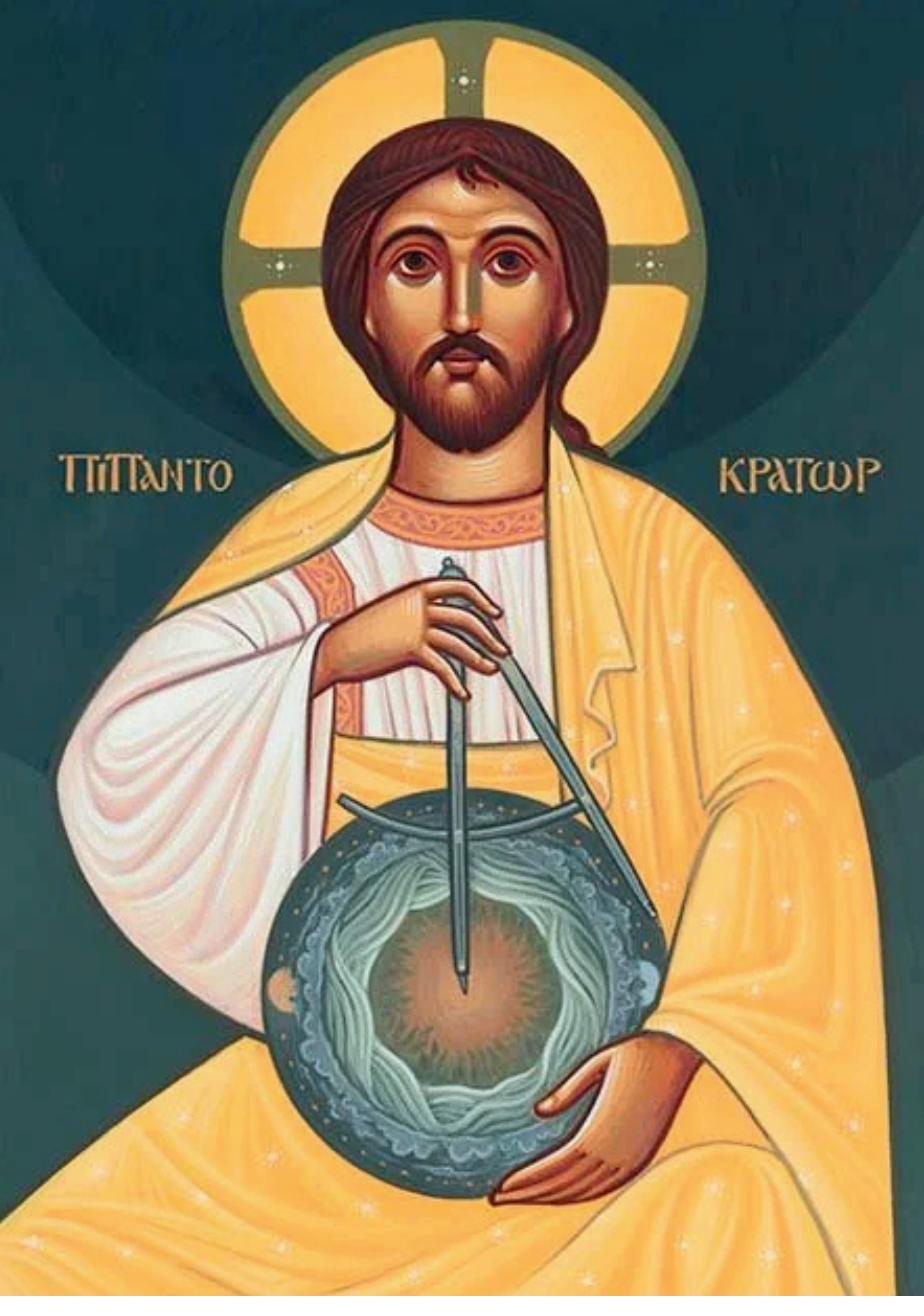
Christology is the heart of Christian confession, and in the Coptic Orthodox tradition no name guards that heart more faithfully than St. Cyril of Alexandria, who taught the Church to confess 'the One Nature of the Incarnate Logos.' This lesson examines what that phrase does — and does not — mean, distinguishing the Orthodox hypostatic union from every mixture, fusion, or division of persons. From this foundation we turn to grace: the undeserved favor of God that flows from the Incarnation and reaches into every corner of the Christian life. We consider how the Fathers defined grace, how the Pelagian error denied our need for it, how grace is prefigured in the Old Covenant and fulfilled in Christ, how it works within us to will and to do, and how the sacraments of the Church become the very vessels through which grace is administered. We also consider the gifts of grace — prayer, faith, the indwelling Spirit, seasoned speech, the mind of Christ, strength over the passions, authority over evil — and, soberly, the possibility that grace may be withdrawn from those who persistently refuse to cooperate with it. Christology and grace are not two doctrines but one: the Word became flesh so that what belongs to Him by nature might become ours by grace.
The One Nature of the Incarnate Logos
St. Cyril of Alexandria's profound declaration — 'The One Nature of the Incarnate Logos' — is the cornerstone of our Christological confession. The phrase has been repeated through the centuries, but it has also been misread, both by those who oppose it and by those who have not been properly taught its meaning. Because so much hangs on reading St. Cyril rightly, the Church has always insisted that the phrase be received with the utmost precision.
By 'One Nature,' St. Cyril does not mean that the divine and human natures are mixed into a new, third nature. Each nature retains its distinct properties and essence: the divine remains eternal, uncreated, and possessing all the attributes of God; the human remains finite, created, and possessing all the attributes of humanity, except for sin. The union does not produce a hybrid. It does not turn divinity into humanity, nor humanity into divinity. It does not result in a tertium quid — some third thing neither God nor man.
Neither does 'One Nature' mean a union of two persons. The Incarnation did not bring together two subjects side by side, as if Christ were a divine person keeping company with a human person. There is one subject in Christ — one Person, one Hypostasis. The term 'hypostasis' is central here. It refers to the concrete, individual existence of a being. In Christ there is one Hypostasis, one Person, who fully possesses both natures. This is the mystery the Church calls the Hypostatic Union.
St. Cyril himself guarded this with the analogy of iron in fire: there is no mixing or mingling of the natures themselves, as though they ceased to be what they are, but there is a communion of properties. The iron retains its nature; the fire retains its nature. Yet when the iron is set in the fire, the iron truly burns and the fire is truly borne by the iron. So it is with Christ: the humanity truly bears the actions of God, and the divinity is truly present in every human act, yet without confusion of natures.
The Actions and Sayings of Christ
One of the most important practical consequences of the hypostatic union concerns how we read the Gospels. Every action and every saying of Christ must be attributed to the one Person of our Lord Jesus Christ — not to one nature in isolation. The Orthodox Church refuses to dissect Christ into moments that belong only to the divine or only to the human.
His miracles are not merely displays of divine power with no human reference; they are the acts of the one Person, Jesus Christ, who is both fully God and fully Man. His teachings are not merely the wisdom of a human sage; they are the words of the one Person, the divine Logos, the Word of God who has taken flesh. His suffering and death are not merely human experiences to be pitied; they are the redemptive acts of the one Person who is at once God and Man, and who offered Himself as a sacrifice for the sins of the world.
This unity of attribution has far-reaching consequences for our salvation. When we confess that God suffered in the flesh, we do not mean that the divine nature was altered in its eternal being; we mean that the one Person who bore our flesh truly bore our suffering, and therefore our suffering has been taken up into the life of God. When we say that Christ died for us, we confess not that a human being died while a divine being looked on, but that the one Person who is the Word made flesh entered into death itself and trampled it.
The blessing of this mystery reaches to us. The Incarnation opens to humanity the possibility of being united to God and restoring the image and likeness through grace. This is what St. Peter means when he writes:
“By which have been given to us exceedingly great and precious promises, that through these you may be partakers of the divine nature, having escaped the corruption that is in the world through lust.” 2 Peter 1:4, NKJV
Why Christology Matters
St. Cyril of Alexandria treats the importance of Christology at great length in his Commentary on the Gospel of St. John. Why does it matter? Because it answers the question of what went wrong with humanity and how God has answered.
“But when he was led astray by the deception of the devil, he despised the creator. He trampled on the law that was marked out for him and grieved his benefactor. The benefactor took back the grace that was given to him. When, for the first time, the one who came to life heard, 'Earth you are, and to earth you will return,' the likeness to God was then marked with a false stamp through the sin that rushed in, and the engraving was no longer distinct. It became more obscure in him, so to speak, and darkened by the transgression. When the human race reached a great multitude and sin ruled over all of them, it thoroughly plundered the soul of each one, and nature was stripped of the original grace. The Spirit also departed completely, and the rational creature fell into utter irrationality, not even recognizing the creator himself.” St. Cyril of Alexandria — Commentary on the Gospel of St. John, Vol. 1, pp. 81-82
This is the condition St. Cyril describes: the likeness of God stamped with a false image, nature stripped of its original grace, the Spirit departed, and rational creatures fallen into irrationality so deep they no longer recognize the Creator. Into this ruin the Incarnation enters — not as a philosophical adjustment but as a restoration of nature at its very source.
“Justly marvel at the incomparable mercy of the divine nature toward us, which graces those whom he has made with what belongs to him and shares with his creatures what belongs to himself alone.” St. Cyril of Alexandria — Commentary on the Gospel of St. John, Vol. 2, p. 307
The Incarnation is therefore the pivotal act of divine restoration. Through Christ the divine image within humanity is renewed, not merely returned to an original state but elevated to a higher communion with God. The theme that runs through the whole of St. Cyril's teaching is that through the redemptive work of Christ, we are granted the opportunity to participate in the divine nature. This is the ultimate goal of human existence. Christology is therefore never a mere academic discipline. It is the dynamic truth that shapes our understanding of God, humanity, and the purpose of our being.
What Is Grace?
Grace is best defined, in the Fathers' usage, as everything that God bestows upon a human being. It is the undeserved, unearned favor of God — His boundless love poured out upon creatures who could never claim it as their right. Every blessing we receive, whether spiritual or material, has its source in the grace of God. We do not summon it by our merit; we receive it as gift.
Precisely because grace is central to salvation, the Church has always guarded it against two opposite errors. The first extreme is the claim that grace alone saves, such that human cooperation plays no part. This is the error of grace without response, and it opens the door to lawless living: if nothing we do matters, then any manner of life is permitted. The Orthodox Church refuses this. The second extreme is the claim that grace is not truly necessary, such that the human will can reach salvation by its own effort. This is the error of effort without grace, and it falsely exalts man to the place of his own savior. The Orthodox Church refuses this as well.
Between these extremes stands the confession of the Church: salvation is by grace, received through faith, and lived out in works that are themselves the fruit of grace at work within us. Grace is never a license to neglect the life of the Gospel, and effort is never an achievement that can dispense with grace. Both operate together in what the Fathers call synergy — a cooperation of divine initiative and human response.
The Pelagian Error
Pelagius was a British monk and theologian who lived from about 355 to 425 A.D. He was well versed in Greek and Latin and known for his rigorous ascetic life. His teaching, however, fell into a serious error that the Church was compelled to condemn. The heresy that bears his name is founded on the denial of original sin and the claim that salvation can be achieved through human effort without the work of divine grace.
Pelagius argued that Adam's sin affected only Adam himself, transmitting no inherited condition to his descendants. He held that human beings are born with a clean slate, possessing the full freedom and natural ability to choose good over evil without any interior assistance from God. In his view, man could save himself; grace was reduced to an external aid — perhaps the teaching of Christ or the example of the saints — rather than the inward power of God transforming the soul.
This position stood in direct opposition to the teaching of the Church. The Fathers, preeminently St. Augustine in the West and the Greek Fathers in the East, taught that Adam's sin corrupted the human condition, leaving all of humanity in need of an interior healing that can come only from God. Salvation, in their teaching, is impossible without the grace of God freely given through Jesus Christ. Human effort without grace cannot cross the distance between fallen man and holy God.
The Pelagian heresy was condemned at the Council of Carthage in 418 A.D., where St. Augustine played a decisive role, and again at the Third Ecumenical Council of Ephesus in 431 A.D. — the same council that upheld St. Cyril's Christology against Nestorius. The condemnation of Pelagianism protects us from a subtle but devastating error: the notion that we can be good without God. No amount of moral effort, however sincere, can substitute for the healing action of grace within the soul. Yet this condemnation does not swing to the opposite error. It does not make man a passive object. Grace operates within freedom, and freedom without grace can only imitate what grace alone can accomplish.
Grace in the Orthodox View
In the Orthodox Church, salvation is not reduced to a legal transaction nor a forensic declaration. It is a dynamic and ongoing process of healing, renewal, and participation in the divine life. It begins in baptism, grows through the sacramental life of the Church, and is consummated in the mercy of God at the Last Judgment. By His mercy we are justified by faith and empowered by Him for good works. We are saved at the Last Day not because we have perfectly kept the Law, but because the Lord Jesus Christ, who alone lived in complete righteousness and alone was resurrected to eternal life, is the way to the Father.
“For all have sinned and fall short of the glory of God.” Romans 3:23, NKJV
This verse tells us that even if we should keep the Law in its fullest sense, we would still fall short of the glory of God, for we would still die and still need salvation. The Lord Jesus Christ has fulfilled the Law in our place:
“Jesus said to him, 'I am the way, the truth, and the life. No one comes to the Father except through Me.'” John 14:6, NKJV
The Orthodox Church does not despise the Law but receives it as a preparation for the coming of Christ. The Law reveals our sinfulness and our need for a Savior. As St. Paul writes, 'Therefore by the deeds of the law no flesh will be justified in His sight, for by the law is the knowledge of sin' (Romans 3:20, NKJV). In His perfect obedience and sacrifice on the Cross, Christ fulfilled the Law and established a New Covenant based on grace and love. St. Paul therefore writes, 'I do not set aside the grace of God; for if righteousness comes through the law, then Christ died in vain' (Galatians 2:21, NKJV).
The sacraments of the Church are the channels of this divine grace. Through Baptism we enter the Body of Christ and begin the journey of salvation. Through the Eucharist we partake of the Body and Blood of Christ, entering into communion with Him and with one another. Through Chrismation we are sealed with the Holy Spirit. Through Confession we are restored when we fall. Through Holy Matrimony and Holy Orders we are set apart for specific vocations of service. In each, grace is not merely symbolized; it is conveyed.
Grace Prefigured in the Old Testament
Of all the creations of God, only humanity was made in His image and likeness, for He formed us with His own hands. No other creature was formed directly by the hands of God. After the creation, Scripture tells us, 'God saw every thing that He had made, and, behold, it was very good' (Genesis 1:31). The Hebrew word rendered 'good' here — tov — carries the richer sense of 'beautiful, bountiful, cheerful, fine, good, gracious.' Humanity was made in a state of grace, a state of beauty and bounty, in harmony with its Creator.
After the fall, man was corrupted and lost this original state of grace. Yet even in the Old Covenant, grace did not disappear; it appeared in anticipations and foreshadowings. Figures such as Abraham, Lot, and Moses found grace in the eyes of the Lord, though the fullness of grace had not yet come. Scripture says of Noah:
“But Noah found grace in the eyes of the Lord... Noah was a just man, perfect in his generations. Noah walked with God.” Genesis 6:8-9, NKJV
And again of Noah's obedience: 'And Noah did according to all that the Lord commanded him' (Genesis 7:5, NKJV). The grace given to Noah was not earned; it was freely bestowed. Yet Noah's righteousness and obedience were the true response to that grace. This is the pattern the Old Testament reveals again and again — a pattern in which God freely gives, and the servant of God responds in faith and obedience, though the full remedy for sin has not yet come.
“And of His fullness we have all received, and grace for grace.” John 1:16, NKJV
This phrase 'grace for grace' points to the continuous outpouring of divine favor. It builds upon the foundation of God's grace in the Old Testament and culminates in the abundant grace offered through the sacrifice of Christ. The Mosaic Law served its purpose in revealing God's holiness and humanity's sinfulness, but it could not accomplish what only the Cross of Christ could accomplish. The Law pointed forward; the Gospel fulfills.
The Work of Grace in Our Lives
The cause of all good in us, and of every spiritual growth we experience, is that God works in us to do His will. St. Paul puts this with great clarity:
“For it is God who works in you both to will and to do for His good pleasure.” Philippians 2:13, NKJV
Our spiritual aspirations and our actions are not merely products of our own initiative. They are divinely inspired and enabled. Grace operates within us, shaping our desires and strengthening our wills so that our choices may conform to His perfect plan. St. Augustine expresses the same truth in his treatise On the Grace of Christ:
“It is not that the will or the deed is not ours, but without His aid we neither will nor do anything good.” St. Augustine — On the Grace of Christ, 26
This sentence holds together the full Orthodox teaching. The will is truly ours. The deed is truly ours. But without the aid of grace, neither the will nor the deed achieves any good. Grace does not erase our agency; it empowers it. The synergy between human cooperation and divine enablement is not competition — it is communion.
The gifts of grace appear in rich diversity, and yet they are united in one source. In 1 Corinthians 12:1-11, St. Paul lists a variety of spiritual gifts: the word of wisdom, the word of knowledge, faith, gifts of healing, the working of miracles, prophecy, discerning of spirits, different kinds of tongues, and the interpretation of tongues. These gifts differ in expression but share one source:
“There are diversities of gifts, but the same Spirit. There are differences of ministries, but the same Lord. And there are diversities of activities, but it is the same God who works all in all. But the manifestation of the Spirit is given to each one for the profit of all.” 1 Corinthians 12:4-7, NKJV
Each gift is distributed according to the sovereign will of the Spirit, but each is given for the profit of all. Grace is never a private possession; it is a ministry. The one who receives a gift receives it as a trust for the Body of Christ.
The Gifts of Grace
The gifts of grace are many. Among them are prayer and faith, the indwelling of the Holy Spirit, seasoned speech, the mind of Christ, the strength to overcome the conditions of our fallen nature, authority over evil, endurance in tribulation, and the ultimate gift of salvation itself.
Concerning the indwelling of the Spirit, St. Cyril of Alexandria writes:
“Christ did not receive the Spirit for Himself but rather for us in Himself. For all good things come to us through Him. Our forefather Adam did not preserve the grace of the Spirit, since he was turned by deception to disobedience and sin. And so in him our entire nature ultimately lost the God-given good. Therefore, God the Word, who knows no turning, had to become human so that by receiving the Spirit as a human He might preserve the good permanently in our nature.” St. Cyril of Alexandria — Commentary on the Gospel of St. John
Concerning seasoned speech, St. Paul writes, 'Let your speech always be with grace, seasoned with salt, that you may know how you ought to answer each one' (Colossians 4:6, NKJV). Concerning the mind of Christ, he writes, 'For who has known the mind of the Lord that he may instruct Him? But we have the mind of Christ' (1 Corinthians 2:16, NKJV).
Grace also gives us strength over the passions that belong to fallen human nature. Concerning grief and sorrow, St. Cyril teaches on John 11:33 that Christ 'was troubled by the Spirit' — that is, by the power of the Holy Spirit He rebuked His own flesh so that it might not indulge grief without restraint. 'The flesh,' St. Cyril writes, 'is being rebuked by the Spirit and taught to have feelings beyond its own nature... so that by the energies of His Spirit He might strengthen the weaknesses of the flesh.' So too concerning fear, St. Cyril teaches on John 12:27 that in Christ fear was stirred up but immediately subdued by the divine power, so that our nature might be transformed into 'incomparable boldness.' So too concerning gluttony: 'By eating we were conquered in Adam; by abstinence we conquered in Christ.' Christ fasted forty days and forty nights (Matthew 4:2), and the Tuesday Psali of Midnight Praises sings, 'Your holy name, O my Lord Jesus, saved them from all their afflictions. For them it was a living food, which filled their souls, and their bodies too.'
St. Cyril summarizes the pattern with striking precision: 'Just as death was destroyed in no other way than the Savior dying, so it is with each of the passions of the flesh. If He had not been afraid, our nature would not have been freed from fear. If He had not grieved, there could never have been any deliverance from grief. If He had not been troubled and alarmed, there would have been no escape from these conditions. For every human experience, you will find the same corresponding experience in Christ.'
Grace also gives us authority over evil. In the Life of Antony, St. Athanasius records the boasting of a demon who finally admits, 'I tricked many, and I vanquished many, but just now, waging my attack on you and your labors, as I have upon many others, I was too weak.' St. Anthony answers boldly, 'You, then, are much to be despised, for you are black of mind, and like a powerless child. From now on you cause me no anxiety, for the Lord is my helper.' At these words, St. Athanasius writes, the demon immediately fled. The Lord has promised us strength from on high:
“These things I have spoken to you, that in Me you may have peace. In the world you will have tribulation; but be of good cheer, I have overcome the world.” John 16:33, NKJV
The Removal of Grace
Is it possible that divine grace may abandon a person? The answer of the Church is soberly yes. Grace may abandon a person either temporarily, in order to lead him to repentance, or permanently, if the person insists on refusing to interact with it. In biblical language this complete removal is spoken of in the phrase 'a debased mind':
“And since they did not see fit to acknowledge God, God gave them up to a debased mind and to things that should not be done.” Romans 1:28, NKJV
Temporary withdrawal, on the other hand, is a fatherly discipline. It may come for the person's own benefit, that he might recognize his dependence and return. In Isaiah the Lord addresses the soul:
“For a mere moment I have forsaken you, but with great mercies I will gather you.” Isaiah 54:7, NKJV
The temporary withdrawal of grace is not divine indifference but divine pedagogy — a strategy to awaken the slumbering conscience, rekindle the flame of faith, and guide the erring soul back to the path of righteousness. It is the loving Father letting go of the child's hand for a moment so that the child learns what it means to reach back.
Complete abandonment, however, is the consequence of persistent and deliberate rejection. God, in His respect for human freedom, allows persons to choose their own path, even when that path leads away from Him. This is not an arbitrary act of divine wrath but the natural consequence of a soul that has set itself against the very source of its life. We are given this warning not to terrify us but to make us vigilant. The same Father who calls the prodigal home is the Father who will not force the son to stay.
The Grace of the Gospel
The New Testament offers a rich multitude of verses that unfold the wonder of grace. Three passages, taken together, hold the balance the Church has always kept.
“For by grace you have been saved through faith, and that not of yourselves; it is the gift of God, not of works, lest anyone should boast. For we are His workmanship, created in Christ Jesus for good works, which God prepared beforehand that we should walk in them.” Ephesians 2:8-10, NKJV
St. Paul's words here hold two truths together. Salvation is attained 'by grace through faith' — it is not earned, not merited, not achieved by human accomplishment. And yet salvation is 'for good works' — believers are created in Christ Jesus for good works which God prepared beforehand. Grace does not cancel works; it creates them. Works do not cause salvation; they flow from it.
“Therefore we conclude that a man is justified by faith apart from the deeds of the law.” Romans 3:28, NKJV
Justification does not come through the Mosaic Law. It is faith in Jesus Christ that brings about our right standing before God. And yet this is no faith that leaves works behind. St. James speaks to a misunderstanding that was already threatening the apostolic community:
“Thus also faith by itself, if it does not have works, is dead.” James 2:17, NKJV
There is no contradiction between St. Paul and St. James. St. Paul refuses a faith that is merely the keeping of external laws; St. James refuses a faith that is merely intellectual assent. The one true faith is neither — it is a faith that is alive, that moves, that feeds the hungry, clothes the naked, visits the sick, and forgives the enemy.
St. Jerome, contemplating the difference between the old and the new, writes in Letter 75:
'For in place of the grace of the law, which has passed away, we have received the abiding grace of the gospel, and, instead of the shadows and figures of the ancient covenant, truth has come by Jesus Christ.'
The grace of the Gospel is not a new quantity of the same grace that was given to Moses; it is the fulfillment of every shadow, the realization of every figure, the truth to which the whole Old Covenant pointed. This grace is not temporary but abiding. It rests upon the Church as the very breath of her life, and it calls each one of us to respond with faith, sacrament, and a life of love.