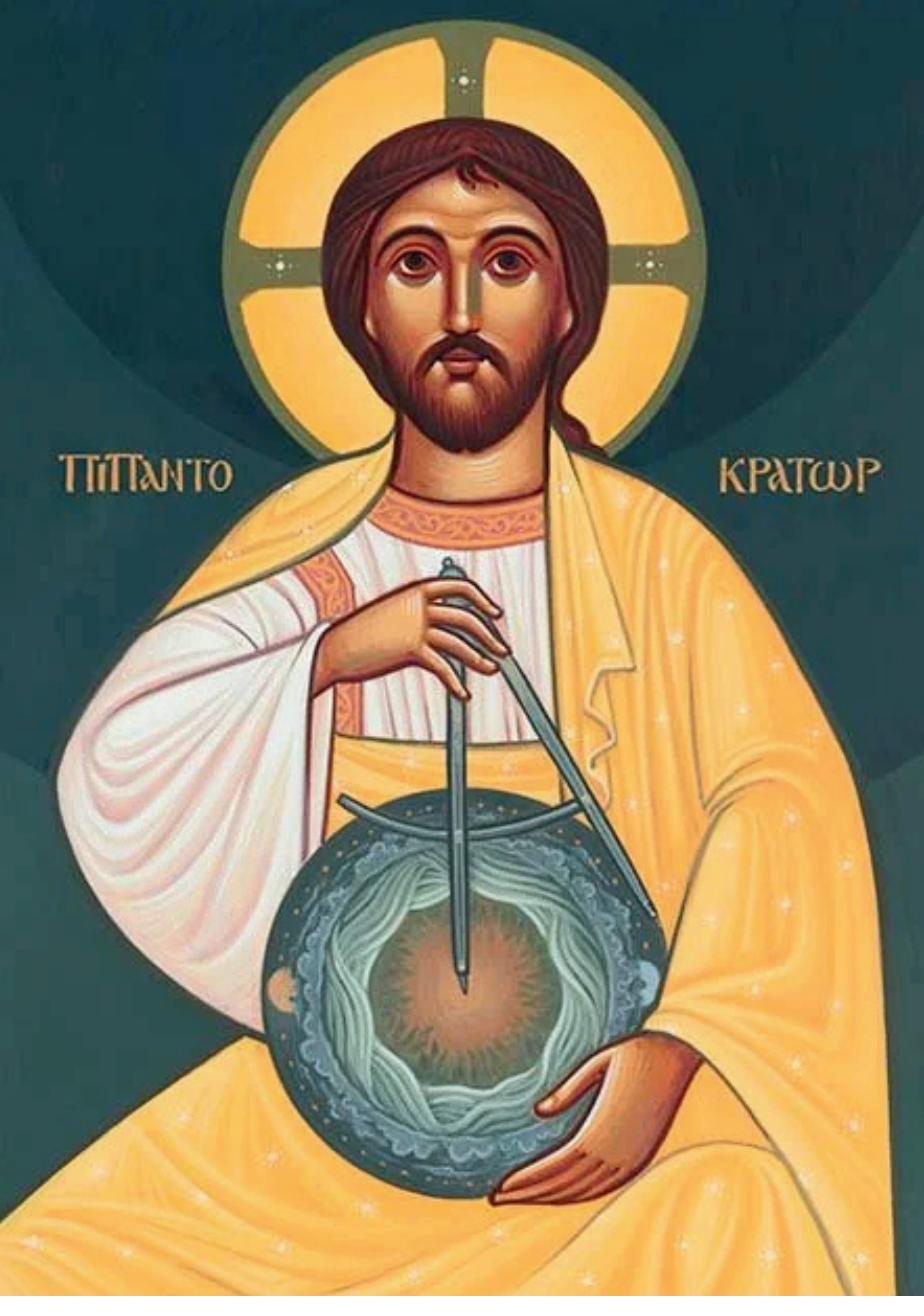
The Holy Trinity is a Mystery
The concept of the Holy Trinity has been a focal point of theological discourse throughout the history of Christianity, sparking debates and occasionally leading to the emergence of heresies. Within the Coptic Orthodox Church, there is a clear distinction between monotheism and polytheism. Monotheism, stemming from the Greek word "mono" meaning "one," asserts the belief in a singular God. On the other hand, polytheism refers to the belief in multiple deities. As Coptic Orthodox Christians, we firmly adhere to monotheism, recognizing the existence of only one true God.
However, there is a common misconception that the Holy Trinity is simply a form of monotheism, equating the Father, the Son, and the Holy Spirit as three manifestations of the same God. This interpretation is incorrect and fails to grasp the profound mystery of the Trinity. The Holy Trinity comprises three distinct persons: the Father, the Son, and the Holy Spirit. Each person possesses their unique role, or hypostasis, within the Godhead. While they embody their own individual "Person," they are united in essence, forming the inseparable Holy Trinity.
The analogy of a triangle is often used to illustrate this concept. Just as a triangle consists of three distinct sides, each with its unique properties, the Holy Trinity comprises three distinct persons. However, much like the sides of a triangle collectively form a single geometric shape, the Father, the Son, and the Holy Spirit collaborate and act as one unified entity.
Therefore, it is crucial to recognize that while the Holy Trinity comprises three distinct persons, whose roles remain distinct, they are not separate entities. Rather, they coexist harmoniously, supporting and complementing one another, forming the one true God. This profound mystery lies at the heart of the Coptic Orthodox faith, and it is through this understanding that we come to appreciate the depth and richness of our Christian tradition.
Key terms
Within the realm of theology, two fundamental terms hold great significance: Essence and Person. Essence, often referred to as substance or nature, encapsulates the inherent qualities that define the identity of something. It delves into the question of "WHAT" something truly is, transcending physical characteristics or external appearances.
On the other hand, Person, also known as Hypostasis, addresses the question of "WHO" someone is. It encompasses the distinct individuality of a being, their unique personality, and their specific role within a larger entity. While multiple individuals may share similar essential characteristics, their personhood sets them apart as distinct and separate entities.
In the context of the Holy Trinity, this distinction between Essence and Person becomes crucial. While the Trinity is acknowledged as ONE in Essence, it simultaneously comprises THREE distinct Persons: the Father, the Son (Jesus Christ), and the Holy Spirit. This profound mystery defies human comprehension, but it is a cornerstone of Christian faith.
As Saint Athanasius, the theologian of the early Church, eloquently stated, "The Trinity, praised, reverenced and adored, is one and indivisible and without degrees. It is united without confusion, just as the One God is also distinguished without separation." Saint Athanasius further illustrates this concept by referencing a passage from the Book of Isaiah (Chapter 6) and the Book of Revelation (Chapter 4:8), where venerable creatures offer praises three times, saying "Holy, Holy, Holy." This threefold repetition, he argues, signifies the distinct perfection of the Three Persons within the Trinity. “For the fact of those venerable living creatures (Isa/ 6; Rev 4:8) offering their praises three times, saying ‘Holy, Holy, Holy,’ proves that the Three Persons are perfect, just as in saying ‘Lord,’ they declare the One Essence”
Moreover, the declaration of "Lord" in these passages points to the singular Essence that unites the Father, Son, and Holy Spirit. Saint Athanasius emphasizes that the Trinity maintains its unity while simultaneously preserving the distinctness of each Person.
Many of our Fathers, such as St. Cyril of Alexandria, have been adamant about the essence of the Holy Trinity stating, “for the whole Holy Trinity opens out, as if it were into three distinct or separate Persons, it is as though it contracts into the one nature of Deity.” This profound understanding of the Trinity as ONE in Essence but THREE in Persons has served as a cornerstone of Christian theology for centuries. It encapsulates the mystery of a single divine being existing in three distinct and interdependent manifestations.
To Each His Own
Each "Person" of the Trinity possesses a unique name and plays a specific role in our lives. This differentiation is crucial for understanding our relationship with God. Consider the example of Andrew and Peter. Although both are male, they are distinct individuals with distinct names. Similarly, the Father, Son, and Holy Spirit, while all being aspects of God, are distinct "Persons" with distinct roles.
For instance, when we pray "Our Father," we are addressing God the Father, not Jesus Christ, His Beloved Son. This distinction highlights the importance of recognizing each Person of the Trinity when approaching, defining, and forming a relationship with God.
The independence of the Father and Son is further emphasized in the Bible. In John 5:22, it is stated that "the Father judges no one, but has committed all judgment to the Son." This verse clearly acknowledges that the Father and Son are not the same "Person."
Another instance of this distinction can be found in Acts 1:7, where Jesus tells His disciples, "It is not for you to know times or seasons which the Father has put in His own authority." This verse converges with a later verse in Matthew 24:36, which states, "But of that day and hour no one knows, not even the angels of heaven, but my Father only." These verses highlight the Father's exclusive knowledge of certain aspects of God's plan, further emphasizing His distinctiveness from the Son.
The Epiphany Regarding the Holy Trinity
The baptism of Jesus Christ, often referred to as the "Baptism of Christ" or the "Epiphany," holds immense significance in the Church. The term "Epiphany" itself means "a moment of sudden revelation or insight," and this event certainly embodies that definition. During this pivotal moment, the Father, Son, and Holy Spirit, the three distinct yet equal Persons of the Trinity, were all revealed.
As Jesus emerged from the water after being baptized by John the Baptist, the heavens opened up above Him. In a remarkable display of divine revelation, the Holy Spirit descended like a dove and alighted upon Jesus, symbolizing the Spirit's anointing and empowering of Him for His earthly ministry. At the same time, a voice came from heaven, declaring, "This is My beloved Son, in whom I am well pleased" (Matthew 3:17).
This event affirmed the identity and mission of Jesus as the Son of God. It also signified the Father's love and approval of His Son, emphasizing the unique and intimate relationship between them. Additionally, it provided a glimpse into the unity and cooperation within the Trinity, as each Person played a distinct role in this momentous occasion.
The baptism of Christ is also recognized as a theophany, a visible manifestation of God to humankind. Through His physical presence at the baptism, God the Father made Himself known to those present, demonstrating His involvement in the life and ministry of His Son. This event not only confirmed Jesus' divine nature but also served as a powerful reminder of God's ongoing presence and guidance in the world.
The baptism of Christ is one of the most significant instances in the New Testament of the Holy Trinity’s nature as well as existence, with St. Augustine of Hippo explaining, “Here then we have the Trinity presented in a clear way: the Father in the voice, the Son in the man, the Holy Spirit in the dove. This only needs to be barely mentioned, for it is so obvious for anyone to see. Here the recognition of the Trinity is conveyed to us so plainly that it hardly leaves any room for doubt or hesitation.”
Analogies for the Trinity
Throughout history, various analogies have been employed to illustrate the concept of the Trinity, each shedding light on different aspects while ultimately falling short of fully capturing its profound mystery. By harmonizing these analogies, we can gain a multifaceted understanding of the Trinity.
One common analogy is that of the Sun, which comprises three distinct components: the sun, its light, and its heat. This analogy emphasizes the idea of three distinct entities existing within a single entity. However, it does not adequately explain the Essence of the Trinity, as the Essence of light differs from that of the physical Sun and the heat. Similarly, the Father, Son, and Holy Spirit are distinct in nature.
Another analogy is the "3-In-1" analogy. Recall from earlier the example of Andrew and Peter; they are distinct individuals despite sharing the same male gender. Now, imagine three individuals: Peter, Andrew, and John. All three possess the same human essence, yet they are distinct human beings. Peter is not Andrew or John, and vice versa. Each has unique attributes such as hair color and nose shape, yet they are all human beings. Now, consider that all three exist within one another: Andrew within Peter, Peter within Andrew, John within Peter, John within Andrew, and so on. Additionally, this being that contains all three permeates the entire cosmos. However, it is crucial to remember that they remain distinct entities.
Applying this analogy to the Holy Trinity, we understand that the Father, Son, and Holy Spirit are one in Essence, meaning they are all divine. They exist within one another, implying that the Father is within the Son, the Son within the Father, the Holy Spirit within the Father, the Father within the Holy Spirit, the Son within the Holy Spirit, and the Holy Spirit within the Son. We profess our belief in one God with three hypostases (Father, Son, and Holy Spirit) in one essence.
It is essential to recognize that within the Trinity, there is diversity but never division. The Trinity exists in unity without requiring uniformity. This mystery transcends human understanding, but through analogies and contemplation, we can deepen our appreciation for the complexity and beauty of the Trinity.
Biblical Usage
The concept of the Holy Trinity, comprising the Father, the Son (Jesus Christ), and the Holy Spirit, is profoundly established in both the Old and New Testaments of the Bible. The Old Testament, specifically in Genesis Chapter 1, sets the stage for the existence of a triune God. It narrates the act of creation, stating that “in the beginning God created the heavens and the earth. The earth was without form, and void; and darkness was on the face of the deep. And the Spirit of God was hovering over the face of the waters. Then God said, ‘Let there be light’; and there was light.” (Genesis 1:1-3) Each ‘Person’ of the Holy Trinity is clearly established long before the arrival of Christ, as He exists as the Word of God.
Moreover, the Old Testament reinforces the notion of the Holy Trinity in Genesis 1:26, where it is written, "Let Us make man in Our image, according to Our likeness." The plurality of the action of creation of man implies This verse suggests that God exists alongside the two other ‘Persons’ of the Holy Trinity.
The New Testament further elaborates on the distinctions within the Trinity. In 2 Corinthians 13:14, the Apostle Paul writes, "The grace of the Lord Jesus Christ, and the love of God, and the communion of the Holy Spirit..." This verse acknowledges the unique attributes and roles of each person of the Trinity: the grace of Jesus Christ, the love of God the Father, and the communion of the Holy Spirit.
In John 5:30, Jesus Christ himself declares, "...I do not seek My own will but the will of the Father who sent Me." This statement illustrates the submission of the Son to the will of the Father, emphasizing their distinct persons while acknowledging their unity in purpose. Similarly, in Matthew 28:19, Jesus commands his disciples to baptize in the name of the Father, the Son, and the Holy Spirit. This instruction underscores the inseparable nature of the Trinity and the recognition that true knowledge of God involves understanding Him as three distinct but interconnected persons.
Hypostatic Union of the Trinity
The word ‘Hypostasis’, meaning ‘Person’, finds its roots in the Greek language. The term is derived from two Greek words: "hypo," meaning "under" or "sub," and "stasis," meaning "stance" or "existence." Together, these elements combine to form the concept of hypostasis, which can be understood as "substance" or "person."
To grasp the essence of hypostasis, it is helpful to consider the analogy of a triangle. In this analogy, the hypostasis of the Father represents the source and origin of all that exists. Uncreated and unbegotten, the Father stands as the supreme being, from whom all creation flows. The hypostasis of the Son, on the other hand, is begotten of the Father. This relationship between the Father and the Son is often described as "eternal generation," emphasizing the unique and intimate bond between them. Through this generation, the Son shares in the divine nature of the Father, yet maintains a distinct hypostasis or personhood.
Lastly, the hypostasis of the Holy Spirit completes the Trinity. The Spirit proceeds from the Father. This procession signifies the dynamic and interactive nature of the divine relationship. The Holy Spirit, as the Spirit of God, partakes in the divine essence while possessing a distinct hypostasis.
It is essential to emphasize that the concept of hypostasis does not imply separation or division within the Godhead. Rather, it affirms the unity and oneness of God while acknowledging the distinct personal characteristics of the Father, Son, and Holy Spirit. Each hypostasis fully possesses the divine nature, yet they are distinct in their personal relations and roles within the Trinity.
Understanding the hypostases of the Trinity is crucial for comprehending the multifaceted nature of God and the intricacies of Christian doctrine. Let us slowly dive into each hypostasis.
The Father
Within the Holy Trinity, the Father stands as the ultimate source, the wellspring from which all creation flows. Far from being an abstract, distant religious entity, He is a present, loving Being who yearns to be known and cherished by His children. As Christ proclaimed in the Gospel of John, "If anyone loves Me, they will keep My word, and My Father will love them. We will come to them and make Our home with them" (John 14:23).
This profound verse reveals the Father's desire for intimate relationship with humanity. He longs to dwell within our hearts, to walk with us through life's journey, and to share His love and wisdom with us. Through His presence, we find comfort, guidance, and strength to navigate the challenges and uncertainties of this world.
The relationship between the Father and the other two persons in the Trinity, the Son (Jesus Christ) and the Holy Spirit, is defined through the concepts of "begetting" and "procession." Begetting refers to the eternal generation of the Son from the Father, while procession describes the eternal proceeding of the Holy Spirit from the Father. These timeless actions demonstrate the mystical, internal connections within God and the dynamic life He holds within Himself.
It is through the Son, Jesus Christ, that we have access to the Father. As Christ Himself declared, "I am the Way, the Truth, and the Life. No one comes to the Father except through Me" (John 14:6). Christ's life, death, and resurrection provide the bridge that spans the chasm between humanity and God, making reconciliation and relationship with the Father possible.
One of Lord Jesus Christ's primary goals during His earthly ministry was to guide people to His Father along with Himself. He taught His disciples about the Father's love, mercy, and grace, revealing His character and attributes through His words and actions. Christ's teachings and example invite us to embrace the Father's love and to experience the transformative power of His presence in our lives.
The Son
The second Person of the Holy Trinity, Jesus Christ, is referred to as the Son of God, the Word, or Logos. This concept finds its basis in the opening chapter of the Gospel of St. John, which likens the relationship between thought and word to that of the Father and the Son.
Thought, originating from within itself, utters a word, much like the Prophet's declaration, "My heart hath poured forth a good word" (Ps. 45:1). Thought and word, though distinct and occupying separate spaces—thought remaining in the heart while the word is on the tongue and lips—are inseparable and codependent. Thought gives rise to word, and word, in turn, communicates thought to the listener.
St. Dionysius of Alexandria provides further insight by explaining that thought is like a word hidden within, while word is thought brought forth. Thought transforms into word, and word carries thought to the ears of the listener. This process allows thought, through the medium of the word, to be instilled in the souls of those who hear it.
“Our thought utters from itself the word according to what the Prophet has said: ‘My heart hath poured forth a good word’ (Ps. 45:1). Thought and word are separate one from the other, and each occupies its special and separate place: while thought remains and moves the heart, the word is on the tongue and the lips. However, they are inseparable, and not for one moment are they deprived of each other. Thought does not exist without word, nor word without thought, having received its existence in thought. Thought is, as it were, a word hidden within, and word is thought which has come without. Thought is transformed into word, and word transmits thought to the hearers. In this way, thought, with the help of the word, is instilled in the souls of the listeners, entering them together with the word. Thought, coming from itself, is as it were the father of the word: and the word is, as it were, the son of the thought. Before the thought the word was impossible, and the word does not come from anywhere outside, but rather from the thought itself. Thus also, the Father, the greatest and all-embracing Thought, has a Son, the Word, His first Interpreter and Herald.” - St. Dionysius of Alexandria explains,
In this analogy, thought, emerging from itself, can be seen as the father of the word, and the word, as the son of thought. Before thought, the word cannot exist, and the word originates not from an external source but from thought itself. Similarly, the Father, the greatest and all-encompassing Thought, has a Son, the Word, who serves as His primary interpreter and messenger.
The Holy Spirit
The Holy Spirit, the third person of the Trinity, is often referred to as the 'wind' or 'breath' of God. While human language and understanding can never fully encapsulate the divine nature, we can attempt to describe the Spirit's role in relation to the Father and the Son.
The Spirit resides within us, guiding and empowering us as believers. Through the Spirit, we experience God's presence and work in our lives. Just as the Son Jesus Christ reveals the Father to us, so the Spirit reveals the Son to us. Through the Spirit's work, the teachings and life of Christ become real and personal to us.
In John 15:26, Jesus promises “But when the Helper (i.e. the Holy Spirit) comes, whom I shall send to you from the Father, the Spirit of truth, who proceeds form the Father, He will testify of Me” (John 15:26). Moreover, in John 14:16-17, Jesus assures us that the Holy Spirit can be known personally. “And I will pray the Father, and He will give you another Helper, that He may abide with you forever–the Spirit of truth, whom the world cannot receive, because it neither sees Him nor knows Him; but you know Him, for He dwells with you and will be in you” (John 14:16, 17).
There is a beautiful prayer in the Agpeya - Third Hour expressed to the Holy Spirit: “O Heavenly King, the Comforter, the Spirit of truth who is present in all places and fills all, the treasury of good things and the Life-Giver, graciously come, and dwell in us and purify us from all defilement, O Good One, and save our souls” This prayer expresses our constant dependence on the Holy Spirit's work in our lives. It acknowledges the Spirit as the Comforter, the Spirit of truth, and the Life-Giver. This prayer reminds us of the essential role of the Holy Spirit in our spiritual lives and encourages us to seek His presence and guidance daily.
Learning from the Trinity
In the following quote by Bishop Kallistos Ware, an Eastern church father, he emphasizes the profound connection between our love for one another and our faith in the Triune God. A genuine confession of faith in the Trinity is only possible when we demonstrate mutual love towards each other, mirroring the loving relationships within the Trinity. He asserts that love for one another serves as a precondition for faith in the Trinity, while faith in the Trinity, in turn, amplifies and gives deeper meaning to our love.
He also challenges the perception of the doctrine of the Trinity as an abstruse theological concept reserved for specialists. He argues that it should have a transformative impact on our daily lives, urging us to recognize that as beings made in the image of God the Trinity, we are called to replicate the mystery of mutual love that exists within the Trinity on earth.
A genuine confession of faith in the Triune God can be made only by those who, after the likeness of the Trinity, show love mutually towards each other. There is an integral connection between our love for one another and our faith in the Trinity: the first is a precondition for the second, and in its turn the second gives full strength and meaning to the first. So far, from being pushed into the corner and treated as a piece of abstruse theologizing of interest only to specialists, the doctrine of the Trinity ought to have upon our daily life an effect that is nothing less than revolutionary. Made after the image of God the Trinity, human beings are called to reproduce on earth the mystery of mutual love that the Trinity lives in heaven.” (Bishop Kallistos Ware, The Orthodox Way)
This quote highlights the inseparable nature of faith and love in the Christian understanding of the Trinity. It encourages us to see our relationships with others as reflections of the divine love and community within the Godhead and to strive for a life of love and unity that mirrors the Trinity's perfect communion.
Therefore, as we seek to know and love God, let us turn our hearts toward the Father. Through His Son, Jesus Christ, and the guidance of the Holy Spirit, we can enter into a personal and intimate relationship with the Father, experiencing His love, grace, and peace in our lives.