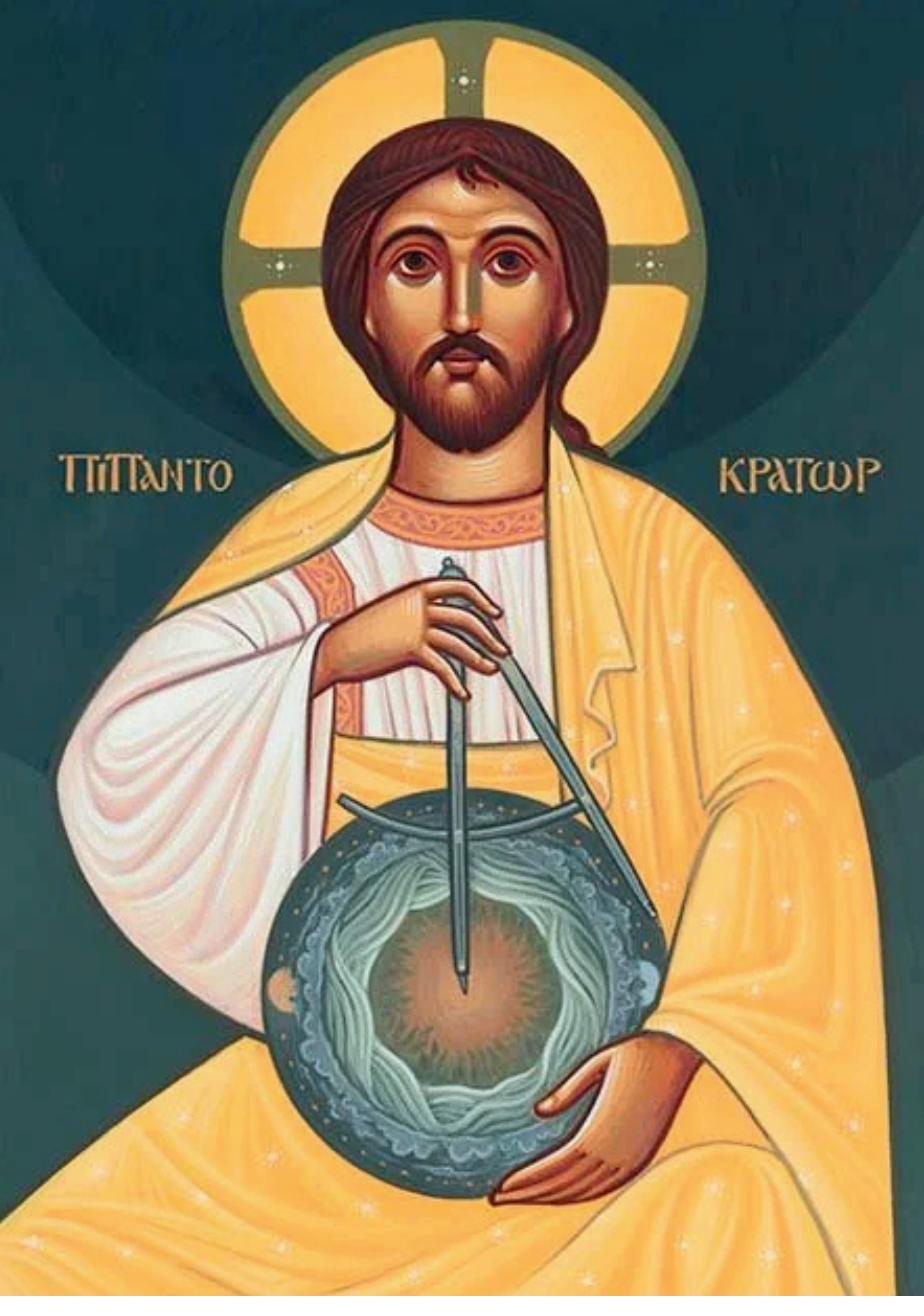
Is Christ more Divine than Human?
The nature of Christ has been a contentious issue throughout history, with numerous heresies emerging to challenge its significance. One of the most notable divisions within the church occurred in 451 AD at the Council of Chalcedon, where monophysitism, which emphasized the unity of Christ's divine and human natures, was addressed. However, some churches, now known as the Non-Chalcedonian or Oriental Orthodox Churches, rejected the council's decisions, insisting on preserving the unity between Christ's humanity and divinity.
At the heart of this dispute lies the fundamental question: Did Jesus Christ possess one or two natures? Understanding the answer to this question is crucial for our salvation and for recognizing God's empathy toward us. The belief in the One Nature of the Incarnate Logos is essential, necessary, and fundamental for one's redemption. This belief affirms that Jesus Christ, the Logos, fully assumed human nature while remaining fully divine.
The significance of this belief lies in its implications for our redemption. Redemption requires an unlimited propitiation, a sacrifice capable of forgiving the countless sins of all people throughout time, not just those of an individual. Only the Incarnation of God, the Logos, offered this generous solution through His Divine Power. By becoming fully human, Christ experienced our limitations, temptations, and sufferings, demonstrating His empathy and solidarity with humanity.
Moreover, Christ's human nature facilitated His substitutionary death on the cross. As a perfect and sinless man, He offered Himself as a sacrifice for the sins of the world, reconciling us with God. Through His sacrificial death and subsequent resurrection, He conquered sin and death, providing the means for our salvation and eternal life. Seeing this ultimate mystical unity between human and divine, St. Paul says: "For had they known it, they would not have crucified the Lord of Glory. " (1 Cor. 2:8) and instead they "...denied the Holy One and the Just, and asked for a murderer to be granted unto you and killed the Prince of Life…" (Acts 3:14)
Understanding the nature of Christ as both fully human and fully divine is essential for our faith and understanding of redemption. It assures us that in Christ, we have a Savior who understands our struggles and experiences and who has offered the ultimate sacrifice for our sins. By embracing the belief in the One Nature of the Incarnate Logos, we acknowledge His divinity, humanity, and sacrificial love, which grants us forgiveness, reconciliation with God, and the promise of eternal life.
The Orthodox Concept
The Lord Jesus Christ, the Incarnate Logos, is God Himself. He assumed a perfect human nature, uniting His Divine nature with His human nature. This union is complete and permanent, never divided or separated. His Godhead never departed from His manhood, even for an instant. As we say in the liturgy: “his divinity never departed from his humanity for a single moment nor a twinkling of an eye.”
After the schism in 451 AD, the Coptic Orthodox Church rejected the Council of Chalcedon and its theological positions. They, along with other churches, were incorrectly accused of being "Monophysites," believing in only one nature of Christ. The Syrians, Armenians, Ethiopians, and Indians also share this belief and are known as "Non-Chalcedonian" Orthodox Churches. Though the Non-Chalcedonian church do indeed believe in ‘One Nature’, it must be specified as ‘One Nature out of Two’, or also known as ‘Miaphysite’. The one Nature of God the Incarnate Logos” as St. Cyril calls it.
On the other hand, the Chalcedonian Catholic and Greek Churches believe in the two natures of Christ. The Protestant Church also holds this belief. These churches are known as "Diophysites," believers in the two natures of Christ. These Roman (or Chalcedonian) Orthodox Churches include Constantinople, Greece, Cyprus, Russia, Romania, Hungary, and Serbia, as well as the Roman Orthodox Churches of Egypt, Syria, Lebanon, America, and the St. Catherine Monastery in the Sinai desert.
According to our belief, the Divine nature united with the human nature in the womb of St. Mary by the power of the Holy Spirit. This unity occurred from the first moment of the Holy pregnancy. As a result of this union, a single nature emerged from the combination of the two, rather than two separate natures coexisting.
Heresies Against the One Nature
The nature of Christ has faced numerous challenges throughout history, with various heresies emerging to question His divinity and humanity. One such heresy is Arianism, proposed by Arius, who denied the Divinity of the Lord Jesus Christ. Arius believed that Christ was not consubstantial with the Father, meaning He was not of the same essence or nature. He asserted that Christ was created, diminishing His divine status. Despite being condemned by the Council of Nicea in 325 A.D., Arianism's roots persist to this day, causing disputes and suspicion within the Church.
Another notable heresy is Apollinarianism, championed by Apollinarius, who acknowledged the Divine Nature of Christ but denied His complete human nature. Apollinarius proposed that Christ did not possess a soul and that His human nature was incomplete, with the Logos (the divine aspect of Christ) providing the necessary life. This notion was perceived as incomplete and heretical, and the Holy Ecumenical Council of Constantinople in 381 A.D. condemned Apollinarianism, rejecting its claims.
Nestorius, the Patriarch of Constantinople in 428 A.D., also sparked controversy with his heresy. He refused to refer to the Virgin Mary as "Mother of God" (Theotokos) and instead promoted the title "Mother of Jesus" (Christokos). Nestorius argued that St. Mary gave birth to a mere human, and that Divinity later descended and filled this human. His teachings essentially separated the divine and human aspects of Christ, which led to his excommunication by the Holy Ecumenical Council of Ephesus held in 431 A.D.
Lastly, Eutyches, an archimandrite in Constantinople, vehemently opposed the Nestorian heresy. In his zeal to emphasize the unity of the two natures in Christ, he fell into another heresy. Eutyches claimed that the human nature of Christ was absorbed and dissolved into the Divine nature like a drop of vinegar in the ocean. This teaching effectively denied the reality of Christ's human nature and was condemned as heretical.
These heresies reflect a diversity of perspectives on the nature of Christ, ranging from denying His divinity to disputing the completeness of His humanity. The early Church faced the challenge of discerning the truth amid these conflicting viewpoints, ultimately affirming the orthodox understanding that Christ is both fully divine and fully human.
Doctrines Regarding the Nature of Christ
Miaphysitism, Monophysitism, Dyophysitism, Docetism, and Nestorianism are then the doctrines related to the nature of Christ that have been debated throughout Christian history.
Miaphysitism asserts that Jesus Christ possesses a single, unified nature that is both human and divine. This nature is often referred to as the "nature of the Incarnate Logos." Miaphysitism emphasizes the unity of Christ's person and the inseparability of his human and divine attributes.
Monophysitism, in contrast, teaches that Jesus Christ has a single, divine nature. Monophysites believe that Christ's human nature was absorbed into his divine nature, resulting in a single, divine nature. This doctrine was popular in the early church, but it was eventually rejected as heretical at the Council of Chalcedon in 451 AD.
Dyophysitism, on the other hand, teaches that Jesus Christ has two distinct natures, human and divine. These two natures are united in the person of Christ, but they remain distinct and unmixed. Dyophysitism emphasizes the full humanity and divinity of Christ and is the Christological doctrine taught in non-Oriental Orthodox churches.
Docetism is a Christian doctrine that teaches that Jesus Christ was not a real, physical human being, but rather a spiritual entity. Docetists believe that Christ's human body was an illusion or a mere appearance. This doctrine was popular in the early church but was eventually rejected as heretical.
Nestorianism is a Christian doctrine that teaches that Jesus Christ has two separate persons, one human and one divine. Nestorians believe that the human person of Christ is distinct from the divine person of Christ and that the two are united only by a moral union. This doctrine was condemned as heretical at the Council of Ephesus in 431 AD.
The Miaphysitism is a doctrine that holds that Jesus Christ has a single, unified nature that is both human and divine. This doctrine emphasizes the unity of Christ's person and the inseparability of his human and divine attributes.
The Nature of the Union
Coptic Orthodox belief holds that the union of the two natures of Christ is unique, distinct from any other type of union. This union is characterized by several key attributes. Firstly, it is without mingling, unlike the union of wheat and barley or salt and sugar. This means that the two natures of Christ remain distinct and do not merge or fuse together. Secondly, the union is without confusion, unlike the union of milk and tea. Although the two natures are distinct, they are perfectly united without causing any confusion or blending of their properties. Thirdly, the union is without alteration, meaning that neither nature is affected or changed by the union. Each nature retains its unique properties and characteristics. Fourthly, the union is without transmutation, meaning that neither nature is transformed or converted into the other. This misconception of transmutation leads to the belief that one element can change into another through processes such as radioactive decay or nuclear bombardment.
To further illustrate the Coptic Orthodox belief in the union of Christ's two natures, certain analogies are employed. One such analogy is the union of iron and fire, as espoused by St. Cyril the Great and St. Dioscorus. When iron is ignited in fire, the two unite, but the iron does not change into fire, nor does the fire change into iron. While this analogy may not be perfect, as the union of iron and fire is not permanent, it serves to convey the idea that the two natures of Christ are united without being transformed or altered. Another analogy used is the union of the soul and the body, as described by St. Cyril, St. Augustine, and others. In this analogy, the nature of the soul unites with the physical, earthly nature of the body to form a union of one nature, which is the human nature we experience today.
Just as we say that human nature is one nature consisting of two elements, we can also say about the Incarnate Logos that He is one entity of two elements. Although a human being is formed of these two 'natures,' one would never claim that a person is two but rather one. All of a person's actions are attributed to this one nature, not solely to the soul or the body alone. “He is not bi-natured, to one we kneel down and to the other we do not, but He is rather of One Nature - the Incarnate Logos - that is one with His Body and before whom we kneel down in one genuflection” (St. Athanasius). This understanding of the union of Christ's two natures is central to Coptic Orthodox belief and distinguishes it from other theological interpretations.
Miracles of the Incarnate Logos
In the Holy Bible, who was speaking with the blind man? It was not just human nature. This is evident from the Lord Jesus Christ's own words, when He confirms to the blind man that "it is He that talks with you, the Son of God" (John 9:37). The Son of God is a reference to Jesus Christ's Divine nature, as He is the second person of the Trinity. Therefore, it was not merely the human nature of Jesus Christ that was speaking with the blind man, but also in union with His Divine nature.
One can also consider the miracles performed by Jesus Christ, such as walking on water and rebuking the wind. These miracles were beyond the capabilities of human nature alone and could only be performed by someone with Divine power. Therefore, it is clear that when Jesus Christ walked on water and rebuked the wind, it was the whole Incarnate Logos that was acting.
Additionally, the same could be said about other miraculous events performed by Jesus Christ, such as giving sight to the man born blind, turning water into wine, and the bleeding woman touching Him for healing. All these events demonstrate the Incarnate Logos. It is important to note, that in the non-chalcedonian perspective, we cannot separate the natures and proclaim just the Divine Nature performed the miracle but rather refer solely and mystically to the Incarnate Logos. It is ‘in thought alone’, as St. Cyril said, that one could expound and give account to one nature. Jesus Christ is not merely a human being but the Incarnate Logos, the second person of the Trinity, who possesses both Divine and human natures.
The One Nature at the Birth of Christ
The birth of Jesus Christ, as recounted in the Bible, holds profound significance for Christians. At the heart of this event lies the question of who the Virgin Mary gave birth to. About who did the angel proclaim: "The Holy Spirit will come upon you, and the power of the Highest will overshadow you, therefore , also, that Holy One who is to be born of you will be called the Son of God. " (Lk. 1:35)? While some may argue that she solely gave birth to the Godhead, others believe it was only the manhood. However, a deeper understanding reveals that the Virgin Mary gave birth to both God and man, in the form of the Incarnate God.
The prophecy in Isaiah 9:6 foretells the birth of a Child who would possess divine attributes such as "for unto Us a Child is born, unto Us a Son is given and the government will be upon His shoulder, and His Name will be called Wonderful, Counselor, Mighty God, Everlasting Father, Prince of Peace." This passage suggests that the Virgin Mary gave birth to more than just a human being. Moreover, the account in Galatians 4:4 emphasizes that God sent forth His Son, born of a woman. “But when the fullness of time was come, God sent His Son, born of a woman, according to Law. " This verse highlights the human aspect of Jesus Christ's birth.
Rejecting the heresy of Nestorius, which claims that the Divine and human natures of Christ are separate, Christians recognize that the Virgin Mary gave birth to the Incarnate God. The inseparable union of these two natures is essential for understanding the significance of Jesus Christ's life, death, and resurrection.
Numerous verses from the Bible depict and substantiate both the Divine and human nature of Jesus Christ. For instance, in John 1:1, we read, "In the beginning was the Word, and the Word was with God, and the Word was God." This verse establishes the pre-existence and divinity of Jesus Christ. Conversely, in Luke 2:7, we find, "And she brought forth her firstborn Son, and wrapped Him in swaddling cloths, and laid Him in a manger, because there was no room for them in the inn." This verse portrays the human birth and humble beginnings of Jesus Christ.
The significance of the Virgin Mary's birth-giving extends beyond the theological debate surrounding the nature of Jesus Christ. It serves as a reminder of God's love and condescension toward humanity. Elizabeth, her cousin clearly saw this, and thus proclaimed: “But why is this granted to me, that the mother of my Lord should come to me. " (Lk. 1:43) By taking on human flesh, Jesus Christ bridged the gap between God and man, making it possible for us to experience salvation and eternal life.
The One Nature during the sufferings of Christ
How can we describe the sufferings of Christ if divinity is not susceptible to pain, yet the human nature within Him endured suffering while united with the Divine nature? It was this unified Nature that bore the pain, despite the Divine nature's immunity to suffering. Through His humanity, Christ suffered during crucifixion. As both man and God, His physical death offered limitless atonement for humankind, as stated in Acts 20:28: "...to shepherd the Church to God which He purchased with His Own Blood."
The holy fathers used the analogy of a red-hot iron to explain this concept, equating the Divine Nature united with Christ's human nature. When a blacksmith strikes the red-hot iron, the hammer impacts both the iron and the fire united with it. The iron bends (suffers), while the fire remains untouched despite bending with the iron.
Christ, the Incarnate Logos, embodies a unique nature that encompasses the characteristics of both His Divine and human natures. While His Divine nature is impervious to death, His human nature possesses the susceptibility to mortality. Crucially, at the time of Christ's death, there was no separation between these two natures.
On the third day, His soul, eternally united with His Godhead, returned to unite with His body, which also remained inseparably connected to His divine essence. This event marked the resurrection of Christ. Throughout this process, His Divinity never departed from either His soul or His body.
"The soul left the body, but His Divinity never departed, neither from His Soul nor from His Body. His Soul, likewise, whilst united with His Godhead, descended into hell to preach those who died in the faith and to open to them the gates of Paradise and let them enter. Yet His Body, also united with His Godhead, remained in the grave. " This is a saying from the Syrian fraction, concerning the death of Christ. The prayer emphasizes the indivisible unity of Christ's Divine and human natures, even in the face of death. They underscore that His Divinity remained present in both His soul and His body throughout the period of the Resurrection.
“Son of Man” vs. “Son of God”
No doubt, the term "Son of Man" denotes the human nature of Christ, just as the phrase, "Son of God," denotes His Divinity. “No one has ascended up to heaven but He who came down from heaven, that is, the Son of Man which is in heaven. "(John 3:13) However, our Lord Jesus Christ used the term "Son of Man" on several occasions where He meant "Son of God." “For the Son of Man is Lord even of the Sabbath.” (Matthew 12:8) The Son of man is thus in heaven and on earth. Similarly, the Lord uses the term “Son of Man” to demonstrate his Lordship: “For the Son of Man is Lord even of the Sabbath.” (Matt. 12:8)
For those skeptical regarding the human nature of Christ, the Holy Bible portrays many instances of our Lord being referred to as “Son of Man,” thereby evidencing his humanity. Recall his many miracles, such as that of the paralytic, “But that you may know that the Son of Man has power on earth to forgive sins”—then He said to the paralytic, “He said to the paralytic, ‘Arise, take up your bed, and go to your house.’ And he arose and departed to his house.” (Matthew 9:6-7) Not only does Christ show his authority of forgiveness but also demonstrates how the “Son of Man” is Lord and Judge: “For the Son of man will come in the Glory of His Father with His angels and then He will reward every man according to his works. " (Matt. 16:27)
The New Testament additionally uses this prevalent phrase to speak of what may come, such as the book of Matthew describing “When the Son of Man comes in His glory, and all the holy angels with Him, then He will sit on the throne of His glory. All the nations will be gathered before Him, and He will separate them one from another, as a shepherd divides his sheep from the goats. And He will set the sheep on His right hand, but the goats on the left. Then the King will say to those on His right hand, ‘Come, you blessed of My Father, inherit the kingdom prepared for you from the foundation of the world…” (Matthew 25:31-34). Also in the same book, "the Son of Man will come in the Glory of His Father with His angels and then He will reward every man according to his works." (Matthew 16:27) Our Lord, Jesus Christ does not encompass only the nature of humanity, for these predictions and as His works, are far beyond the capability of any regular man. His Divine nature is what allows one to, God willing, "...see the Son of Man sitting on the right hand of Power, and coming in the clouds of heaven." (Matthew 26:63-65). The “Son of Man” is then seen and described as full of glory and seated at the right hand of the Father!
The book of Matthew is not the sole book of the Bible wherein this phenomenon is observed: throughout the book of Acts we are told that one saw “...the heavens opened and the Son of Man standing at the right hand of God!” (Acts 7:56). In summation, one needs to be aware of the duality of the nature of Christ, be it one nature altogether, as what shall you do “...if you should see the Son of Man ascend where He was before?” (John 6:62)