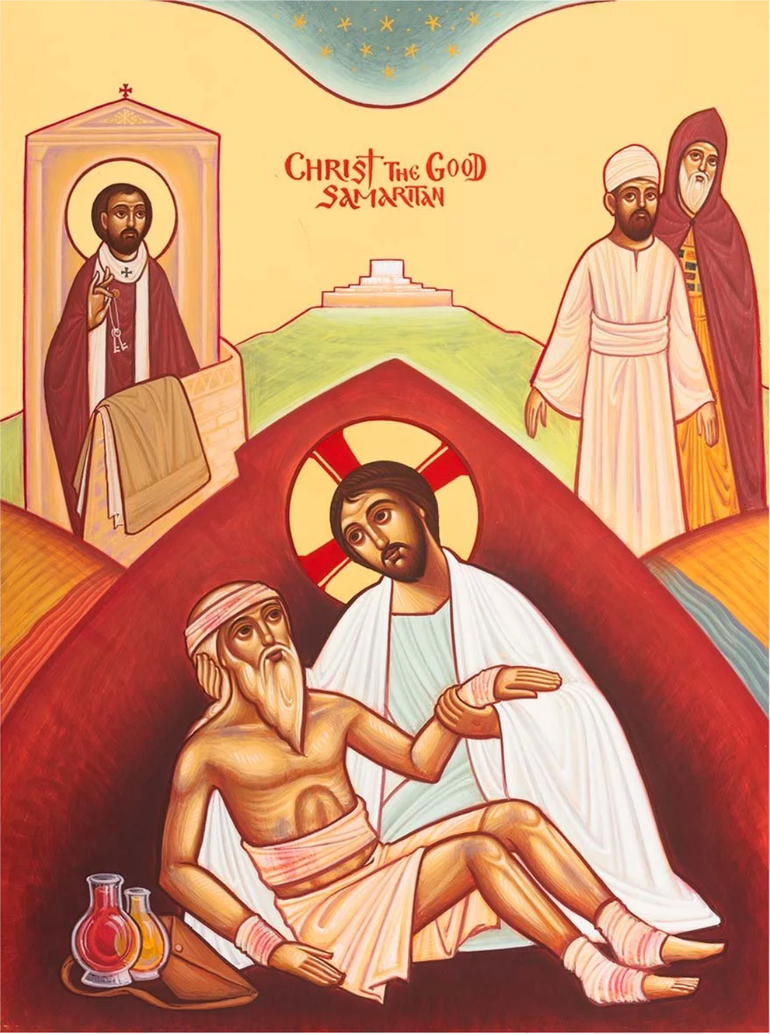
There is no Christian who has not wondered, in the middle of a long dark night, whether this fight is worth it. There is no servant who has not at some point asked whether God sees, whether God hears, whether the victory we read about in Scripture is the kind of victory that could ever really be ours. The answer of the Gospel is yes — but not in the way we often hope. The Christian life is not a life without struggle; it is a life that finds its victory inside of the struggle. Our Lord did not promise to spare us from trial. He promised something far greater: that in Him, we would overcome. To live a life of victory is not to flee the battle but to stand in it with arms outstretched to the One who has already crossed the finish line and whose hand has never let go of ours. This is not an abstract teaching. It is the lens through which every disappointment, every weakness, every unanswered prayer, every late-night temptation is transformed. Nothing the enemy sets before us lies outside the scope of a victory already won. Our work, then, is not to manufacture that victory — we cannot, and we were never asked to. Our work is simply to stand inside of it: to keep watch, to stay in the ranks, and to lift up the weapons the Lord has already placed in our hands.
The Necessity of Struggle
How often we equate a successful life with a comfortable one. How often we pray, with hearts weary of trial, “Lord, take this away.” It is a natural prayer, and the Lord does not scold us for praying it — He Himself prayed something very much like it in Gethsemane. But it was not the final prayer He prayed in the garden, and it cannot be the prayer that finally shapes our lives as servants.
Jesus did not promise us a life without tribulation. He promised a life of victory inside of it. On the night of His betrayal — the darkest night of His life, in His last private conversation with His disciples — He reached for the very fear that rises in our throats at every difficult moment, and gently stilled it:
“These things I have spoken to you, that in Me you may have peace. In the world you will have tribulation; but be of good cheer, I have overcome the world.” (John 16:33, NKJV)
There is tenderness in that sentence. He says “be of good cheer” to a small group of men He knows will, that very week, watch Him die. The peace He gives them is not the peace of the world, which asks for calm seas before it can rest. It is a peace that holds us in the middle of the storm, whispering over the wind that it has already heard a greater voice than the one howling outside. That is the peace our Lord has for us tonight.
The Desert Fathers knew this deeply. Abba Poemen tells the story of Abba John the Dwarf, a monk so exhausted by his own passions that he prayed the Lord would simply take them away so he could live, at last, free of care. In His mercy, the Lord granted it. John went to his elder, glowing, and said, “I find myself in peace, without an enemy.” But the elder looked at him with sad, knowing eyes and replied:
“Go, beseech God to stir up warfare so that you regain the affliction and humility that you used to have, for it is by warfare that the soul makes progress.” – Sayings of the Desert Fathers (Abba Poemen 78, on Abba John the Dwarf)
John prayed again — not that the conflict be removed this time, but that he be given strength for the fight. It is one of the great reversals of the spiritual life, and it should be our pattern too. The elder’s counsel cuts against every modern instinct: a life without struggle is not a life closer to God; it is a life further from Him. Where there is no contest, there is no growth. Where there is no humility, there is no room for grace.
So when hardship comes — and it will come: a failing marriage, a wayward child, a prolonged illness, a dryness in prayer that stretches into weeks — we must resist the first impulse to ask only for escape. Let us pray, instead, like Abba John. Let us ask for strength to endure. Let us ask to be made worthy of what the Lord is doing in us. The One who has overcome the world stands beside us in the contest, and the very contest itself is part of His tender work in our souls.
The Christian Race
St. Paul loved the language of the arena. He had grown up in a world that knew athletes the way our world knows artists and kings — their names in every mouth, their bodies carved into marble, their victories celebrated for generations. When he wrote to the Corinthians, whose own city hosted the famous Isthmian Games, he reached for the image he knew every one of his readers would feel in his bones: the lone runner, the flaring breath, the narrow lane between victory and disqualification.
“Do you not know that those who run in a race all run, but one receives the prize? Run in such a way that you may obtain it. And everyone who competes for the prize is temperate in all things. Now they do it to obtain a perishable crown, but we for an imperishable crown. Therefore I run thus: not with uncertainty. Thus I fight: not as one who beats the air. But I discipline my body and bring it into subjection, lest, when I have preached to others, I myself should become disqualified.” (1 Corinthians 9:24–27, NKJV)
An athlete disciplines the body to win a medal; the Christian disciplines body, mind, and spirit for a crown that does not fade. Consider for a moment what an Olympic runner gives up — late nights, lazy mornings, favorite foods, whole seasons of the easy life — all for a wreath of olive leaves that will brown in a week. The honest question is whether we give up as much for the eternal crown as he gives up for the perishable one. St. Paul’s question is unsettling precisely because we accept the athlete’s ordering as sensible and resist the disciple’s as excessive. It should not be so.
Our culture offers a very different vision of the good life. It prizes comfort and removes every obstacle. It whispers to us that the easy life is the blessed life, and that if a discipline costs us anything at all, something must be wrong. The Christian takes exactly the opposite view. The obstacles are the training. Without a contest there is no prize, and without struggle there is no sanctification. The servant who waits for his life to become easy before he begins to fight is like a runner who waits for the race to become downhill before he bothers to move his feet.
And there is this: our Lord Himself, who needed no training, entered the arena first. Before He asked anything of us, He walked in front of us:
“Then Jesus was led up by the Spirit into the wilderness to be tempted by the devil. And when He had fasted forty days and forty nights, afterward He was hungry.” (Matthew 4:1–2, NKJV)
Notice the grammar carefully. He was led by the Spirit into the temptation. The wilderness was not an interruption of His ministry; it was part of it. He went there deliberately, He fasted deliberately, He was hungry deliberately — so that when we meet our own wilderness, we would know in our bones that our Captain has been there first. Every footprint of trial we will ever walk in has already been walked in by Him.
Triumph Over Temptation
The wilderness temptations of Christ are the pattern for every fight we will ever wage. They lay out the three arenas in which the enemy always comes at us — the body, the pride, and the will. In each of them our Lord chose the harder answer. And in each of them He gave us, His weary younger brothers and sisters, a pattern we can take into our own struggles today.
First, the body. After forty days of fasting, Jesus was truly hungry — not the inconvenient hunger of a missed lunch but the deep, cellular hunger of a man whose body is eating itself. The devil’s proposal was not, at first glance, sinful. Jesus had every right as God to eat, and the stones would have harmed no one. And yet He refused:
“It is written, ‘Man shall not live by bread alone, but by every word that proceeds from the mouth of God.’” (Matthew 4:4, NKJV; cf. Deuteronomy 8:3)
He shows us that even our most legitimate physical needs — food, sleep, comfort, affection — are not allowed to become our highest loyalty. Victory here is not the crushing of the body. It is the quiet, hard-won conviction that settles into the soul over many small refusals: I am satisfied in the Lord. The servant who can say that over a skipped meal for the sake of prayer, or an hour of sleep given up for a brother in need, is being trained by God to say it in the larger trials that are coming.
Second, pride. Christ could have displayed His divinity to Satan with a single word and ended the contest in the first round. Instead He chose patience and humility. The Scriptures warn us repeatedly — tenderly and pointedly — of what boasting invites into a life. Consider King Nebuchadnezzar, the most powerful man in the known world, standing on the roof of his palace, looking out over the gardens and walls and wonders he had built, saying to himself:
“Is not this great Babylon, that I have built for a royal dwelling by my mighty power and for the honor of my majesty?” (Daniel 4:30, NKJV)
The words were still warm on his lips when judgment fell. He was driven from men and lived as a beast in the fields, eating grass like an ox, until at last he lifted his eyes to heaven. St. Jerome, commenting on this passage, warns every reader who builds, governs, or is praised for his wisdom:
“Nebuchadnezzar’s arrogance and boasting are immediately punished by the Lord; the very breath with which he exalted himself was taken away. Let every man who builds, who governs, who is praised for his wisdom, read this and tremble.” – St. Jerome, Commentary on Daniel 4.28–33
The Lord gives and the Lord takes away. Our achievements are gifts, not trophies. We do not build what is good in our lives; He builds it and lets us participate. The servant who forgets this in a moment of public praise — a well-received sermon, a successful program, a kind word after liturgy — has already begun to lose the very thing he is tempted to congratulate himself for. The safest posture before every success is the bowed head.
Third, the will. This is the quietest and longest of the three battles, because it is the most interior. No one sees it. The victories are rarely applauded; the defeats are rarely noticed. But this is where we are most deeply shaped into the likeness of Christ or deformed into the likeness of the world. St. Athanasius and St. Cyril of Alexandria taught that the deepest meaning of salvation is that we are so united to Christ that we begin to bear His very attributes — His patience, His mercy, His steadfast love. The Friday Theotokia sings this mystery back to us every week, and we ought to let it settle into our hearts:
“He took what is ours, and gave us what is His, that we may praise Him, and exalt Him above all, forever.” – Friday Theotokia, Part 11
This is the logic of the will’s victory. Christ does not merely help us fight. He gives us His own victory to stand in. If we do not struggle with our sin — if we let it quietly coexist with our prayer, if we whisper to ourselves that it isn’t so bad, that everyone struggles with it, that we’ll deal with it next week — we receive no portion of His victory over it. The servant who wants to see a life of virtue must first be honest enough to see a life of vice in himself, and humble enough to bring it to the only One who can exchange it.
For teaching and for review, these three wilderness temptations belong in a single frame. Each of Christ’s answers is a single line of Scripture, spoken in simple confidence — and each of them is a line every servant can memorize tonight and carry into his own fight tomorrow:
Arena The Devil’s Offer Christ’s Answer (NKJV)
Reference
| Body | Turn these stones into bread | “Man shall not live by bread alone, but by every word that proceeds from the mouth of God.” | Matthew 4:3–4 |
| Pride | Throw Yourself down; angels will bear You up | “You shall not tempt the Lord your God.” | Matthew 4:5–7 |
| Will | All the kingdoms of the world, if You will bow | “Away with you, Satan! For it is written, ‘You shall worship the Lord your God, and Him only you shall serve.’” | Matthew 4:8–10 |
Across the rows, the pattern becomes luminous. In each arena Christ answers the devil not with a clever argument, not with a display of power, but with a verse of Holy Scripture — and in each arena His answer says the same thing in shape: we are not our own; we are the Lord’s. We are given the same arena, and we are invited to give the same answer.
Weapons of Victory
Here is the good news no one tells us clearly enough: the Christian does not enter the contest unarmed. Scripture, prayer, the intercession of the angels and saints, and the sacramental life of the Church — these are not decorations of the pious life. They are the weapons of the fighting one. St. Paul does not speak about them as optional extras. He speaks about them in the voice of a battlefield captain handing armor to young soldiers:
“Put on the whole armor of God, that you may be able to stand against the wiles of the devil. For we do not wrestle against flesh and blood, but against principalities, against powers, against the rulers of the darkness of this age, against spiritual hosts of wickedness in the heavenly places. Therefore take up the whole armor of God, that you may be able to withstand in the evil day, and having done all, to stand.” (Ephesians 6:11–13, NKJV)
Scripture is the first of these weapons, and the easiest to neglect. Christ Himself answered each temptation in the wilderness with a verse — not with a clever argument, not with a display of power, but with a line of Holy Scripture spoken in simple confidence. The Word of God comforts us when we are afraid, strengthens us when we are weary, enlightens us when we are confused, and leads us home. A daily reading of Scripture, done in humility and without hurry, is the Christian’s training ground. The servant who has not memorized even a small handful of verses for the fights he already knows are coming has left part of his armor in the tent.
Prayer is the second. Nothing drives the devil off like a humble and broken heart. Arrow prayers — short, direct lines to God shot off in the middle of the day — are a lifeline in the middle of temptation, and they ask for nothing we do not already have. The Jesus Prayer is the simplest and one of the strongest:
“My Lord Jesus Christ, Son of the Living God, have mercy on me, a sinner.” – The Jesus Prayer (Agpeya tradition)
The Jesus Prayer belongs in every moment of the day — on the drive home, in the elevator, in the moment when anger begins to rise, or lust begins to whisper, or despair begins to close around the heart. And when we have prayed it, we do not stop there — we go further, to the floor. Metanoias, the physical prostrations that accompany our prayer, proclaim with the body what the heart already knows: that we are weak, that God is almighty, and that the distance between us must be closed by His condescension, not by our pretense. The servant who has never fallen on his face in his own room does not yet know the full range of his prayer.
Third are the angels and the saints. We must not be shy of them. Every time a Christian overcomes temptation, the angels minister to him, just as they ministered to our Lord after His forty days:
“Then the devil left Him, and behold, angels came and ministered to Him.” (Matthew 4:11, NKJV)
Our beloved Pope Kyrillos VI grew the Coptic Church for twelve years largely through prayer, and his prayer was constantly populated with the angels and the saints. He spoke to them the way a small child speaks to his older brothers and sisters — confidently, specifically, expecting them to come. They did. They come still. We can call on them before we walk into the classroom, the hospital room, the late-night hours alone with a lit screen. They are already being sent.
Fourth is the sacramental life of the Church. The Mysteries of Confession and Communion are not the ornaments of a settled piety. They are food and medicine for a soul at war. A servant who has not confessed in many weeks is not a spiritually advanced servant; he is a hungry soldier, and he has forgotten that he is. A servant who has not received the Body and Blood of Christ is not operating from strength; he is operating from memory. Let us come to the altar. Let us allow Christ to feed us.
St. Paul gathers all four weapons under a single posture, and the posture is one word long:
“Praying always with all prayer and supplication in the Spirit, being watchful to this end with all perseverance and supplication for all the saints.” (Ephesians 6:18, NKJV)
Watchfulness. To be watchful is to refuse both complacency and despair at once. The complacent servant assumes he will not be attacked and is caught defenseless. The despairing servant assumes he will not prevail and stops trying. Both are wrong, and Christ has a word for both. The watchful servant does not need to conquer the devil — Christ has already done that, and perfectly. The watchful servant needs only to stay in the ranks of the One who has.
These four weapons take the shape of four simple disciplines in the servant’s week — rhythms that can be written down, placed on the calendar, and made real:
- Scripture. A fixed time and a fixed place for daily reading — even ten minutes at the same hour — will change us. One verse memorized each week for the temptation we already know is coming.
- Prayer. The Agpeya at the opening and closing of every day. Between those hours, arrow prayers whenever temptation arrives — the Jesus Prayer, the Trisagion, or simply and without shame, “Lord, help me.”
- Angels and saints. A patron saint named for each arena of ministry, and their intercession sought by name before we step into it. The angels asked to surround us before we enter the places temptation waits.
- Sacraments. Confession regularly, not occasionally. Communion at every liturgy we are able. Received as medicine for the fight, not as rewards for having already won it.
The Crown That Does Not Fade
A life of victory is not a boastful life. It cannot be — because the victory is not ours. It is Christ’s, and He has freely, lovingly, joined us to it. The servant who understands this begins to serve differently. He is no longer anxious about his struggles, because he knows they are the training ground of a crown he did not earn. He is no longer ashamed of them, because he knows the arena was walked first by his Lord. He is no longer afraid of a new temptation nor surprised by an old one, because he has seen, at last, that the fight was never his alone.
Every resisted temptation we will ever win, every humble prayer we will ever pray, every arrow shot toward heaven in the middle of a hard night — each is a small participation in the victory of the One who has already overcome the world. St. Paul, near the end of his life, under the shadow of the Roman sword, and with nothing left to prove to anyone, looked back on his own race and wrote these words for every servant who would ever come after him:
“I have fought the good fight, I have finished the race, I have kept the faith. Finally, there is laid up for me the crown of righteousness, which the Lord, the righteous Judge, will give to me on that Day, and not to me only but also to all who have loved His appearing.” (2 Timothy 4:7–8, NKJV)
Notice what he did not say. He did not say, “I have lived a comfortable life.” He did not say, “I have avoided trouble.” He said, “I have fought the good fight.” The language is the language of the arena, the same vocabulary he once gave the Corinthians — and the crown he describes is not laid up only for him. It is for everyone who has loved the Lord’s appearing. That is to say, it is for everyone who has kept watch in the contest and has refused to leave the ranks. It is for us.
So let us stand. Let us stand inside the victory of Christ — and draw our peace from His peace, our strength from His strength, our endurance from His endurance. When the struggle returns tonight (and it will return), we need not be afraid. He has been there first. When the crown is placed, one day, upon our heads by the righteous Judge, we will know in the depth of our hearts that we never ran alone, that every footstep of the long race was His footstep, and that the crown itself is His gift to us — a crown that does not fade.