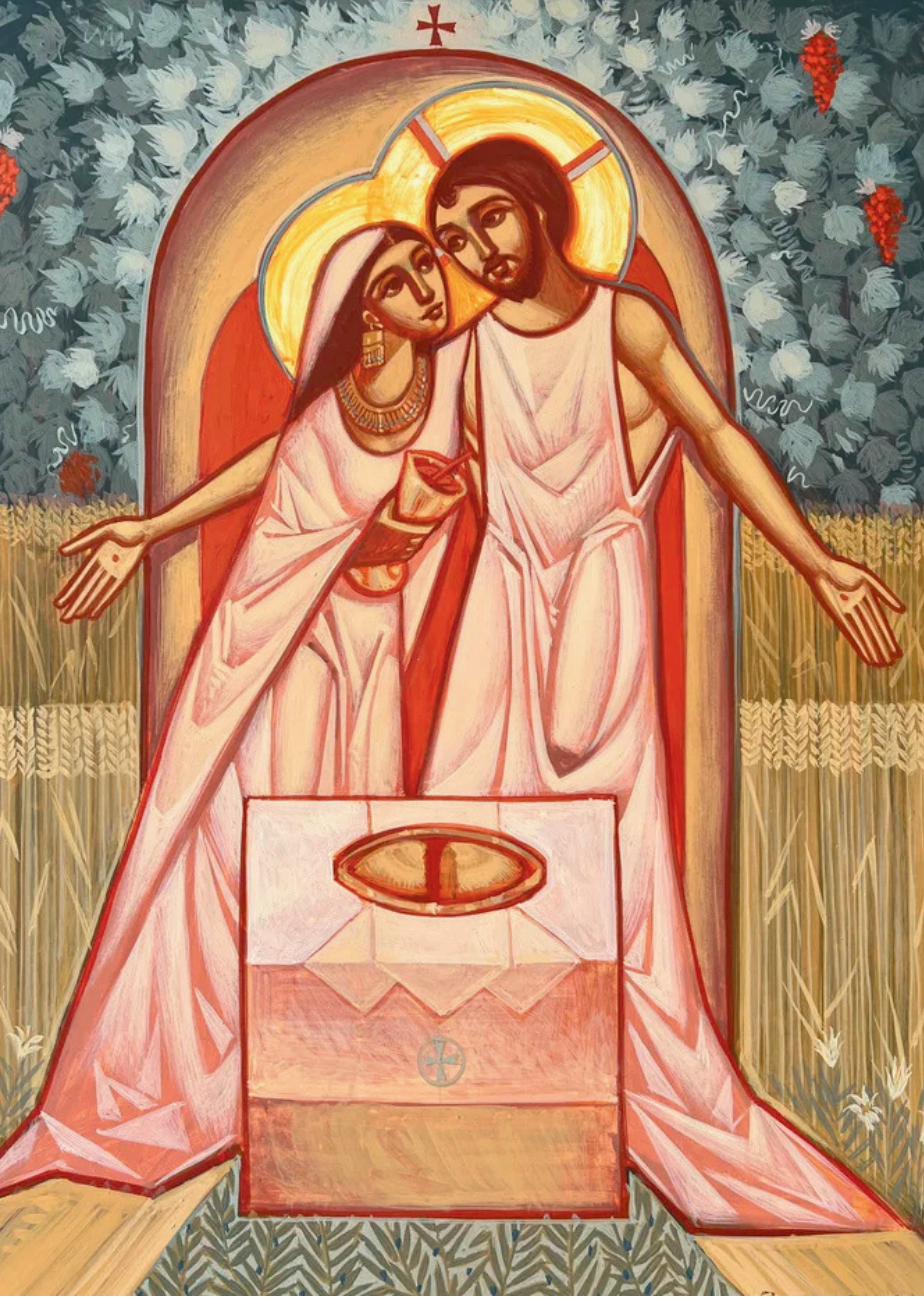
Song of Songs 3:3 — "Have you seen the one I love?"
“Have you seen the one I love?”
— Song of Songs 3:3
There is a question that runs like a golden thread through the whole of Scripture, from the garden of Eden to the last page of Revelation. It is not a question of doctrine or duty. It is the question of the searching soul: “Have you seen the One I love?” The bride in the Song of Songs asks it of the watchmen as she wanders the streets at night, and every servant gathered here today must ask it of themselves. For if we have lost sight of the Beloved, all our service — however impressive, however busy, however well-organised — is the restless wandering of a heart that has forgotten its way home.
Ask yourself. What is the extent of your love for God? How deep is it? Are all the spiritual practices that you observe saturated with love for the Lord? Are your prayers filled with love? Do you fast out of love for the Lord? Does your reading of the Bible abound with love? Are your prostrations and kneeling done with true love and submission to Him? Have you truly come to know God? Have you become His friend and spent time with Him? Have you lived with Him and experienced His existence in your life? These questions are not meant to crush you with guilt. They are meant to awaken you — to stir the embers of a fire that may have been banked beneath the ashes of routine.
For the truth is this: the servant of Christ is a sojourner. We are pilgrims seeking our eternal homeland. This feeling should not disappear from our heart, mind, or body for a single moment. We should cherish it both inwardly and outwardly, lest we inadvertently forget the state of our exile — an exile in which we feed on the inextinguishable love of God. The servant who forgets that they are a sojourner begins to settle. They put down roots in the soil of routine, and routine slowly hardens into obligation, and obligation into resentment. But the servant who remembers — who keeps the ache of longing alive in their heart — that servant walks through the world with a lightness that nothing can weigh down, because their treasure is not here. Their treasure is the Beloved Himself.
And what is this inextinguishable love? Fire can be quenched with a little water, but love, if it really burns within one’s heart, nothing can quench it — neither disdain, nor contempt, nor hostility, nor humiliation, nor indifference. If these negative feelings found a place in an enemy’s heart and death itself were embodied in a hostile person, even this would not quench love. This is not a poetic exaggeration. This is the lived experience of every saint and every faithful servant who has walked this road before you. Think of the martyrs. Think of the confessors. Think of the mothers who prayed through decades of heartbreak for a wayward child. Think of the servants who returned week after week to a classroom of indifferent faces and loved them still. What sustained them? Not willpower. Not a sense of duty. But a fire within that no amount of cold could extinguish — the fire of divine love itself, burning in a human heart.
St John Climacus, standing at the summit of his Ladder, tries to describe this fire and finds that even his great eloquence fails: “God is love. So he who wishes to define this, tries with bleary eyes to measure the sand in the ocean.” Love defies measurement because it comes from the One who is infinite. And yet — and this is the great paradox of the Christian life — this immeasurable love makes its home in the smallest and most fragile of vessels. It dwells in your heart, beloved servant, if only you will open the door. St Climacus tells us that “Love bestows prophecy; love yields miracles; love is an abyss of illumination; love is a fountain of fire — in the measure that it bubbles up, it inflames the thirsty soul.” You are that thirsty soul. And the fountain has never stopped flowing.
But how does one tend this fire? How does the busy servant, stretched between lesson preparation and pastoral visits, between family obligations and church meetings, keep the flame alive? The answer is not to add more activities to an already crowded schedule. The answer is simpler and more demanding than that: whoever wants to become a true Christian must first become a poet. You must love and suffer — suffer for the One you love. Not the suffering of forced labour, but the willing suffering of a heart so consumed by love that it cannot bear to be separated from its Beloved, even for a moment. In your spiritual life, engage in your daily contest simply, easily, and without force. The soul is sanctified and purified through the study of the Fathers, through the memorisation of the psalms and of portions of Scripture, through the singing of hymns, through the quiet repetition of the Jesus Prayer. These are not items on a checklist. They are the breath of the sojourner — the air that keeps the fire burning.
And when the fire seems to have gone out? When the servant sits in the ashes of burnout, wondering whether any of it ever mattered? Here is where the witness of the faithful is most consoling. However weak your spiritual life may be, do not despair. Desperation is one of the enemy’s weapons by which he seeks to weaken your resolve and stop your resistance. Even if you despair of yourself, never despair of the grace of God. If your own efforts do not lead you to repentance, God’s work for you will. He wants only one step from you. Take it, and He will lead you to the next. Make a new start every day, with new resolution, with enthusiasm and love, prayer and silence — not with anxiety. For Christ will come on His own and stoop over your soul, as long as He finds certain little things which gratify Him: good intention, humility, and love.
Sometimes the hearts of people are hard and stiff and cannot be entered quickly or easily. If you have tried hard to earn the hearts of people and could not, do not be upset. If you have entered a person’s heart and did not find the same level of love, do not be sad — for this happened to Christ, and He is the source of love, and He continued treating people with love. The servant who understands this is free. Free from the need for results. Free from the tyranny of metrics and attendance numbers. Free to love without return, because the love itself is its own reward — for it comes from God and returns to God, and nothing in the circuit is wasted.
St John Climacus gives the servant one final image to carry in their heart: “Repentance is the daughter of hope and the denial of despair. The penitent is an undisgraced convict. Repentance is reconciliation with the Lord.” If you have wandered from the fire, you have not been expelled from it. You need only turn around. Repentance raises the fallen. Mourning knocks at the gate of heaven. And holy humility opens it. With humility you attract the grace of God. You surrender yourself to the love of God, to worship and to prayer. The door was never locked. The Beloved was never far. He was waiting, all along, on the other side of your turning.
Beloved servants, you are sojourners. This world, with all its beauty and all its pain, is not your final home. Your homeland is the heart of God. And the road that leads there is not paved with achievements or accomplishments. It is paved with love — the small, daily, unremarkable loves that, when gathered together, form the great Love that carries you home. Every kind word spoken to a struggling child. Every prayer whispered for a soul you will never see again. Every moment of patience when your own heart was breaking. These are the cobblestones of the pilgrim’s road. And at the end of that road, you will hear the voice you have been longing for since before you were born: “I have loved you with an everlasting love; therefore with lovingkindness I have drawn you.”
Until that day, walk on. Keep the fire burning. And never forget: you are not walking alone. The cloud of witnesses surrounds you — St Augustine and St Chrysostom, St Cyril and St Climacus, the holy Fr Pishoy Kamel, and ten thousand saints whose names are written in heaven. They walked this road before you. They kept the fire alive. And they are cheering you on, beloved sojourner, all the way home.