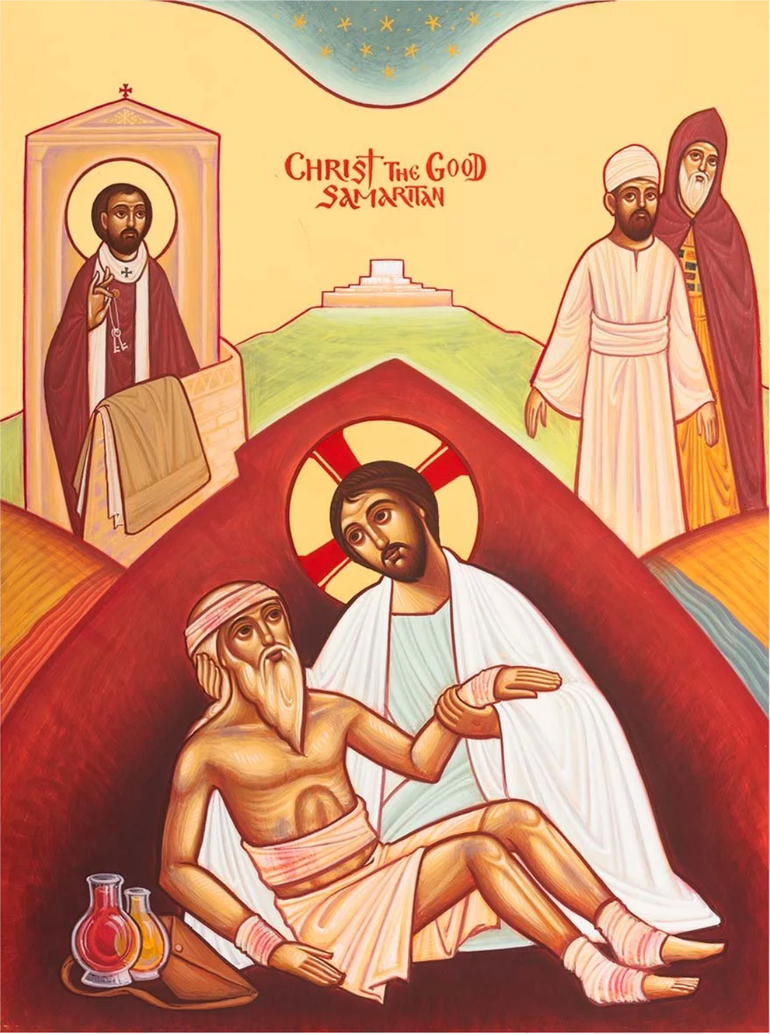
Having seen in the previous lesson who our Master is — the Good Shepherd who laid down His life for the sheep — we now turn to the question His example presses upon us: what does He expect of the ones He has called to serve with Him? The New Testament is not shy about answering. In the Pastoral Epistles especially, the Holy Spirit through St. Paul sketches for us a portrait of the Christian servant: a person grounded in the Scriptures, taught by heavenly wisdom, upright in conduct, clear in speech, steady in zeal, and always aiming not at a crowd of hearers but at a chain of disciples. None of these expectations is a standard to be reached by ourselves; each of them is a work of grace that the Lord is willing to perform in any servant who asks for it. In this lesson we will walk through six of these expectations in turn, so that when we stand before the children, the youth, or the inquirer, we will know what kind of people the Lord is quietly making us into as we serve.
Called by the Servant-King
The first expectation the Lord places on every servant is the one He placed on Himself. He does not begin by handing us a list of duties; He begins by handing us His own life as the pattern. Two of His disciples had approached Him through their mother, asking for thrones at His right and left hand. The other ten were indignant. And into that argument about greatness, the Lord spoke the sentence that has defined Christian service ever since:
“You know that the rulers of the Gentiles lord it over them, and those who are great exercise authority over them. Yet it shall not be so among you; but whoever desires to become great among you, let him be your servant. And whoever desires to be first among you, let him be your slave — just as the Son of Man did not come to be served, but to serve, and to give His life a ransom for many.” (Matthew 20:25–28, NKJV)
The vocabulary is striking. The Lord does not forbid greatness among His disciples; He redirects it. He does not tell them to be small. He tells them that the road to true greatness runs in the opposite direction from the one the world has been pointing them down. And then He points to Himself as proof. He is the Son of Man. He is greater than any of them will ever be. And He has spent His whole ministry on the underside of human life, where the tired and the sick and the ashamed have gathered, because that is where service goes.
If that is what Christ Himself embraced, what should we expect of ourselves? St. Paul answers for us, writing to his young disciple St. Timothy who was entering the work of the service:
“Let no one despise your youth, but be an example to the believers in word, in conduct, in love, in spirit, in faith, in purity. Till I come, give attention to reading, to exhortation, to doctrine. Do not neglect the gift that is in you, which was given to you by prophecy with the laying on of the hands of the eldership.” (1 Timothy 4:12–14, NKJV)
Every phrase of that charge deserves a slow reading, because each phrase is a facet of the single jewel called the servant’s life. An example in word — our speech is to teach even when we are not teaching. An example in conduct — our lives are to match what our mouths say. An example in love, in spirit, in faith, in purity — these are not character traits optional to ministry; they are the minimum soil in which ministry can grow. Then come the disciplines: reading, exhortation, doctrine. And behind all of it is the reminder that the gift we carry was given through the laying on of hands, through the Church, by the Spirit — it is not ours to squander. The servant’s life begins here: called by the Servant-King, charged with His example, entrusted with His gift.
Grounded in the Word
If we are to speak for the Lord, we had better first let the Lord speak to us. The first expectation after calling is Scripture. A servant who does not know the Word of God well has almost nothing of eternal value to give, no matter how naturally gifted he may be as a speaker or how charming she may be with the children. The treasury we dispense must first fill our own hearts:
“Let the word of Christ dwell in you richly in all wisdom, teaching and admonishing one another in psalms and hymns and spiritual songs, singing with grace in your hearts to the Lord.” (Colossians 3:16, NKJV)
Note the words St. Paul chose. He did not say, let the word of Christ visit you occasionally. He said dwell — take up residence, settle in, become a permanent household member of the heart. And not only dwell, but dwell richly, as a houseguest who has unpacked every suitcase. That kind of indwelling is what qualifies us to teach one another at all, because the teaching that follows (“teaching and admonishing one another”) is the overflow of a heart that is already full. An empty heart has nothing to overflow.
Scripture is not merely our favorite source; it is our only God-breathed source, and therefore it sits in a category of its own among all the books a servant will ever read:
“All Scripture is given by inspiration of God, and is profitable for doctrine, for reproof, for correction, for instruction in righteousness, that the man of God may be complete, thoroughly equipped for every good work.” (2 Timothy 3:16–17, NKJV)
The four purposes St. Paul names — doctrine, reproof, correction, instruction — are almost a description of the work of service itself. Doctrine teaches what is true; reproof names what has gone wrong; correction sets it right; instruction trains in the way of righteousness. The servant who knows the Scriptures has all four of these in his hand every time he opens the Bible. The servant who does not is working with a toolbox that is mostly empty.
But knowing the Word is not a task that ends when we graduate from Sunday School or seminary. It is a lifelong pursuit that even the greatest of the apostles refused to lay down. In the last letter St. Paul ever wrote, from a Roman prison, awaiting the executioner’s sword, he made a final request of St. Timothy:
“Bring the cloak that I left with Carpus at Troas when you come — and the books, especially the parchments.” (2 Timothy 4:13, NKJV)
Let us feel the weight of that sentence. Paul has preached for more than thirty years. He has been caught up to the third heaven and heard words unlawful to utter. He has written most of the letters that now form half the New Testament. He is, in the most literal sense, a man whose own words are Scripture. And with weeks to live, he asks for books. The Fathers noticed and would not let us forget. St. John Chrysostom returns to this habit of the servant over and over in his preaching:
“When you immerse your mind and heart in spiritual books, you will always be filled, for spiritual reading gives you a foundation in God.” – St. John Chrysostom, Third Homily on Lazarus
And Theophan the Recluse, summarizing centuries of monastic wisdom, refuses to let us treat reading as a luxury for those who have time:
“One must read, for this is an ascetical activity.” – Theophan the Recluse, The Path to Salvation
Ascetical — that is, a discipline, an exercise, a labor of the soul. Reading Scripture and the Fathers is not recreation for the servant; it is training. The servant who does not read grows thin, and a thin servant cannot feed anyone. Before we expect to feed others, let us be sure we have been fed.
Taught by the Spirit
Reading, however, is not yet enough. There are professors of theology in every great university who can parse the Greek of the New Testament better than most of us will ever read English, and who nevertheless do not believe one word of what the text says. Information is not the same as wisdom, and wisdom is not the same as heavenly wisdom. The servant needs the third of those, and only the third will do.
St. Paul draws the line sharply between a wisdom that is of this world and a wisdom that is given from above:
“Now we have received, not the spirit of the world, but the Spirit who is from God, that we might know the things that have been freely given to us by God. These things we also speak, not in words which man’s wisdom teaches but which the Holy Spirit teaches, comparing spiritual things with spiritual.” (1 Corinthians 2:12–13, NKJV)
Earthly wisdom is real; we are not called to despise it. A servant who prepares a lesson on a historical book of the Old Testament and neglects to learn what little archaeology can tell us about its world has cheated the children. But earthly wisdom cannot, by itself, reach the places in a hearer’s soul that only God has ever seen. It can describe the outside of a lamp; it cannot light it. For that, we need the wisdom the Holy Spirit teaches — the habit of comparing spiritual things with spiritual, of letting Scripture interpret Scripture, of letting the mind of Christ (which we have, by grace) shape the mind we bring to our preparation.
This is why St. Paul refuses to separate preaching from wisdom. The Gospel he preached was not merely news; it was news handled wisely, so that it could do its saving work in every hearer:
“Him we preach, warning every man and teaching every man in all wisdom, that we may present every man perfect in Christ Jesus.” (Colossians 1:28, NKJV)
Notice the three “every man”s. Wisdom is not a gift for our own private satisfaction; wisdom is what makes it possible to address every man, which is to say, each particular person with a particular story and a particular wound. The servant who has only one style of speaking has wisdom for one kind of hearer. The servant whom the Spirit has trained begins to find that the right word for the child, the right word for the teenager, the right word for the grieving parent, and the right word for the visiting unbeliever are not the same word — and that this is not a problem but a grace.
And since wisdom always travels with faith and truth, the servant must hold both. St. Paul describes his own ministry in precisely these terms: “a teacher of the Gentiles in faith and truth” (1 Timothy 2:7, NKJV). Faith keeps us warm; truth keeps us accurate. The Lord has joined them, and we dare not put them asunder. The servant’s lesson is to be reviewed for sound doctrine before it is carried into the classroom, because the same St. Paul who described his teaching as full of faith also warned his disciple against a ministry that has drifted from the truth:
“As I urged you when I went into Macedonia — remain in Ephesus that you may charge some that they teach no other doctrine.” (1 Timothy 1:3, NKJV)
A loving servant with a false doctrine will harm the flock more than a crude servant with a true one. The expectation, then, is that we will work to be both: warm in faith and clear in truth, both taught by the Spirit.
The Life That Matches the Word
It is possible to know the Scriptures, to have heavenly wisdom, and still to disqualify oneself from the service — by a life that does not match what the mouth is saying. The fourth expectation, therefore, is integrity, which is simply the old word for the condition in which one’s inner life and outer life are the same shape. St. Paul puts the danger plainly to the church at Rome:
“You, therefore, who teach another, do you not teach yourself? You who preach that a man should not steal, do you steal? You who say, ‘Do not commit adultery,’ do you commit adultery? You who abhor idols, do you rob temples? You who make your boast in the law, do you dishonor God through breaking the law?” (Romans 2:21–23, NKJV)
The servant is not called to be sinless — no servant ever has been, and no servant ever will be this side of the resurrection — but the servant is called to be struggling, in actual practice, against the very sins he is teaching others to struggle against. The lesson on prayer is hollow if the one giving it does not pray. The lesson on forgiveness is hollow if the one giving it refuses to forgive. The lesson on purity is hollow if the one giving it lives a double life. The children are not deceived for long; sooner or later the word and the life will be laid side by side, and the hearer will believe the life. This is the meaning of St. Paul’s other charge to Timothy:
“If you instruct the brethren in these things, you will be a good minister of Jesus Christ, nourished in the words of faith and of the good doctrine which you have carefully followed.” (1 Timothy 4:6, NKJV)
The little phrase “which you have carefully followed” is the whole point. The good minister is the one whose teaching is a report from his own road. He does not hand out maps of a country he has never visited. And lest we be tempted to shrug this off, St. James closes the door on every easy escape:
“My brethren, let not many of you become teachers, knowing that we shall receive a stricter judgment.” (James 3:1, NKJV)
Stricter. Not lighter. The servant stands in the place of the Master before the children, and the Master will ask what the servant did with that place. This is not a reason to run from the service — the Lord has called us, and we do not turn Him down — but it is a reason to enter the service with our eyes open and with a continual prayer on our lips that the life the Lord sees would match the life the children see. Integrity is not an achievement; it is a daily labor of keeping the two in alignment.
Persuasion, Parable, and the Reach of the Teacher
Next to integrity stands a quieter virtue that we sometimes forget to name: the labor of making ourselves understood. The Lord Himself took this labor seriously. He did not address the crowds in the technical idiom of the scribes. He spoke of sowers and seeds, of a lost coin and a lost sheep and a lost son, of a wedding feast and a pearl of great price. The Fathers read this as a deliberate pedagogical choice. St. Paul, who had every Pharisaic credential, made the same choice in his own ministry and was clear about why:
“Yet in the church I would rather speak five words with my understanding, that I may teach others also, than ten thousand words in a tongue.” (1 Corinthians 14:19, NKJV)
Five intelligible words outweigh ten thousand unintelligible ones. That is the servant’s arithmetic. A lesson overflowing with theological vocabulary that the children cannot carry home is a lesson that has not yet been taught. The servant’s work is not finished when the words leave our mouths; it is finished when the words land in the hearer’s heart. St. Gregory the Great, in the Pastoral Rule which shaped Christian ministry for a thousand years, made this principle the axis of an entire book:
“The same exhortation does not suit all, inasmuch as neither are all bound together by similarity of character. For the things that profit some often hurt others.” – St. Gregory the Great, Pastoral Rule, Book III, Prologue
He then spends the rest of the book sketching forty pairs of contrasting hearers — the timid and the bold, the patient and the impatient, the joyful and the sad, the married and the celibate — and asking the shepherd to speak differently to each. That is persuasion in the patristic sense: not manipulation, not salesmanship, but the servant’s care to bring the same eternal truth to this particular soul in a form it can receive. Applications, illustrations, stories, questions — these are not frills on top of a lesson; they are the bridges by which the lesson crosses from the servant to the hearer.
The Lord Himself has told us that, when we teach in this way, we do not teach alone and we do not teach small:
“Most assuredly, I say to you, he who believes in Me, the works that I do he will do also; and greater works than these he will do, because I go to My Father.” (John 14:12, NKJV)
Let us not miss what is promised there. The lowliest servant, faithfully teaching one Sunday School class in an unknown parish, stands on the same promise the apostles stood on. The Lord has not reserved “greater works” for saints in stained-glass windows. He has reserved them for anyone who believes. The labor of persuasion, the labor of finding the word that fits this hearer, is work the Lord Himself is pleased to multiply.
Zeal, Patience, and Disciples
The final expectation gathers up the first five and sends them forward in time. The servant is called not to a sprint but to a long obedience, and the fruit of that long obedience is not a crowd but a chain of disciples. Near the end of the letter in which he asked for the books, St. Paul gives St. Timothy what may be the clearest charge on zeal anywhere in the New Testament:
“Preach the word! Be ready in season and out of season. Convince, rebuke, exhort, with all longsuffering and teaching.” (2 Timothy 4:2, NKJV)
In season, when the class is full and attentive and the lesson lands. Out of season, when only three children have come, when the sermon seems to have gone nowhere, when the ones we have served longest are the ones who have wounded us most. Preach the word. Convince, when reason will receive it. Rebuke, when rebuke will save a soul. Exhort, when the hearer needs heart. And do all of it with longsuffering — a word that literally means long-tempered, slow to give up on a person — and with teaching, that is, never weaponizing the service into a personal vendetta, always returning the hearer to the truth.
This is why attitude matters as much as aptitude. The servant with every gift but a brittle spirit will not last. The servant with modest gifts and a supple spirit will bear fruit for decades. St. Paul even envisions the community around the servant sharing in his labor, so that zeal is not left solitary:
“Let him who is taught the word share in all good things with him who teaches.” (Galatians 6:6, NKJV)
And at the end of the long obedience stands the true goal of the service, which our Lord named in His last commandment before He ascended:
“Go therefore and make disciples of all the nations, baptizing them in the name of the Father and of the Son and of the Holy Spirit, teaching them to observe all things that I have commanded you; and lo, I am with you always, even to the end of the age.” (Matthew 28:19–20, NKJV)
The Lord did not say, make hearers. He did not say, make students. He said, make disciples. A disciple is a hearer who has become a follower, and a follower who is becoming, by grace, a teacher in turn. This is why St. Paul, at the very end of his life, measures his ministry not by how many times he preached but by how many links the chain of discipleship has grown:
“And the things that you have heard from me among many witnesses, commit these to faithful men who will be able to teach others also.” (2 Timothy 2:2, NKJV)
There are four generations in that single verse: Paul, Timothy, the faithful men, and the others also. The servant’s life is not a candle burning alone; it is a candle lighting other candles, and those candles lighting still others, until at last the room the Lord has asked us to fill is fully lit. May the Lord who called us find us, at the end, with our hands full of the disciples He has given us through our long labor — and may He count us among the good and faithful servants who have entered into the joy of their Lord.