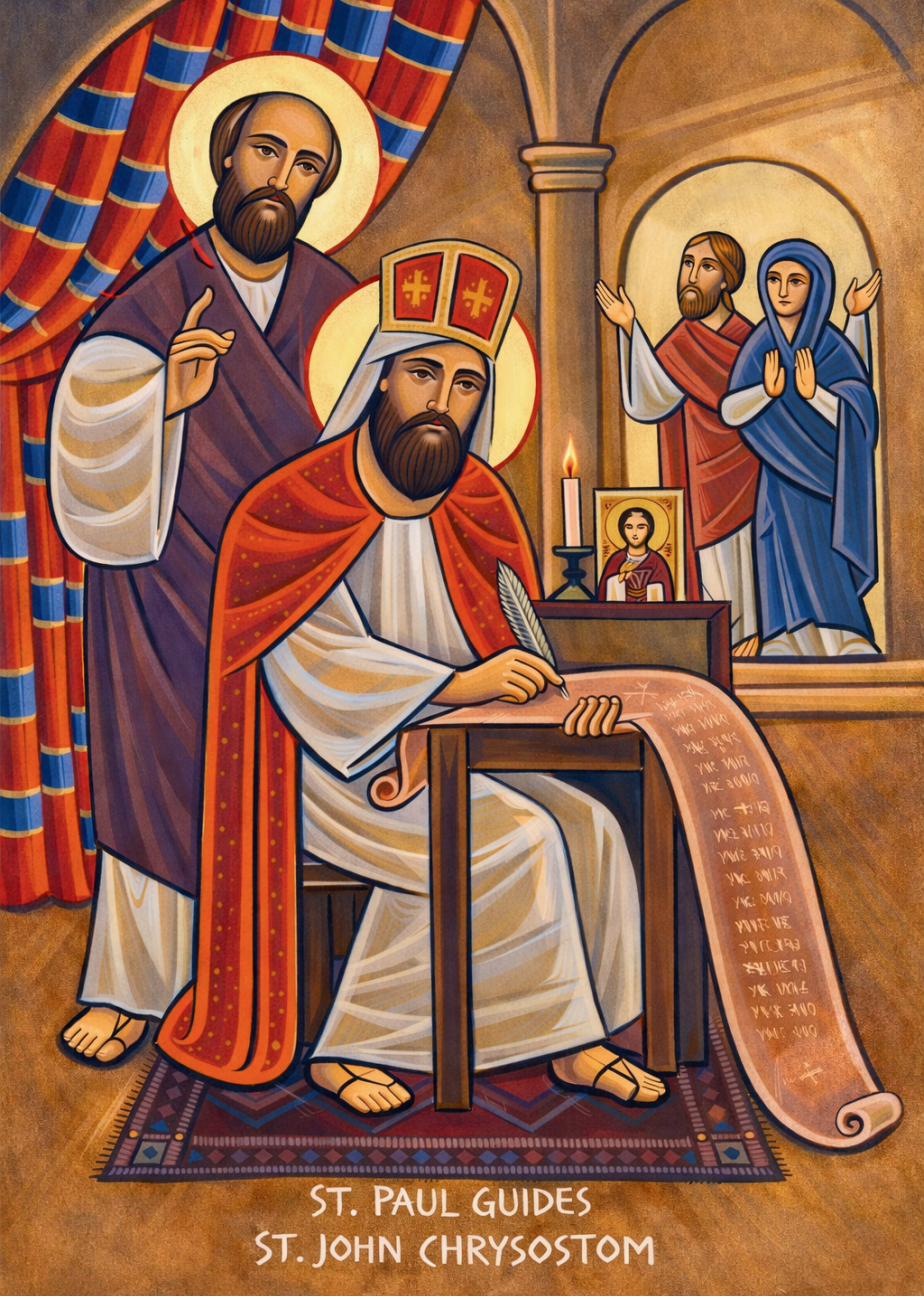
- 1 Introduction & Organization
Introduction: Faith Is Received, Not Invented
Passing on the Orthodox faith to the next generation is not simply an educational task; it is a sacred trust. The faith we teach is not ours to modify, simplify, or reinterpret according to personal preference. Rather, it is a living inheritance received from Christ, preserved by the Apostles, safeguarded by the Fathers, and faithfully handed down through the life of the Church.
Teaching, therefore, is not about creativity or innovation in doctrine. It is about faithfulness. It is a responsibility that we must embrace with reverence and utmost care. The importance of transmitting the faith accurately, without adding, guessing, or interpreting on our own, cannot be overstated.
A helpful analogy is the well-known “telephone” or “charades” game. A message whispered from one person to another gradually becomes distorted. Details are lost, meanings shift, and the original message is often unrecognizable by the end. In the same way, when the faith is passed on casually, selectively, or creatively, it becomes altered. Over time, even small changes can result in serious theological distortions.
For this reason, Orthodox teaching insists on returning continually to the source:
- Holy Scripture,
- Holy Tradition,
- the teachings of the Church Fathers,
- and the lived life of the Church.
Only when teaching remains anchored in these foundations can the faith be transmitted in its fullness, purity, and power.
What Are We Passing Down?
When we ask ourselves what we are teaching our children, the answer is clearly proclaimed every time we recite the Creed. We pass down faith in the Church that is:
- One, Holy, Catholic, and Apostolic
These four marks are not abstract descriptions of the Church alone; they are also the defining characteristics of Orthodox teaching itself. Every lesson, explanation, activity, and example should reflect and preserve these four qualities.
Orthodox teaching, therefore, is:
- One in doctrine and faith
- Holy, leading to sanctification
- Catholic, universal and complete
- Apostolic, rooted in what was handed down
We will explore each of these characteristics and explain how they shape the way we teach.
One: Unity of Faith, Teaching, and Doctrine
Orthodox teaching is characterized first by oneness. This oneness is not merely emotional unity or friendliness, but unity in faith, doctrine, and confession.
St. Paul repeatedly emphasizes this truth. In the book of Romans, St. Paul writes to the Christians believers in Rome. They consisted of both Jewish and Gentile Christians, which led to some divisions and tensions within the community. Seeing this tension, St. Paul urges believers to share not only love, but also a unified understanding of the faith:
"May the God who gives endurance and encouragement give you the same attitude of mind toward each other that Christ Jesus had, so that with one mind and one voice you may glorify the God and Father of our Lord Jesus Christ." (Romans 15:5–6)
And again, to the Corinthians, who were also divided:
“That you all speak the same thing, and that there be no divisions among you, but that you be perfectly joined together in the same mind and in the same judgment.” (1 Corinthians 1:10)
Unity, therefore, is not achieved by ignoring doctrinal differences. True unity requires shared belief.
Unity vs. Mere Tolerance
The purpose of teaching is precisely this unity. People might ask,
"Why can't we all be friendly and loving towards all Christians and consider ourselves one?"
The answer lies in the definition of being one in the context of the church. We can be one in many aspects, but what do we mean in the church when we speak about this oneness?
The question of why we cannot be friendly and loving towards all Christians and consider ourselves one is a complex one. On the surface, it seems like a simple matter of practicing love and acceptance.
The Orthodox Church affirms that we must love all people, respect all individuals, and treat everyone with kindness. However, love does not require doctrinal compromise. Being “one” in the Church means sharing the same faith as it has been received—not merely agreeing to coexist.
Differences in beliefs about salvation, sacraments, priesthood, and worship are not minor disagreements. Some beliefs are fundamentally different and cannot be reconciled.
For example, some denominations believe that salvation is only possible through faith in Jesus Christ, while others believe that good works are also necessary. These are two fundamentally different understandings of the path to salvation, and they cannot be reconciled. This does not mean that we cannot be friendly and loving towards people of other denominations. Of course, we can and should strive to be kind and respectful to everyone, regardless of their beliefs. However, we must also be honest about the fact that there are some fundamental differences between different Christian denominations, and these differences can make it difficult to achieve true unity.
Oneness of faith
These beliefs shape how we understand God, salvation, and the Christian life. For this reason, the Church insists on unity in truth, not unity at the expense of truth.
As Saint Jude exhorts:
“Beloved, while I was very diligent to write to you concerning our common salvation, I found it necessary to write to you exhorting you to contend earnestly for the faith which was once for all delivered to the saints.” (Jude 1:3)
This means that we must be faithful to the teachings of Jesus Christ and defend the truth against error. We cannot simply be nice and friendly and make everyone feel good. We must also be willing to speak the truth, even when it is unpopular.
Orthodox teaching preserves unity by faithfully transmitting this one faith without addition, subtraction, or reinterpretation.
The passage from Ephesians 4:5-6 further emphasizes the importance of unity in the faith. It speaks of one body, one Spirit, one hope, one Lord, one faith, one baptism, and one God and Father of all.
“There is one body and one Spirit, just as you were called in one hope of your calling; one Lord, one faith, one baptism; one God and Father of all, who is above all, and through all, and in you all. (Ephesians 4:5-6)
This is the ideal that we should strive for, but it is not always easy to achieve.
How to stay one in teaching?
The true church of the Lord Jesus Christ stands apart as unique and distinct. It is not simply any faith or religious organization but the embodiment of the one true faith. The phrase "THE Faith" holds significant weight, emphasizing the specificity of this belief system.
If Orthodox teaching is truly one, then it cannot be drawn from multiple competing authorities. Unity of faith demands unity of source. From the beginning, the Church understood Holy Scripture as the written witness to the one faith revealed by God.
Scripture is not one source among many; it is the common foundation that unites the Church across geography, culture, and time. This is why Saint Paul warns against “another gospel” and insists that the Church “speak the same thing” (1 Corinthians 1:10). Without a shared biblical foundation, unity becomes impossible.
However, Orthodox teaching does not approach Scripture as isolated individuals. The Bible is not interpreted privately or creatively, but within the Church. Scripture belongs to the Church because it was written by the Church and for the Church. When teaching departs from Scripture, or uses Scripture selectively or out of context, unity fractures and confusion enters.
Therefore, an Orthodox teaching must be biblically rooted, not as proof-texting, but as faithful continuity with the revealed Word of God as received by the Church. A lesson without Scripture may sound inspiring, but it cannot preserve the oneness of the faith.
Holy: Teaching That Leads to Sanctification
Orthodox teaching is not only correct—it is sanctifying. Its purpose is not simply to inform the mind, but to transform the individual.
Saint Paul describes Christ’s purpose for the Church:
“Just as Christ also loved the church and gave Himself for her, that He might sanctify and cleanse her with the washing of water by the word, that He might present her to Himself a glorious church, not having spot or wrinkle or any such thing, but that she should be holy and without blemish.” (Eph 5:25-27).
Holiness originates in Christ Himself. Through His sacrifice, we are cleansed and set apart. Yet sanctification is not a one-time event; it is a lifelong journey of growth, repentance, and transformation.
The goal of this sanctification is to present the church to Himself as a glorious church, free from any blemish or wrinkle.
Teaching the Mysteries of the Church
Orthodox teaching always directs believers toward the Mysteries (Sacraments) of the Church. Through Baptism, Chrismation, Confession, Eucharist, and the other Mysteries, believers participate in the life of Christ and are continually renewed.
Teaching that does not lead to sacramental life, repentance, and spiritual growth falls short of Orthodox holiness. The goal of teaching is not simply moral improvement, but communion with God.
Holiness Requires More Than Information
Orthodox teaching is not merely about conveying correct ideas; it exists to sanctify the hearer. If teaching does not lead toward repentance, transformation, consecration and communion with God, it fails its purpose.
Holiness is not theoretical. It is lived, embodied, and experienced — especially through the liturgical life of the Church. This is why Orthodox teaching is inseparable from worship. What the Church believes, she prays. What she prays, she lives.
Teaching that is disconnected from the liturgy risks becoming abstract and moralistic. By contrast, liturgical teaching forms the soul through:
- repetition,
- reverence,
- posture,
- fasting,
- prayer,
- and sacramental participation.
The Church does not teach holiness by lecture alone, but by drawing the faithful into a holy rhythm of life. When a lesson connects to the Liturgy, the Psalms, the Feasts, or the Mysteries, it ceases to be mere instruction and becomes formation.
For this reason, Orthodox teaching must be liturgical in spirit and direction. Even when taught outside the church building, it should point back to the altar. Teaching that does not lead to worship does not fully lead to holiness.
Catholic: Universal, Complete, and for All
In the Creed, the word Catholic does not refer to a particular denomination. It comes from the Greek katholikos, meaning universal, complete, and whole.
Orthodox teaching is catholic in three important ways:
- It is offered to all people
- It preserves the fullness of the faith
- It transcends culture, language, and time
Christ commanded His disciples:
““But you shall receive power when the Holy Spirit has come upon you; and you shall be witnesses to Me in Jerusalem, and in all Judea and Samaria, and to the end of the earth.” (Acts 1:8)
The commandment given by the Lord to His disciples in Acts 1:8 serves as the cornerstone of this catholicity. Jesus instructs His followers to spread the Gospel message beyond the borders of Judea and Samaria, reaching to the remote corners of the earth.
The Church did not tailor the faith to fit cultures; rather, the faith transformed cultures while remaining unchanged. Orthodox teaching today must reflect the same universality—accessible to all, yet uncompromised.
The Church’s liturgical life, saints, and traditions reflect this catholicity. The same faith is lived across generations and continents, uniting believers into one Body.
Universality Proven by Lived Witness
Orthodox teaching is catholic — universal, complete, and shared by the whole Church. But how do we know that a teaching is truly universal and not merely local, modern, or personal?
The answer is found in the lives of the saints.
The saints are not optional illustrations or inspirational add-ons. They are the living proof that a teaching belongs to the Church everywhere and always. What the Church teaches, the saints live. A doctrine that cannot be found embodied in the saints is suspect.
The saints span centuries, cultures, languages, and circumstances — monks and martyrs, bishops and laypeople, men and women, young and old. Yet they share the same faith, the same sacraments, and the same spiritual struggle. This unity across time is the clearest evidence of catholicity.
For example, repentance, confession, fasting, veneration of saints, Eucharistic devotion, and obedience to the Church are not regional customs. They appear consistently in the lives of saints from Egypt to Rome to Ethiopia to Syria.
Therefore, an Orthodox lesson should always ask:
- Who lived this teaching?
- How did it shape their life?
Teaching that cannot be traced in the saints risks becoming theoretical rather than truly catholic.
Apostolic: Words founded in Christ and the fathers
Orthodox teaching is apostolic, meaning it is grounded in what was handed down from Christ through the Apostles. The foundation of the Christian Church is built upon the teachings of the Apostles, prophets, and the Lord Jesus Christ Himself, who is the Chief Cornerstone.
It is significant to note that the Lord Jesus Christ did not personally write a gospel, but His teachings and principles were passed down through oral tradition and later recorded in the writings of the Apostles and evangelists.
St. Paul, in his second letter to Timothy, emphasizes the importance of continuing in the things that Timothy has learned and been assured of. St. Paul commends Timothy for his faithfulness to the teachings he received from childhood, which were based on the Holy Scriptures.
“But you must continue in the things which you have learned and been assured of, knowing from whom you have learned them, and that from childhood you have known the Holy Scriptures, which are able to make you wise for salvation through faith which is in Christ Jesus. All Scripture is given by inspiration of God, and is profitable for doctrine, for reproof, for correction, for instruction in righteousness, 17 that the man of God may be complete, thoroughly equipped for every good work.” (2 Tim 14-17)
St. Paul's praise for Timothy's faithfulness serves as an example for us to follow, reminding us that we too should strive to remain steadfast in our faith. The example of Abel, who offered a more excellent sacrifice than Cain by faith, demonstrates that faith existed centuries before the written commandments. Abel's faith and knowledge of animal sacrifices were likely passed down from his father, Adam, who received them directly from God. In the book of Hebrews, chapter 11, verse 6, we read about the faith of Abel: "By faith Abel offered to God a more excellent sacrifice than Cain."
This verse raises several intriguing questions, one of which is: where did Abel get his faith? Abel lived approximately 14 centuries before the written commandments were given to Moses. During this time, there were no written instructions or explicit laws governing religious practices. So, how did Abel acquire the faith that enabled him to offer a more excellent sacrifice to God than his brother Cain?
The answer to this question lies in the relationship between Abel and his father, Adam. Adam, being the first human created by God, had a direct and intimate connection with the Creator. It is reasonable to assume that Adam received divine instruction and revelation from God Himself, including knowledge about the importance of faith and the practice of offering animal sacrifices. As a son of Adam, Abel would have been raised and nurtured in this environment of divine revelation. From his father, Abel would have learned about the nature of God, the need for worship, and the significance of faith in God. Adam, having experienced the presence and glory of God, would have passed on these precious truths to his son, instilling in him a deep faith and understanding.
Similarly, St. Paul's reference to Jannes and Jambres, the two witches who resisted Moses the Prophet, illustrates the concept of tradition in transmitting information.
“Now as Jannes and Jambres resisted Moses, so do these also resist the truth: men of corrupt minds, disapproved concerning the faith” (2 Timothy 3:8)
While their names are not explicitly mentioned in the books of Moses or the rest of the Old Testament, St. Paul knew about them through oral tradition. This highlights the significance of tradition in preserving historical accounts and religious teachings.
The Orthodox Church does not separate Scripture from Tradition. Scripture is the heart of Tradition, and Tradition is the living context in which Scripture is understood. Orthodox teaching remains apostolic by faithfully preserving both Scripture and Tradition without contradiction.
Faith That Is Handed Down, Not Reconstructed
Orthodox teaching is apostolic because it is received, not reinvented. The Apostles handed down the faith to the Church, and the Church preserved it through the Fathers.
The Church Fathers are not merely early theologians or historical commentators. They are authorized witnesses of how the Apostolic faith was understood, lived, defended, and explained. To teach without reference to the Fathers is to sever teaching from its lineage.
The Fathers safeguard this continuity. They protect the Church from novelty disguised as insight. They ensure that Scripture is interpreted according to the mind of the Church, not the imagination of the individual.
Orthodox teaching, therefore, must be patristic — not by overwhelming students with quotations, but by ensuring that every lesson aligns with the consensus and spirit of the Fathers. Even a single patristic reference anchors a teaching within the apostolic stream.
Teaching without the Fathers risks becoming modern opinion rather than apostolic faith.
What Makes a Teaching Truly Orthodox?
An Orthodox teaching is not defined by tone, aesthetics, or intention. It is defined by content and continuity.
A teaching is Orthodox when it is:
- Biblical, preserving the oneness of the faith
- Consecrating and liturgical, leading to holiness
- Confirmed in the saints, proving its catholicity
- Rooted in the Fathers, ensuring apostolic continuity
If any of these elements are missing, the teaching may still sound Christian — but it is no longer fully Orthodox.
This is not rigidity. It is faithfulness.
Apostolic Responsibility: The Vows of the Church
Those entrusted with teaching the faith carry a serious responsibility. Bishops and priests make solemn vows to preserve and teach the Orthodox faith faithfully. Servants share in this responsibility.
At ordination, priests vow to:
- remain steadfast in the Orthodox faith,
- preserve the traditions of the Church,
- teach the people the true faith,
- and live as examples of holiness.
‘To be steadfast in the holy orthodox faith until the last breath, to respect the canons of the Holy Church, and to keep all her traditions, rites, customs, and teachings. I will make every effort to teach the people the true faith, and lead them in a holy and righteous life, and to be an example for them in every good deed.”(The Vow)
In many churches, servants also sign Faith and Order commitments, acknowledging that teaching Orthodoxy requires accountability, humility, and obedience to the Church.
Bishops, priests, and Sunday school servants all have a responsibility to teach the Catholic faith to children. It is not enough to simply say that we are Christians; we must also be able to explain what we believe and why we believe it. This is essential for the spiritual growth of our children.
For a three-day convention, bishops, priests, and servants leave everything behind to focus on explaining the faith. They do this because they know that it is important for children to have a strong foundation in the faith. They want to help children grow in their love of God and their understanding of the Catholic Church.
Every element, that is, ‘One, Holy, Catholic and apostolic’ is incorporated in the vow. This is the ultimate goal of all orthodox teachings. This is why in some churches, servants sometimes sign a Faith and Order Vow letter: “I will be faithful to the Orthodox Faith until the last breath and respect the laws and teachings of the Holy Church. I will faithfully put my effort to teach those entrusted to me and will lead them in the life of holiness and righteousness while ensuring myself to be a good example to them in every good deed, hidden and manifest.”
The responsibility to teach the faith does not rest solely on the shoulders of bishops, priests, and Sunday school servants. Parents also have a responsibility to teach their children about the faith. They are the primary educators of their children, and they have a unique opportunity to shape their children's spiritual development. Parents can teach their children about the faith by setting a good example, by praying with them, and by talking to them about God. They can also take their children to church, enroll them in religious education classes, and encourage them to participate in other faith-based activities. By working together, bishops, priests, Sunday school servants, and parents can help children to grow in their faith and develop a lifelong relationship with God.
Discernment in Teaching Materials
Orthodox teaching requires discernment, not suspicion, but awareness.
Servants must evaluate:
- lesson content,
- crafts,
- songs,
- videos,
- and activities
If you were a coordinator tasked with reviewing lessons, you would need to adopt a critical and discerning approach. Your primary responsibility would be to ensure that the lessons align with Orthodox teachings and do not contain any non-Orthodox or potentially misleading content.
- When reviewing the lesson plan:
- Are there any statements or ideas that deviate from Orthodox teachings?
- Do the lesson materials accurately reflect Orthodox beliefs and practices?
- Are there any potential areas of confusion or misinterpretation that need to be addressed?
- Is the reference source in line with the Orthodox Faith?
- When selecting crafts and activities for the lesson:
- Do the crafts or activities promote Orthodox values and morals?
- Are they age-appropriate and suitable for the intended audience?
- Do they require the use of any materials or tools that may be considered inappropriate or dangerous?
- When reviewing videos or other multimedia content for the lesson:
- Do the videos or multimedia content accurately represent Orthodox teachings?
- Are they free from objectionable or offensive language, imagery, or music?
- Are the videos or multimedia content appropriate for the intended audience?
These should be things you ask yourself too when you’re preparing the lesson, when you’re doing your lesson plan, looking for crafts, listening to videos, etc… Keep in mind, sometimes there are things that are not necessarily wrong, but just seeing them should trigger in our minds to emphasize something in orthodoxy.
For example, the statement ‘love one another’, there is nothing wrong with that! Or, ‘ Do not judge’, likewise, nothing wrong with that. But we then can emphasize that we love everyone but we may not agree with their behavior! There’s a difference between love and accepting sin. These subtleties help preserve orthodox teachings. Sometimes, it's not about what is explicitly stated, but rather what is implied or suggested that can be problematic.
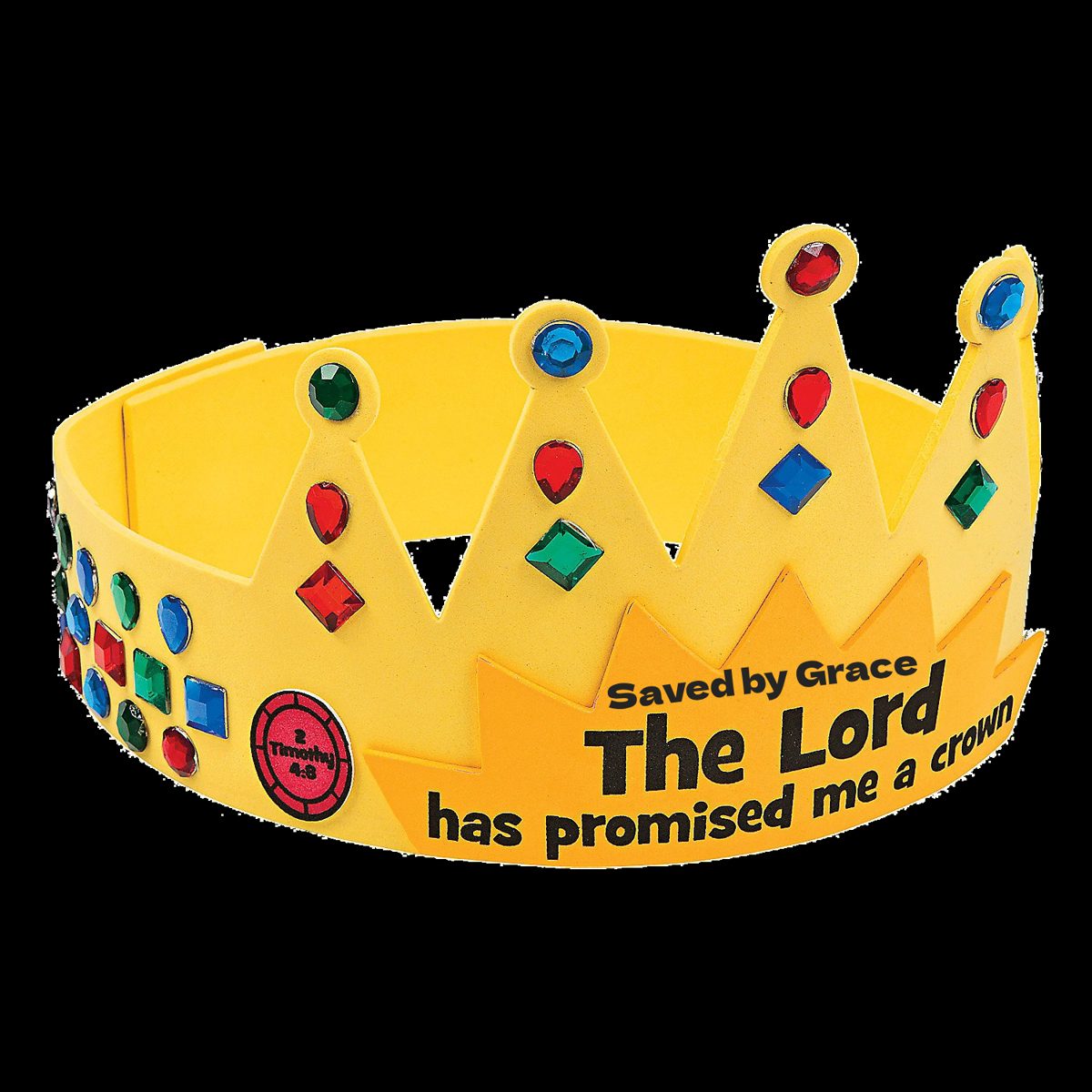
In the crown image on the left, the crown is entitled The Lord Promised me a Crown - Saved by grace. This phrase carries profound significance for our understanding of salvation and the relationship between faith and works. At the core of our teachings, we emphasize the importance of salvation through faith in Jesus Christ. Grace, an undeserved gift from God, is the
foundation upon which our salvation rests. It is through faith that we receive forgiveness of sins and reconciliation with God. However, our understanding of salvation does not end with mere belief.
"Thus also faith by itself, if it does not have works, is dead" (James 2:17)
"You believe that there is one God. You do well. Even the demons believe; and tremble! But do you want to know, O foolish man, that faith without works is dead?"(James 2:19-20)
This passage challenges us to consider the inseparable connection between faith and works. Faith, without the accompanying actions that demonstrate our love for God and others, is dead. Genuine faith produces a natural desire to live a life that glorifies God and reflects His character.
"For the Son of Man will come in the glory of His Father with His angels, and then He will reward each according to his works" (Mt 16:27).
This verse further reinforces the idea that our works will be taken into account when we stand before Jesus Christ on the Day of Judgment. Each person will be rewarded according to their deeds, demonstrating the importance of living a life consistent with our faith.
It is crucial for us to be attentive and aware of different teachings regarding salvation. By doing so, we can avoid disseminating unorthodox beliefs that undermine the true gospel message. The crown adorned with the words "Saved by grace" while true, can be misinterpreted due to the heresy of the 5 solas.
There are many other examples of materials that seem at a first glance permissible but contain unorthodox content. A song like ‘Here I am to worship’ has lyrics “Call upon the Name of the Lord and be saved” that imply the heresy of salvation in a moment. All of which do not remind us of the importance of the mysteries for salvation. Or songs that may not be heretical but do not present the reverence that the orthodox church teaches when it comes to prayer with songs that have exceeding clapping, jumping and dancing. The church has throughout not changed its method of praying and praising. Introducing these novel ideas, though at first glance may seem pleasant, are not in line with the ‘One, Holy, Catholic and Apostolic’ teaching that we are striving for.
By asking yourself these questions and critically evaluating the lesson materials, you can help preserve Orthodox teachings and ensure that the lessons are both informative and edifying for the students.
Orthodox Emphasis
Because children encounter many ideas outside the Church, Orthodox teaching must sometimes emphasize what makes our faith distinctive.
For example:
- Repentance includes confession before God in the presence of a priest.
- Baptism is participation in Christ’s death and resurrection.
- The Eucharist is truly the Body and Blood of Christ.
- Saints are living members of the Church who intercede for us.
These emphases do not exist to oppose others, but to preserve the fullness of Orthodox life.
In other words, a Sunday school lesson may imply to repent whenever you do something wrong. This statement is entirely accurate. However, since we are aware that other denominations do not share our belief in confession and priesthood, we must clarify this point when teaching children about repentance. We emphasize that after repenting, it is essential to go and confess in front of God in the presence of Abouna. By doing so, Abouna will pray for your absolution, and all your sins will be forgiven.
The following table is a table with subject that often require additional emphasis to the Orthodox teaching.
| Challenges | Emphasis in Sunday School |
|---|---|
| Sign of the Cross | Teach the kids the power of the cross, making the sign of the cross. |
| Saved by Grace alone | We teach the kids that we have to do good works, and living in the sacraments. Grace is provided through the sacraments |
| Priesthood | We teach the kids that we believe in the sacraments, in confession in front of a priest |
| Baptism | Emphasize by immersion not sprinkling, infant baptism applicable. |
| Veneration of the saints | Teach the kids to ask for the intercessions of the saints in their prayers. |
| Communion | Teach the kids that the Eucharist is the Real body and blood |
| Early church fathers, Holy Tradition | We teach the kids to read commentary but not anything written. We use early church fathers, Holy Tradition |
| Pictures and Icons | We teach the kids to light candles in front of the icons, to ask for intercession of saints, etc. |