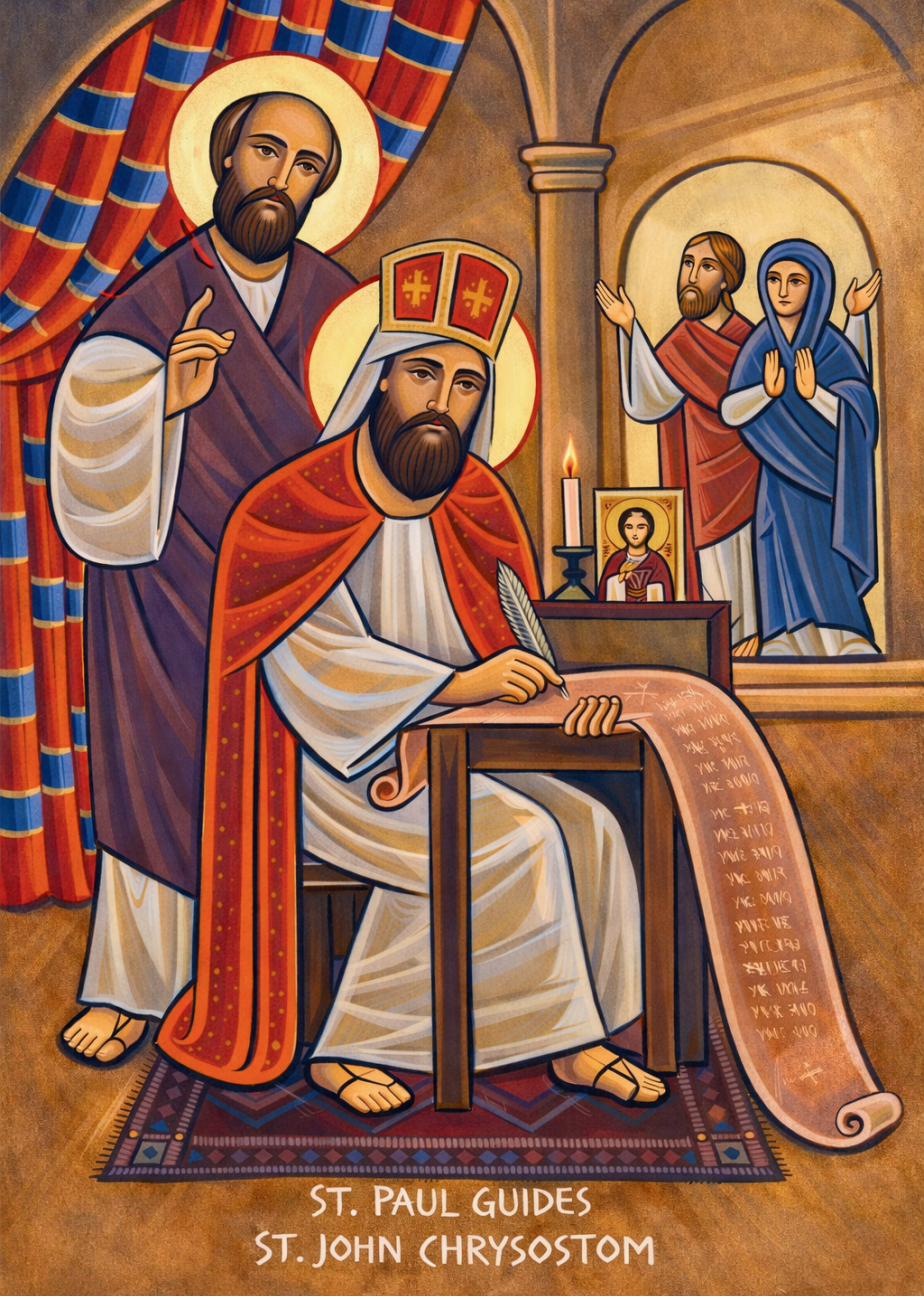
- 1 Leadership
Relation Between Leadership and Service
Being granted the privilege and responsibility to serve, we, servants, are being called to leadership. It is a profound calling that demands not only stewardship but also the ability to guide and inspire others. In the corporate world, the primary responsibility of a leader is often perceived as the need to increase organizational wealth and enhance its reputation. These objectives, while significant, represent a limited understanding of leadership's true purpose.
To grasp the essence of leadership, let us turn to God's first dealings with man. In the words of Genesis 1:26, "Let us make man in our image, according to our likeness; let them have dominion." This encapsulates the fundamental principle of leadership: to create, to nurture, and to empower others to reach their full potential. Leadership influences others. Leadership is not self-seeking but rather seeking to bring the best out of those around them. Thus, great service almost always requires great leadership.
Leadership vs Management
In the realm of leadership and management, John C. Maxwell offers a profound insight when he states, "A leader is one who knows the way, goes the way, and shows the way." This statement encapsulates the essence of effective leadership and distinguishes it from management. Leadership is not merely about having a vision or understanding the path; it involves actively embarking on the journey, setting an example, and guiding others along the way.
At its core, leadership is a skill of influence, one that harnesses the potential and enthusiasm of individuals to work towards common objectives. A true leader possesses the ability to inspire, motivate, and empower others, enabling them to reach their full potential and contribute to the greater good. By fostering a sense of purpose and belonging, leaders can create a team of highly engaged and dedicated individuals who are willing to go above and beyond to achieve their goals.
In contrast, management focuses on the practical aspects of getting things done. It involves planning, controlling, delegating tasks, developing strategies, and organizing resources efficiently. While management is essential for the smooth operation of any organization, it is distinct from leadership. Managers are primarily concerned with the execution of tasks and the achievement of specific objectives. They ensure that resources are allocated effectively, processes are followed, and deadlines are met.
While leadership and management are often intertwined, they represent distinct roles and skill sets. Leaders are visionaries who set the direction and inspire others, while managers are responsible for implementing those visions and ensuring operational efficiency. Leaders provide the vision, purpose, and motivation that drive an organization forward, while managers ensure that the necessary structures, systems, and processes are in place to turn that vision into reality. Typically, great leadership translates into great service.
Five Levels of Leadership
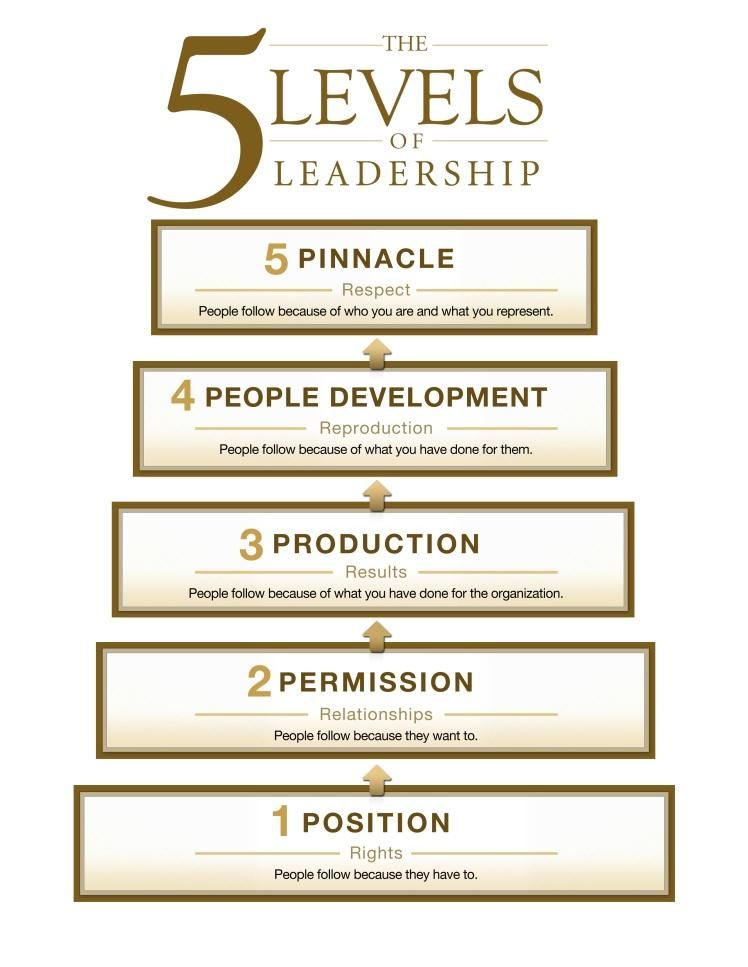
There are five levels of leadership that will be discussed, inspired by John Maxwell’s book ‘5 Levels of Leadership’: pinnacle/top-down, people development, production, permission, and position. Below shows the hierarchy of the levels as well as a brief description on what they entail when it comes to a leader. These elements will apply to both the servant and real world scenarios of leadership opportunities. What kind of leader are you aiming to be?
Positional Leader - Follow
Because They Have To
In this case, influence is provided solely due to the title. Following a positional leader produces the least output, because followers tend to be: clock watchers, mentally absent, or minimalists. Noticing that if you interact with those types of people regularly, it may be an indication of you potentially being a positional leader. These elements will apply to both the servant and real world scenarios of leadership opportunities.
Based on the interactions, you can see whether a person may be viewing your leadership as positional. For example, clock watchers. At times, while teaching, you may stop and see if anyone has questions. A child will raise his hands and ask you a question. A question, you had not seen coming, especially if it was his first time. “Sir, how much time is left?” Know that in that scenario, it is likely there is no connection and no relationship. It is a positional interaction, with little to no influence. The child is not paying attention, and is only there by force, as in because it is mandatory.
Others may be mentally absent, characterized by a physical presence but a lack of engagement: ‘there but not there.’ Typically they are daydreaming or thinking of something else even when they are with others. They are similar to clock watchers, words go in one way and out the other. There is no interest shown. They display a noticeable absence of curiosity and interest.
At the other end of the spectrum, one may encounter the minimalistic type. This group is characterized by a lack of a core relationship with the learning process. Their primary concern is achieving success, which they define as fulfilling the bare minimum requirements. They show no inclination to explore beyond the minimum necessary, lacking the drive and motivation to challenge themselves or expand their knowledge. For them, education becomes a mere exercise in checking off boxes rather than an opportunity for personal growth and discovery.
The positional leader portrays authority, however, they are fixated on self-image. They strive to project an illusion of perfection, seeking validation and admiration. This preoccupation with strength masks their inner vulnerabilities. These leaders tend to be self-centered, viewing the world through the lens of their own needs and desires. Every decision and interaction revolves around them, as they demand unwavering attention and obedience.
In order to maintain control, positional leaders often resort to intimidation tactics. They subtly or overtly threaten to use their authority to punish or marginalize those who challenge them. This creates a climate of fear and uncertainty, making it difficult for others to express dissenting opinions or offer alternative perspectives.
The positional leader's obsession with image and strength often comes at the expense of genuine connection and empathy. They may struggle to understand the needs and concerns of their followers, as they are primarily focused on maintaining their position and projecting an image of dominance. This lack of emotional intelligence can lead to strained relationships, low morale, and a lack of trust within the team.
While positional leaders may achieve short-term success through intimidation and self-promotion, their leadership style is ultimately unsustainable. True leadership requires more than just authority and strength; it demands humility, empathy, and the ability to inspire and motivate others. Without these qualities, positional leaders may find themselves isolated and ineffective, unable to build a truly successful and cohesive team.
If we aspire to embody the leadership exemplified by Jesus Christ, characterized by the intentional development of disciples, we must cultivate a unique quality of leadership. This necessitates a shift from a predominant focus on task-oriented outcomes to a people-oriented approach. While tasks and goals are undeniably important, a Jesus kind of leader recognizes that true impact and lasting change are achieved through investing in the lives of others. This means prioritizing the development of relationships, understanding and empathizing with the needs of those served, and creating an environment that fosters growth and empowerment. It requires the ability to listen actively, provide guidance and support, and celebrate the successes of others. By embracing a people-oriented approach, leaders can inspire and equip those served/serving to become leaders themselves, creating a ripple effect of positive influence and transformation within their churches and communities. Ultimately, this shift in leadership mindset aligns with the teachings and example of Jesus, who invested in a few individuals who went on to change the world.
Permission - Follow Because They Want To
The willingness of the follower is achieved through the relationship with their leader. However, this willingness does not guarantee immediate results. Instead, it serves as a solid foundation upon which progress can be built. When King Rehoboam exercised purely authoritative leadership toward Jeroboam, he failed to establish permission, resulting in the division of the kingdoms. The key takeaway is that once a meaningful relationship is forged, a willingness to listen and follow naturally follows.
Leaders who adopt this style prioritize the individual growth of their followers, offering tailored guidance and attention to each one. As the leader, it's essential to maintain an encouraging attitude, even in the face of setbacks. A significant aspect of this approach is standing shoulder-to-shoulder with followers as they navigate challenges.
Initiation plays a vital role in this leadership style. Leaders may need to take the first steps for or with their followers, but it should never be viewed as a competition. The ultimate goal is to collaborate and cooperate toward a shared objective. Recognizing and embracing the uniqueness of each individual is crucial for the well-being of the collective. Therefore, followers should be actively involved in decision-making processes.
While this leadership style has its merits, it's important to acknowledge its potential drawbacks as well. Permission leaders can be susceptible to being taken advantage of due to their kind and understanding nature. Additionally, this approach may appear to yield slower results compared to other leadership styles, although it often involves less risk. Finally, in certain situations, these leaders might be perceived as overly lenient or soft.
Production - Follow Because of What You Have Done
In organizations where leaders effectively articulate their vision and objectives, a profound sense of purpose and direction permeates every level of the hierarchy, creating a unifying spirit that moves towards a shared goal. When servants have a clear understanding of what is expected of them and how their individual contributions align with the broader goals of the church, they experience heightened levels of engagement and motivation. This clarity fosters a sense of ownership and responsibility, as servants recognize the direct impact of their actions on the collective success of the team.
Trust and credibility are indispensable components of successful leadership. When individuals perceive their leaders as honest, competent, and genuinely invested in their well-being, they are more likely to exhibit unwavering loyalty and dedication. Additionally, when the servants see their leaders directly bring production towards their organization, this trust increases. This trust-based foundation facilitates open communication, candid feedback, and a shared commitment to achieving common objectives. Leaders who consistently demonstrate integrity, transparency, and a willingness to listen to their team members' concerns foster an environment where this trust can flourish.
However, no single leader can accomplish extraordinary feats in isolation. Effective leadership encompasses the cultivation of a collaborative environment where every team member feels valued, respected, and empowered to contribute their unique ideas and expertise. When individuals work cohesively toward a shared purpose, leveraging their collective strengths and perspectives, the likelihood of achieving remarkable outcomes is significantly enhanced. Leaders who actively encourage collaboration, break down silos, and create opportunities for cross-functional teamwork foster an environment where innovation thrives.
To establish a thriving team, leaders must create a conducive environment that fosters love, encouraging team members to voice their opinions and share innovative ideas without fear of judgment or retribution. This requires leaders to model vulnerability, admit their own mistakes, and create a culture where it is acceptable to take risks and learn from failures. Additionally, effective leaders possess the ability to actively listen to feedback, demonstrate humility, and adapt their plans in response to changing circumstances. Through collaboration and open communication, leaders and their teams can unlock their full potential, harnessing their collective wisdom to overcome challenges, seize opportunities, and accomplish extraordinary feats.
This effective leadership involves effectively communicating a compelling vision, fostering a climate of trust and credibility, promoting collaboration, and establishing an environment where unity and harmony is valued. By doing so, leaders can create a thriving team that is motivated, engaged, and capable of achieving remarkable outcomes.
People Development - Follow Because of What You Have Done for
Them
People development leadership is a leadership style that focuses on empowering followers and helping them reach their full potential. This type of leader believes that the best way to lead is to bring out the best in others. They do this by providing opportunities for growth and development, creating a supportive environment, and recognizing and rewarding achievements. People development leadership is the goal of church services. It aligns with the Christian principle of love and service. When leaders empower their followers, they are not only helping them grow as individuals but also creating a stronger and more effective church community.
However, people development leadership is not without its risks. One potential risk is that it can lead to increased self-centeredness among followers. This can happen when followers become too focused on their own development and lose sight of the needs of the church as a whole. Another risk is that leaders may become insecure as their followers grow and develop. This can happen when leaders feel threatened by the potential for their followers to surpass them in knowledge or ability.
Despite these risks, people development leadership can be a highly effective form of leadership when done well. The key is for leaders to strike a balance between empowering their followers and maintaining a healthy sense of humility and self-awareness.
Another important aspect of people development leadership is the need for commitment. When a leader is committed to developing their followers, they are willing to invest the time and energy necessary to help them grow. This includes providing opportunities for training and development, offering feedback and coaching, and creating a supportive environment. In addition to commitment, leaders also need to be disciplined in their approach to people development. This means that they need to be consistent in their efforts and not give up when things get tough. It takes time and effort to develop people, and leaders need to be patient and persistent.
When leaders are committed and disciplined, they can help their followers reach their full potential and create a thriving church community.
Personhood
Under this aspect of leadership, people follow because of who you are as well as what you represent to them. This level of leadership is reserved for those who have dedicated years to noble causes, fostering the development and growth of individuals and organizations. The leader's teachings transcend their own being, becoming a reference point, a guiding philosophy that shapes the thoughts and actions of others. As a person, the teachings become a reference – a school of thought and being.
One great example is His Holiness Pope Shenouda the third. Over 40 years of service, weekly sermons, hundreds of books written, the impact Pope Shenouda left cannot be underestimated. To the point where his sayings are recited by many individuals today. Arguments are held and individuals at times will be asked, ‘why do you do such and such this way?’ The response would be, ‘because Pope Sheouda taught us this’. He became a reference. His integrity, his zeal, his love for God were never put in question. His leadership to the coptic church helped it grow throughout all the lands of immigration, his constant defense against heresies, his persistence on righteous living, all became an inspiration to millions. This is the epitome of personhood leadership. People follow because of what the leader now represents. He has gained followers permission, he has great vision, he has developed people around him and helped develop all of us.
Good Connection
In summary, there are certain guidelines for good connections with people as a leader and speaker. The stronger the connection between a leader and a follower, the more help the follower will offer to the leader. Below is an outline of what different elements may help flourish a connection:
- Be Confident in Yourself:
- Have a strong belief in your abilities and capabilities.
- Project self-assurance and conviction.
- Confidence inspires trust and credibility in your followers.
- Embrace your imperfections and learn from your mistakes.
- Know Your Audience:
- Gather as much information as possible about your audience.
- Understand their needs, aspirations, and concerns.
- Tailor your message and delivery to resonate with their specific interests.
- Establish a genuine connection by showing empathy and understanding.
- Be Authentic:
- Live your message and practice what you preach.
- Lead by example and demonstrate your commitment to your values.
- Authenticity builds trust and fosters respect.
- Be transparent and honest with your followers, even when it's difficult.
- Focus on Your Followers and Goals:
- Keep the well-being and success of your followers at the forefront of your mind.
- Set clear and achievable goals that align with the interests of your team.
- Empower and involve your followers in decision-making processes.
- Celebrate their achievements and recognize their contributions.
- Give Hope and Build Futures:
- Inspire your followers by offering a vision of a brighter future.
- Motivate them to believe in their potential and strive for greatness.
- Help them develop the skills and knowledge they need to succeed.
- Foster a sense of optimism and possibility.
- Personal Qualities and Symbolic Representation:
- Cultivate personal qualities such as integrity, humility, and compassion.
- Embody the values and ideals that you want your followers to emulate.
- Use symbols and imagery to communicate your message and reinforce your identity as a leader.
- Create a compelling narrative that resonates with your followers and inspires them to action.
Leaders must acknowledge that sacrifice is an intrinsic aspect of their position. Their role often requires them to make personal sacrifices in order to safeguard the well-being and success of their team. This selfless commitment is what truly distinguishes genuine leaders from others. True leaders prioritize the interests of their followers above their own, demonstrating a willingness to make personal sacrifices for the greater good. While sacrifice may come with its own challenges, it is essential for leaders to find fulfillment in knowing that their sacrifices contribute to a positive impact on those they serve. Leaders who recognize that sacrifice is a necessary component of their role will be more prepared to make difficult decisions and navigate the challenges that come with leadership. By embracing this reality, they can cultivate a team culture that values dedication and collaboration, setting the stage for long-term success.
Remember, leadership is not about personal glory but about serving others and making a positive difference in the world. By embracing these guidelines and understanding the importance of sacrifice, you can foster meaningful connections with your followers and lead them towards a brighter future.
Jesus’ Leadership Style
Jesus turned leadership upside down. He taught the disciples that in the Kingdom they were not to lead people as those in the world did; they were to be radically different. The leadership style that Jesus taught and modeled was neither about command and control, nor status and power. He did not teach techniques but grew character — a character centered on a Christ-like servant heart. He modeled servanthood and challenged his disciples to follow that example — to be like Him. From the Kingdom perspective, this makes leadership modeled on Jesus and centered on his indwelling character superior to all secular leadership styles. This style will be further discussed in the ‘Servant Leadership’ section.