- 2 Relationships
Why is Teamwork so important?
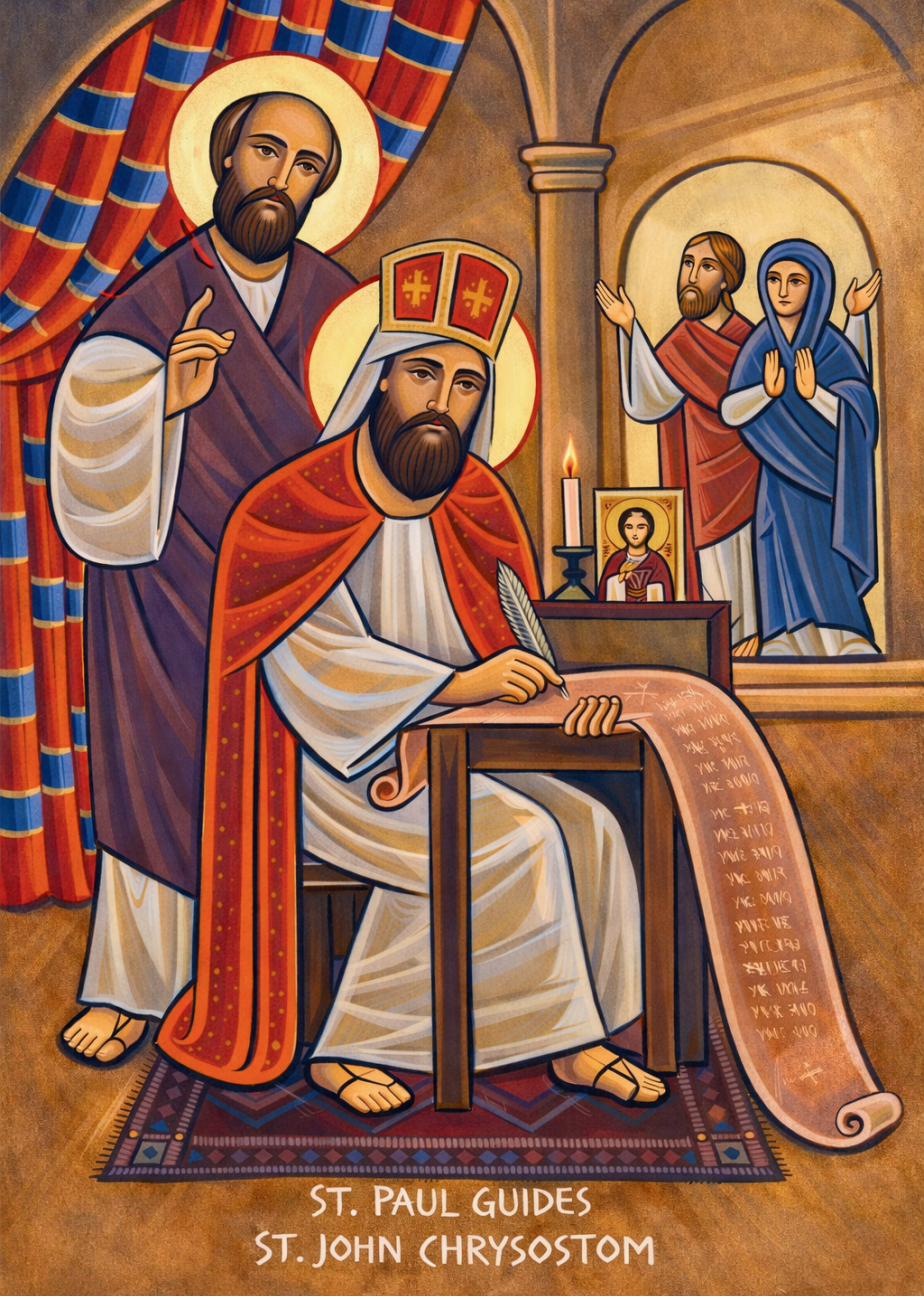
Teams composed of multiple individuals, provide an abundance of resources, ideas, and energy. This collaborative opportunity enables us to accomplish more collectively than we could individually. The apostle St. Paul recognized this principle in 1 Corinthians 12:14, 18-19, emphasizing that the body consists of many members and not just one. “For in fact the body is not one member but many … But now God has set the members, each one of them, in the body just as He pleased. And if they were all one member, where would the body be” (1 Corinthians 12:14, 18-19). God orchestrates the harmonious functioning of each member within the body, demonstrating His design for teamwork. When we collaborate as a team, we unlock our full potential and achieve remarkable accomplishments.
This concept of teamwork is deeply rooted in God's plan for the church. In Romans 15:5-6, the apostle St. Paul emphasized the need for unity and like-mindedness among believers. “Now may the God of patience and comfort grant you to be like-minded toward one another, according to Christ Jesus, that you may with one mind and one mouth glorify the God and Father of our Lord Jesus Christ.” (Romans 15:5-6) He encouraged them to glorify God with one mind and one voice, highlighting the significance of teamwork in magnifying God's glory.
With harmonious teamwork, the effort is efficiently distributed to achieve a goal while multiplying its impact. The results achieved by a team collectively surpass the individual efforts of any single team member. This principle is evident in the behavior of geese, which can fly 72% farther when flying in formation compared to flying alone. The application of this principle extends to all areas of life, demonstrating that collaborative efforts lead to greater achievements than individual endeavors. Together, everyone achieves more.
In Colossians 3:23-24, St. Paul reminds us that our work, including teamwork, has eternal significance. "Whatever you do, work at it with all your heart, as working for the Lord, not for human masters, since you know that you will receive an inheritance from the Lord as a reward. It is the Lord Christ you are serving." This verse serves as a reminder that our work, including teamwork, extends beyond mere temporal pursuits but carries eternal significance.
Accountability and Shared Responsibility
No individual possesses all the necessary skills, gifts, or wisdom to lead a successful life. Our innate human design predisposes us to rely on God and on one another. In Romans 12:5-6 we read, “ so we, being many, are one body in Christ, and individually members of one another. Having then gifts differing according to the grace that is given to us, let us use them” We are called to utilize our unique talents, abilities, and spiritual gifts to serve one another with kindness, respect, and appreciation. The biblical account of Moses provides a compelling example of teamwork. Although God entrusted Moses with the vision to construct the tabernacle, he did not undertake this task alone. Instead, he relied on a team of skilled craftsmen and women who collaborated to complete the project successfully (Exodus 35:31). This illustrates that even the most exceptional leaders require the assistance of others to accomplish their objectives.
Within these frameworks of different unique members, teamwork plays a vital role in the dynamism and vitality of the church. Church leaders cannot shoulder the entire responsibility alone. Jesus Christ exemplified this concept by sending his disciples out in teams of two to initiate their ministry. St. Ignatius of Antioch, an early church father, highlighted in his Letter to Polycarp the significance of teamwork not only for achieving goals but also for fostering spiritual growth and deepening our love for one another. “Toil and train together, run and suffer together, rest and rise at the same time, as God’s stewards, assistants and servants.” Letter to Polycarp, 6, Ignatius of Antioch. Working together as a team offers the advantage of diverse perspectives and ideas. When faced with challenges, multiple minds generate various solutions, enabling us to identify the most effective approach. This collaborative process contributes to personal growth, enhancing our abilities and effectiveness in various areas of work. Proverbs 11:14 underscores the importance of seeking counsel from others before making crucial decisions, emphasizing the value of teamwork in navigating complex situations. “Where there is no counsel, the people fall; But in the multitude of counselors there is safety.” (Proverbs 11:14)
A cornerstone of making this teamwork successful involves sharing credit for successes and responsibility for setbacks. This fosters genuine humility within the team, as we acknowledge the contributions of others and recognize that we are part of something greater than ourselves. Proverbs 11:2 states, "Pride leads to disgrace, but with humility comes wisdom." This verse underscores the critical nature of humility in teamwork. When we acknowledge the contributions of others and recognize that we are part of something greater than ourselves, we embrace humility and promote a genuine sense of unity within the team. Moreover, this collective responsibility fosters a culture of trust and respect within the team. When members know that their successes will be recognized and their mistakes will be confronted with understanding and support, they are more likely to be open, honest, and engaged in their work. St. Paul further emphasizes the principle of shared responsibility in Philippians 2:3-4: "Do nothing out of selfish ambition or vain conceit, but in humility consider others better than yourselves. Each of you should look not only to your own interests but also to the interests of others." This passage encourages team members to set aside personal aspirations and prioritize the team's goals. By considering the needs and perspectives of others, we foster a collaborative environment where every member feels valued and respected and encouraged to collaborate.
Moreover, accountability in teamwork aligns with the principle of stewardship, reminding us that we are entrusted with the resources and opportunities to make a positive impact. When we hold ourselves accountable, we acknowledge our responsibility to use our time, talents, and abilities wisely, maximizing their potential for the benefit of the team and the organization. This stewardship mindset cultivates a sense of ownership and empowerment, as team members feel responsible for the outcomes of their work and motivated to contribute their best.
John Maxwell in his book The 17 Essential Qualities of a Team Player states, “Great challenges require great teamwork, and the quality most needed among teammates amid the pressure of a difficult challenge is collaboration. Notice that we didn’t say ‘cooperation’ because collaboration is more than that. Cooperation is working together aggressively. Collaborative teammates do more than just work with one another. Each person brings something to the table that adds value to the relationship and synergy to the team. The sum of truly collaborative teamwork is always greater than its parts” (page 13, 14)
Ultimately, effective teamwork glorifies God. When we collaborate harmoniously as a team, unity emerges, reflecting God's glory. John 13:35 emphasizes that the world will recognize us as Christ's disciples through our love for one another. “ By this all will know that you are My disciples, if you have love for one another.” By working together effectively as a team, we provide a glimpse of God's love to the world.
Examples of Teamwork
The Father, the Son, and the Holy Spirit each have unique roles in the creation and redemption of Mankind. The Three Persons of the Godhead are never independent but always work together. Scripture records the work of the Divine Trinity in the creation cosmos (Genesis 1:1-2, John 1:1-3 and Colossians 1:15-17), but this perfect and harmonious interaction was especially evident in how God made it possible for people who were formerly alienated from him to be transformed into his beloved children. St. Paul first spoke of the work of the Father in accomplishing our salvation in Ephesians 1:3-6. Second, the apostle focused on the work of the Son in verses 7-12. Third, the work of the Holy Spirit, identified in Ephesians 1:13-14, seals and guarantees our spiritual inheritance. The Trinity exemplifies teamwork and harmony perfectly.
Similarly, we are called to be members of One Body, that is the Church of the Living God. Ephesians 4:12 refers to the church—the community of believers—as the “Body of Christ”. The church is to work as a team. 1 Corinthians 12:17-31 unpacks the idea of the church as a body in greater depth, using the systems of the human body as an analogy for the way team members need to rely on each other. Strong teams, just like strong bodies, are made up of interdependent members fulfilling defined tasks.
Another example can be seen in the Liturgical services of the church. The Divine Liturgy is not a spectacle that people simply follow, nor a concert of hymns and readings that they listen to. It is a divine work, which is celebrated by God’s priest together with His people. The very word ‘liturgy’ means ‘the work of the people’ (Greek ‘leitos’, which derives from laos = people). Going to church means that people go to participate in the celebration of the Divine Liturgy. St. John Chrysostom says, “‘We should dwell in the Church as in one house, as one body. For holy baptism is one, the table is one, the source is one, the creation one and the Father one’.”
Biblically, there are many examples as well. Moses, even though a great leader of the Israelites and author of the first five books of the Bible, needed Aaron, Joshua and Caleb with him. Aaron was his brother and earliest teammate, “So the LORD said to Moses: “See, I have made you as God to Pharaoh, and Aaron your brother shall be your prophet. 2 You shall speak all that I command you. And Aaron your brother shall tell Pharaoh to send the children of Israel out of his land.” (Exodus 7:1-3). Joshua and Caleb served as influential guides to Moses, (Numbers 13-14) and Jethro, his father-in-law, gave him precious advice on how to delegate part of his responsibilities and workload to a team of elders. (Exodus 18:19-23)
In his service, the Lord Christ called His disciples and later the seventy apostles to help in His ministry. Jesus sends them out in teams of two, “After these things the Lord appointed seventy others also, and sent them two by two before His face into every city and place where He Himself was about to go.” (Luke 10:1. The Apostles held on to this principle and carried it through their own service. In the book of Acts, the apostles and other workers traveled and worked in groups of two or more. The early church demonstrated a great example of teamwork on different occasions, e.g., choosing the seven deacons.
Why are some people not team players?
In many environments, where collaboration and teamwork are highly valued, certain individuals may struggle to adopt a collaborative mindset. Understanding the reasons behind this behavior is crucial for promoting effective team dynamics. This section aims to elaborate on five key factors that contribute to non-team player behavior.
- Preference for Individual Work
Some people may find it easier and more efficient to work alone. They may believe that individual effort allows for greater control over the quality and pace of their work. This preference can result in a lack of engagement with teammates and an unwillingness to contribute to collaborative efforts. An example of this could be a student who prefers to work on individual projects rather than group projects because they feel they have more control over the outcome of their work when working alone.
- Control Issues
Individuals with control issues may have a tendency to take on multiple tasks without seeking input or support from their teammates. Such behavior stems from a desire to maintain dominance over their work, often leading to resistance against suggestions for improvement. This attitude goes against the biblical principle of unity and like-mindedness as stated in Philippians 2:2.
- Resistance to Change
Some individuals may display resistance to change, particularly in situations where team dynamics or work processes are modified. They may be comfortable with established routines and may perceive changes as disruptive or unnecessary. This reluctance to adapt can hinder the team's ability to innovate and respond effectively to new challenges. For example, when a company implements a new software system, some employees may resist learning how to use it, as they are comfortable with the old system and may not see the need for change.
- Lack of Vision and Clarity
A clear vision and understanding of one's role within the team are essential for fostering team spirit. For example, in a soccer team, each player has a specific position and responsibilities. If a player is unsure of their role or the team's overall strategy, they may feel disconnected from the team and less motivated to contribute. When individuals lack a sense of purpose or are uncertain about their responsibilities, they may feel disconnected from the team's goals. This lack of clarity can lead to decreased motivation and engagement in team activities.
- Ego Needs
An inflated sense of self-importance, commonly referred to as ego, can significantly hinder team player behavior. Individuals driven by ego may believe that their ideas and approaches are superior to those of others, leading to inflexibility and an unwillingness to consider alternative perspectives. This self-centered attitude undermines the collaborative nature of teamwork. For example, in a workplace setting, an employee with an inflated ego might constantly interrupt colleagues during meetings, disregarding their opinions and suggestions. This behavior creates a hostile environment, discouraging open communication and collaboration among team members.
8 Principles of Teamwork
| Principle | Description |
|---|---|
| 1. The collective goal is the most important | Team members must remember that the goal is more important than their individual role, just like how in a relay race, each runner must focus on passing the baton to the next person, rather than just their own speed. |
| 2. Every member has a unique value added | All players have a place where they add the most value. This place is ofetn called their "sweet spot" or "niche." It is the area in which they have the most experience, knowledge, and skills. When a player is in their sweet spot, they are able to perform at their highest level and contribute the most to their team. Much like how we all have our own unique talents and abilities that we can bring to any project or endeavor. |
| 3. The weakness of a teammate impacts the entire team | The strength of the team is impacted by its weakest link. As much as any team likes to measure itself by its best people, the truth is that a team is only as strong as its weakest player. A weakest link is defined as such because of attitude, special agenda, or ability. |
| 4. Team members must buy into the team vision | Vision acts as a guiding light, illuminating the path for team members. It provides a sense of direction and purpose, enabling them to navigate obstacles and make informed decisions. Much like a compass, vision helps individuals stay on track and aligned with their goals. Without a clear vision, it's like sailing without a destination, leading to confusion and uncertainty. Just as a compass guides sailors on the vast seas, a well-defined vision guides individuals and teams toward their desired outcomes. |
| 5. Negative attitude brings a team to its demise | Negative attitudes can have a detrimental impact on a team's success and overall morale. When team members display negativity, it can create a hostile and unwelcoming environment, leading to decreased motivation, productivity, and collaboration. While good attitudes do not guarantee success, negative attitudes guarantee failures. For example, just as a bitter ingredient can spoil a cup of tea, a sour outlook can ruin a team. Tea is ofetn associated with relaxation and tranquility, so a sour ingredient can clash with that atmosphere, making it dififcult to fully appreciate the tea's flavors and aromas. |
| 6. Teamwork impacts more than ability | If a team doesn’t reach its potential, rarely is ability the issue. It is almost always a payment issue. Sacrifice, time commitment, personal development, and unselfishness are required payments for a team's success. Consider the example of a soccer team with talented players who fail to gel as a cohesive unit. While they may possess the skill and athleticism to succeed, the team may struggle to reach its potential if its members are not willing to make the necessary payments. They may prioritize individual glory over team success, leading to selfishness and a lack of cohesion on the field. To improve, they must recognize that individual ability is only one component of team success and be willing to make sacrifices, dedicate time to training, and focus on personal development to achieve their collective goals. |
| 7. Adjustment can be made with honest feedback | The team can make adjustments when it knows where it stands. When a team knows where it stands on the scoreboard, it can make strategic adjustments to improve its chances of winning. This is true for any endeavor, whether it's a sports team, a business, a service or a personal goal. Without a clear understanding of where you are in relation to your goals, it's dififcult to know what changes need to be made. If a basketball team is losing at halfitme, the coach may decide to make some changes to the starting lineup or the team's defensive strategy. The coach can make these adjustments because he knows where the team stands in relation to its goal of winning the game. On the personal level, for example, if someone wants to lose weight, they may decide to change their diet or exercise routine. These adjustments can help the individual achieve their goal of losing weight. Knowing where you stand is essential for making progress towards your goals. It allows you to set realistic goals and develop a plan to achieve them. Without this information, you would be shooting in the dark and would be less likely to succeed. |
| 8. Shared values define the team | Shared values serve as the foundation for team culture and behavior and help to create a strong sense of camaraderie and trust among team members. Shared values can include things like honesty, integrity, respect, collaboration, and excellence. For example, in a healthcare setting, a team might share the values of compassion, patient-centered care, and teamwork. These values guide their interactions with patients and each other and help to ensure that they are all working towards the same goal of providing the best possible care to their patients. Shared values are essential for any team that wants to be successful. |
They provide a sense of unity and purpose and help to create a positive and productive work environment. When team members share the same values, they are more likely to be engaged, motivated, and committed to their work. They are also more likely to collaborate effectively and support each other in achieving their goals.
Hierarchical interrelationships
During the course of service, or throughout the course of any leadership interactions, there are numerous obstacles and challenges that can arise within the relationships among the leader, the team, and the task at hand. These obstacles and challenges can significantly impact the effectiveness of the leadership process and the ability to achieve desired outcomes.
Let us evaluate a few interactions. First, where the Leader is distant from the team and the task. A disconnection from the team members and the task may ultimately impact the team and the completion of the task. Building a great connection with the people is essential for maintaining their engagement and for the success of the task. It's like trying to build a house without a blueprint - it's possible, but it's going to be a lot harder and take much longer.
On the other hand, there are leaders that are close to the task, but distant from the team. They are typically task-oriented leaders. This may lead to a lack of the team members autonomy and creativity. This type of leader focuses on the tasks that need to be carried out in order to reach goals. Task-oriented leadership involves some task management features. This involves placing emphasis on administrative activities, coordinating job-related activities, preparing financial reports etc. This type of leader doesn’t really care about relationship building. They are more concerned with following their plan to reach organizational targets.
On a better scale, another leader is close to the task and the team, but communication is limited. This poor communication from leaders can disrupt a team's cohesion and performance. Leaders need to take care when communicating with their team to ensure that everyone is on the same page. Just like a game of telephone, miscommunication can lead to unexpected and often humorous results.
Now, imagine the Leader is involved with the task and the team, but something is still missing. In the destruction of the wall of Jericho, we see a team working together and succeeding together but something was still missing. “But the children of Israel committed a trespass regarding the accursed things, for Achan the son of Carmi, the son of Zabdi, the son of Zerah, of the tribe of Judah, took of the accursed things; so the anger of the Lord burned against the children of Israel.” (Joshua 7:1) From this verse we find that Israel acted unfaithful in the Battle of Jericho when it stole something from the ban. When one of them, named Achan, took some things from the ban, He rebelled against God’s command. They acted unfaithfully and they were defeated. They lacked the fear of God.
This leads us to the final interaction, the leader is involved with the task and the team… AND ALL IS WITHIN THE FEAR OF GOD. “The fear of the Lord is the beginning of wisdom, And the knowledge of the Holy One is understanding.” (Proverbs 9:10). Fear of the Lord can be defined as the continual awareness that our loving heavenly Father is watching and evaluating everything we think, say, and do, (Matthew 12:36; Psalm 139:2; Jeremiah 12:3). Thus, a leader of any capacity is expected to have the fear of God and be considerate with his leadership. Nehemiah 4-5 provides a master lesson in leadership based on the fear of God. Nehemiah 5:19 tells us: Nehemiah is not looking for approval from nobles or from people. He is looking for approval from God. In other words, he feared God.
What are the characteristics of a good team?
Finally, we can now conclude the characteristics of a team team. A good team has good connections between its members. They will have a clear understanding of the team’s mission with a common goal and purpose. They will grow together as this is one of the team leader’s top responsibilities. The team members trust and respect the other players while the team’s best interests come before a member’s individual rights. Each team member plays a special role. Ideally, each person’s role is built on his or her greatest strengths and everyone is willing to pay the price. Time and energy should not be spared while practicing and preparing.
There is no jealousy in teamwork. When the whole team is working for the glory of God, there is no internal competition: “I planted, Apollos watered, but God gave the increase.” (1 Corinthians 3:6). The unified team understands that reaching goals is God’s doing. And what God is doing requires teamwork on our part: “And he who reaps receives wages, and gathers fruit for eternal life, that both he who sows and he who reaps may rejoice together. For in this the saying is true: ‘One sows and another reaps.’ I sent you to reap that for which you have not labored; others have labored, and you have entered into their labors.” (John 4:36-38).