“Pray for those who spitefully use you and persecute you.”
The Coptic Tradition of Spiritual Fatherhood
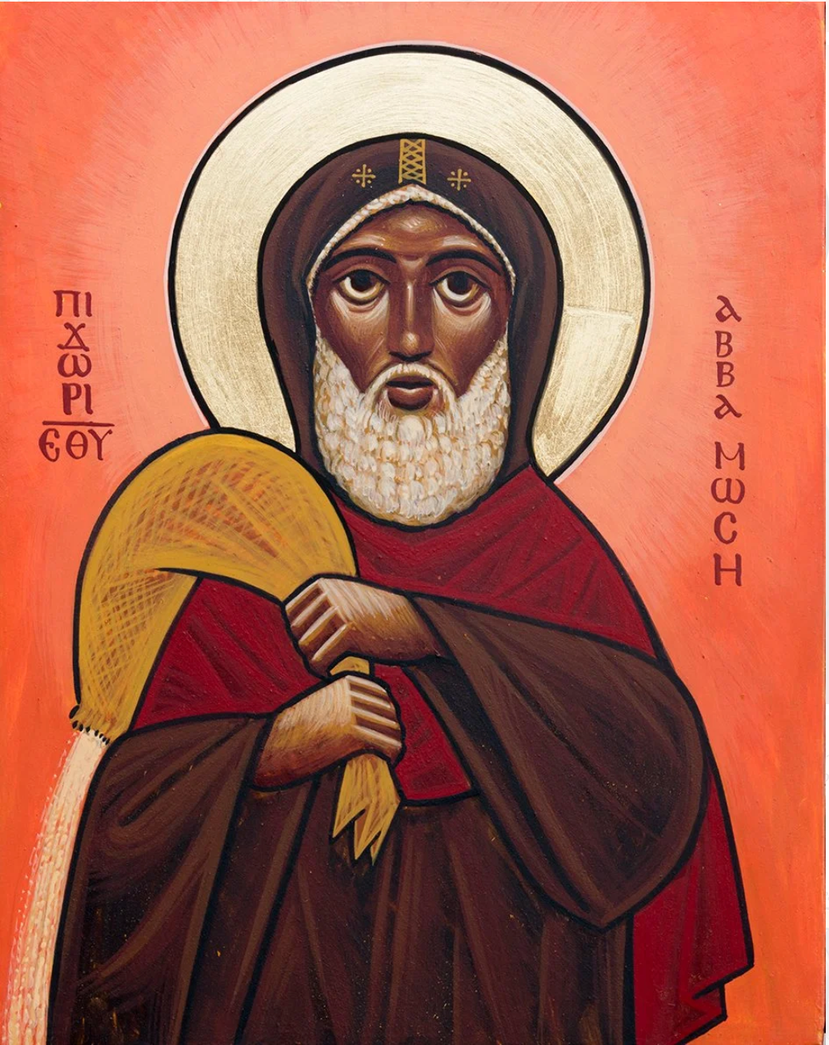
Abba Moses · The Wound That Becomes Prayer
A young servant came to his father of confession carrying a wound he was sure was justified. He had been serving faithfully in his church, teaching his class, giving his time. Another servant had seen him distribute calendars to his group and, missing his share, came across the room and shouted at him in front of all the children. The entire church fell silent. Every class turned to watch. The young man stood without retaliating. He did not raise his voice or fight back. He waited until the other servant was led away, then continued his lesson.
The following week he went to confession. He told the story in full: the humiliation, the injustice, the public shame before the children, his own silence and restraint. He expected, at the end of it, a word of comfort. He expected consolation.
The father of confession looked at him and said: “Have you sinned, and come to me to complain?”
The young man was bewildered. He thought he had not been heard. He told the story again. The answer was the same: “I heard you the first time. Have you sinned, and come to me to complain?”
And then came the examination that the young servant had not expected and would never forget. Is this man not your brother? Yes. And did the devil trick him? Yes. And he fell into the sin of anger? Yes. Then: How much did you pray for your brother before you came to me? How much did you fast for your brother, that the Lord might remove his anger? How many prostrations did you make for him? The answer to each question was the same. Nothing. He had come straight to confession to tell the story. And so the father said what had to be said: “Did I not tell you that you sinned, and came to me to complain?” He sent the young man away not with absolution but with an assignment: Go. Pray. Fast. Do prostrations. And after that, come back.
What the father of confession did was not deny the wound. The humiliation had happened. The other servant had sinned. None of that was in dispute. What he refused to do was allow the wound to remain the centre of the story. He turned the young servant entirely around: Your brother has fallen. You are the one positioned to intercede for him. You carry this not as a grievance to be processed but as a responsibility to be fulfilled. The wound is not yours to nurse. It is yours to pray from.
The servant who carries the wound of another’s sin against them is not simply a victim of that sin. They are, by the same wound, invited into an intercession uniquely theirs.
They know the shape of that sin from the inside. They have felt what it does. No one can pray for that brother or sister more specifically, more honestly, more effectively than the one who was wounded by them — if the wound is brought to prayer rather than to complaint.
The Orthodox tradition names what happened to the young servant in that confession with a word that deserves to be recovered from theological abstraction: the turning of the whole person (metanoia). Not merely remorse for sin, not the management of guilt, but the reorientation of the deepest self in a new direction. The young servant came to confession with his whole interior attention fixed on the wound, on the one who had inflicted it, on the injustice that had been done. The father of confession turned him around: away from the wound received, toward the brother who had fallen and needed intercession. That turning — sharp, painful, unglamorous — was true repentance. It is what the sacrament of confession is always, at its deepest, doing: not counting up the wrongs and pronouncing absolution, but reorienting the interior gaze toward God and neighbour.