“A broken and a contrite heart, O God, You will not despise.”
The Psalter · Pope Shenouda III
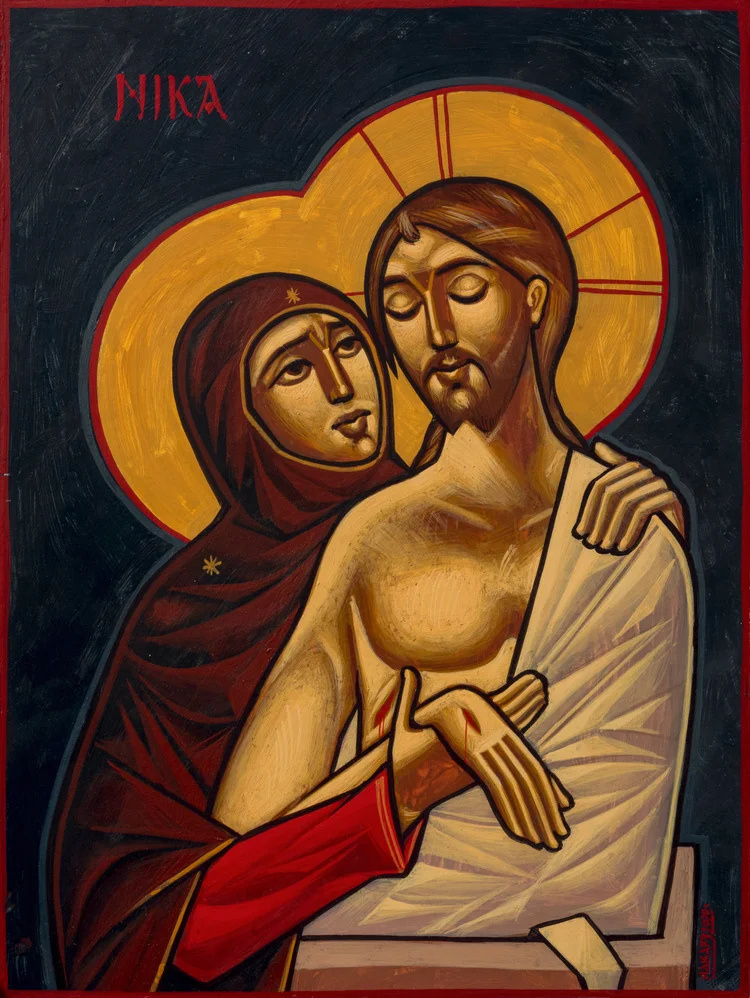
Christ stoops to meet us in our poverty
There is a wound that most servants carry more privately than any other. It is not the wound of being misunderstood by a colleague or abandoned by someone they invested in. Those wounds can at least be named in safe company. This wound tends to stay inside, in the dark, because naming it feels like a confession that disqualifies rather than a prayer that opens. It is the wound of looking honestly at yourself — at your own motives, your own inconsistency, your own poverty before the demands of the calling — and not liking what you see.
The servant who has been in ministry for any length of time knows this wound with specificity. They know the Sunday morning when they led a session about love for the young people in front of them while privately resenting one of their colleagues in the next room. They know the moment they gave pastoral attention to a struggling family while part of their mind was somewhere else entirely. They know the season when the prayers felt mechanical, the preparation felt like duty, and the service felt like performance — and when they are honest, they cannot be entirely sure that season ended.
The tradition of the Church is precise about what to do with this wound, and the precision is important because two very different responses are possible. The first is guilt — the kind of self-recrimination that turns inward and stays there, rehearsing the poverty, cataloguing the failures, reaching no resolution and deepening no trust. This is what the Desert Fathers called the counterfeit of repentance: it has the appearance of spiritual seriousness but produces only paralysis. The soul that is absorbed in its own failures has not moved toward God. It has simply moved from one kind of self-absorption to another.
The second response is what the Fathers call holy mourning — the gift of tears that comes from seeing oneself clearly before God and bringing what one sees directly into His presence. The difference between the two is not in the severity of what is seen. It is in the direction of the gaze. Guilt looks at the self and stays there. Holy mourning looks at the self and then immediately looks up. The Psalmist does both in the same breath: I know my transgressions, and my sin is ever before me — and then, in the same movement: create in me a clean heart, O God (Psalm 51:3, 10). The wound of honest self-knowledge, brought to God rather than nursed alone, is the beginning of the very humility the Fathers consider the summit of Christian life.
Pope Shenouda III, in his meditations on the Song of Songs, observes something remarkable about the Bride’s search for the Beloved: that the searching itself reveals to her how little she has, how inadequate she is, how poor her resources are for finding the One she seeks. She goes out. She is struck. She loses her veil. And what is taken from her in that process — the veil of her own spiritual confidence, the sense that she was capable of managing the search — is precisely what had been standing between her and the fullness of the encounter. The poverty is the path. The discovery of inadequacy is not the obstacle to finding God. It is the condition of finding Him honestly.
The servant who has served faithfully for years and who has come, through that service, to a genuinely humble knowledge of their own poverty — who no longer entertains illusions about the purity of their motives or the consistency of their love — is not a failed servant. They are a formed one. Without it, what the servant offers is performance dressed as service. With it, what they offer is the genuinely broken vessel through which the light, as St Paul insists, can actually escape.
The broken and the contrite heart, the Psalmist promises, God will not despise. He will not turn away from the servant who comes with nothing to offer but what they honestly are. That — and the Fathers are unanimous on this — is the servant He has always most wanted.
The Coptic tradition has built this wound into its liturgical rhythm with great pastoral wisdom. The preparatory prayers before the Divine Liturgy are not triumphant. They are confessional. The Book of Hours (the Agpeya) provides seven daily moments of the same movement: I am small, I am insufficient, I bring what I have, receive it. The daily examination of conscience is not an exercise in self-punishment. It is the Church’s invitation to keep the wound of self-knowledge clean — to bring it regularly into the light of God’s presence, where it becomes not the source of shame but the ground of genuine and continuing encounter.