“The watchmen who went about the city found me. They struck me, they wounded me; the keepers of the walls took my veil away from me.”
St Gregory of Nyssa · Commentary on the Song of Songs
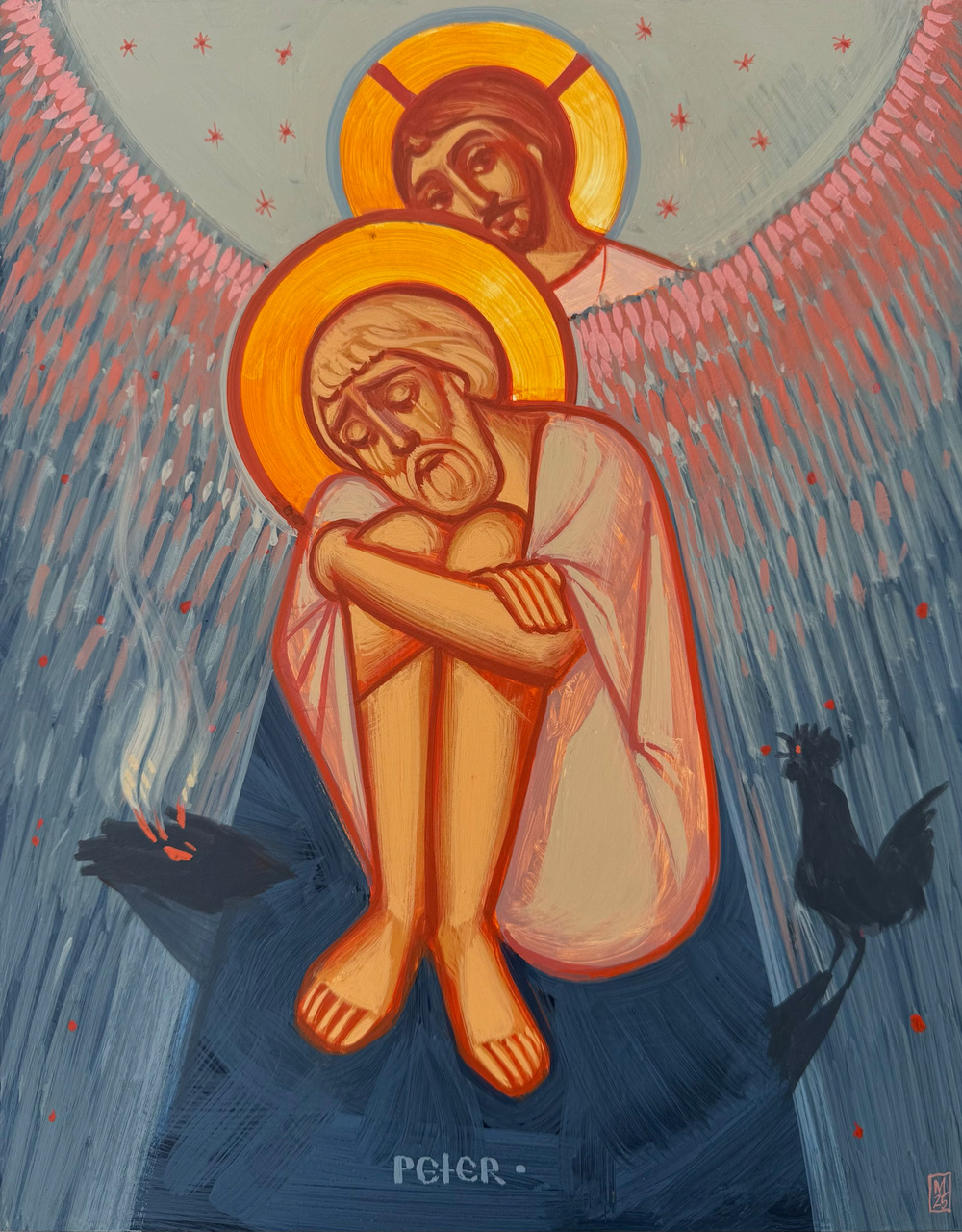
St Peter · Wounded in the Seeking
The Bride has already been found once. Earlier in the Song she searched, and she found Him, and she brought Him to her mother’s house, and the love story seemed to have arrived at its destination. But the Song of Songs does not end there — because the encounter with divine love does not end there. It opens further. The Beloved withdraws again, not out of indifference but out of an invitation to a deeper seeking, a more costly love, a pursuit that will cost the Bride more than the first one did.
So she goes out again. Into the night. Through the city. Searching. And this time the watchmen find her before she finds Him — and they do not assist her search. They strike her. They wound her. They take her veil.
The Fathers of the Church sat with this passage for a very long time, and what they found in it was not a complaint but a confession — and not a sign of abandonment but of proximity. The Bride was struck because she went out. She was wounded because she was close enough to the walls of the city — the city where the Beloved dwells — that the watchmen encountered her. The wound did not come to her sitting at home in safety. It came to her in motion, in the act of love-driven searching. She earned the wound by refusing to stop seeking.
The veil that was taken from her is, in the patristic reading, the last layer of self-protection. The first search had cost her something, but she had retained, perhaps, the veil of her own spiritual confidence — the sense that she knew where to look, that the search was within her capacity, that love was something she could navigate. The second search strips even that. The veil is gone. She stands before the walls with no protection and no dignity and nothing left but the one thing she went out with: the question. Have you seen the one I love? She asks it of the watchmen who just struck her. She does not stop to nurse the wound. She keeps seeking.
This is the particular wound that the servant in genuinely costly ministry will recognise with a shock of familiarity. It is not the wound of failure — the wound of having stayed home and played it safe and done nothing. It is the wound of the second search, the wound of one who has already been found and loved and served, and has gone out again anyway, further this time, into a darkness more disorienting than the first, and has been struck in the going. The years of faithful, unglamorous, fruit-unseen service. The pastoral relationships that cost everything and seemed to yield nothing. The prayer life that stripped away every spiritual consolation and left only the bare cry: Where are You? Have You seen the one I love?
The Bride who has been struck at the walls and has lost her veil is closer to the Beloved than she was when she began.
This is not comfortable news. It does not make the striking hurt less. But it orients the wound correctly — not as evidence that the search has failed, but as evidence that it has reached the place where the real encounter happens. The walls where the watchmen stand are the walls of the city where He dwells. She has come far enough to be struck. And the One who permitted the striking is already moving to meet her.
For the Coptic servant, the ancient voices that carried this teaching were never merely academic. The Desert Fathers who went out into the Egyptian wilderness did not find it comfortable. The fathers and mothers who have served faithfully in the diaspora, far from home, in communities that did not always understand them — they know what it is to go out in the night and be struck at the walls. They know the particular loneliness of the second search, when the first joy has faded and the road ahead is longer than expected. And they know — those who have persevered — that the wound at the wall is not the end of the story. It is, in the economy of God’s love, almost always the beginning of the deepest chapter.