“Let the peace of God, which surpasses all understanding, guard your hearts and minds through Christ Jesus.”
Elder Thaddeus of Vitovnica · Our Thoughts Determine Our Lives
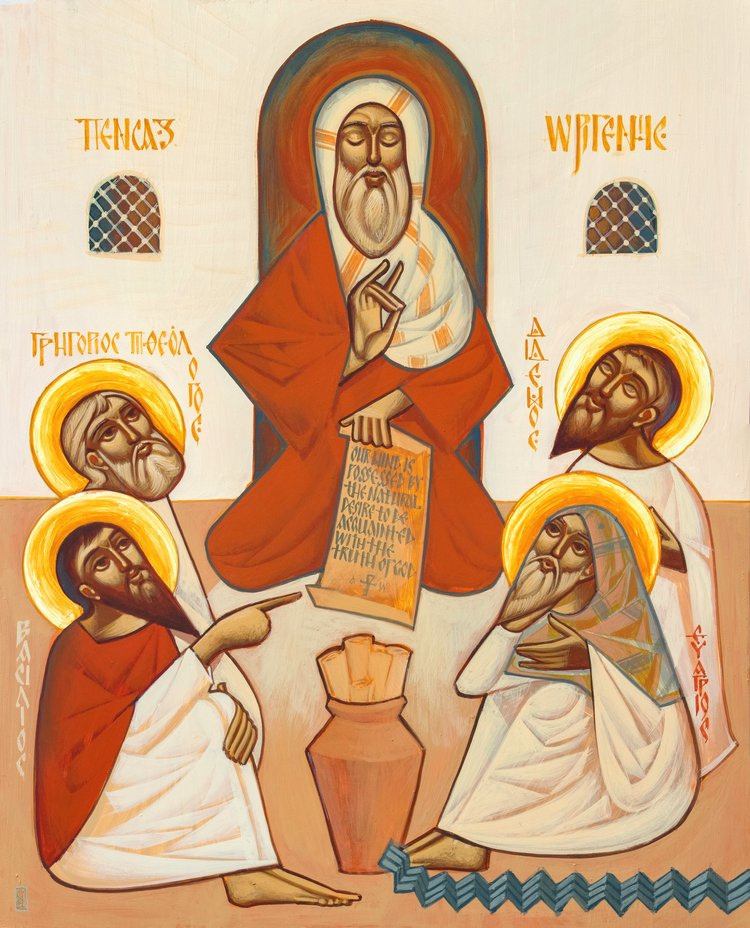
The Desert Fathers · Our Thoughts Determine Our Lives
Those who made their way to a certain monastery in Serbia to sit with an old monk in his later years did not come looking for theology. They came because of something they had heard, or sensed, or could not quite articulate: that there was, in the presence of this old man, a stillness. A quality of peace that was not merely temperamental or produced by the serenity of the monastic environment. A peace that seemed to come from somewhere deeper than personality, deeper than the absence of disturbance. A peace that felt, to those who sat in it, like standing in a warm room after a long time in the cold.
That peace did not arrive through the absence of suffering. It arrived through the interior transformation of suffering across many decades.
He had been imprisoned. He had been subjected to deliberate physical and psychological humiliation by the communist authorities who governed Yugoslavia for much of his ministry. He had known chronic illness, material deprivation, and the particular loneliness of a monastic life lived under a regime that regarded the Church as an enemy to be subdued. He knew what wounds were. He did not speak of them from a comfortable distance.
What he taught — and what he embodied — was this: our thoughts determine our lives. The phrase sounds simple. It is, in fact, a compressed summary of Orthodox anthropology, of the entire ascetical tradition of the Eastern Church, of the Philokalia and the Fathers of the desert and the practical wisdom of centuries of monastic formation. In Orthodox understanding, the spiritual intellect — the eye of the soul, the capacity in the human person that is made for direct knowledge of God — is the centre of the human being. And that deep faculty shapes the interior climate. The interior climate shapes everything the servant gives to those around them.
The servant who carries a wound in their service and who spends the subsequent hours rehearsing it in thought — replaying the difficult conversation, the thankless response, the years of what seemed to be wasted effort — is cultivating a climate the wound will eventually come to dominate. Not because the wound is stronger than God, but because the servant has given it more interior territory than God. They have moved the wound to the centre and built their interior life around it. And from the centre, it spreads.
The servant who is wounded and who, repeatedly and imperfectly and with the grace of the Holy Spirit, refuses to give the wound that central territory — who brings the specific thought to God as it arises, who returns the interior gaze to Christ when the gaze has drifted to the wound — discovers in time what the long monastic tradition has always known: that the wound can exist within an interior climate of peace. It does not vanish. It is not suppressed or spiritually managed into invisibility. But it is no longer master. It has been displaced from the centre. And from the centre, where the wound was, something else has been permitted to take residence.
This is the protection of the interior life that the wisest among the wounded lived and taught — and that the servants gathered on this day are invited to receive not as a technique but as a way of being. It is not denial. It is not the performance of positivity. It is the hard and holy and daily work of refusing, with God’s help, to give the wound more interior space than it deserves — and offering that space, instead, to the One who was wounded before us and who has made of His wound the ground of all peace.