“Unless I see in His hands the print of the nails, and put my finger into the print of the nails, and put my hand into His side, I will not believe.”
St John the Evangelist · The Gospel of John
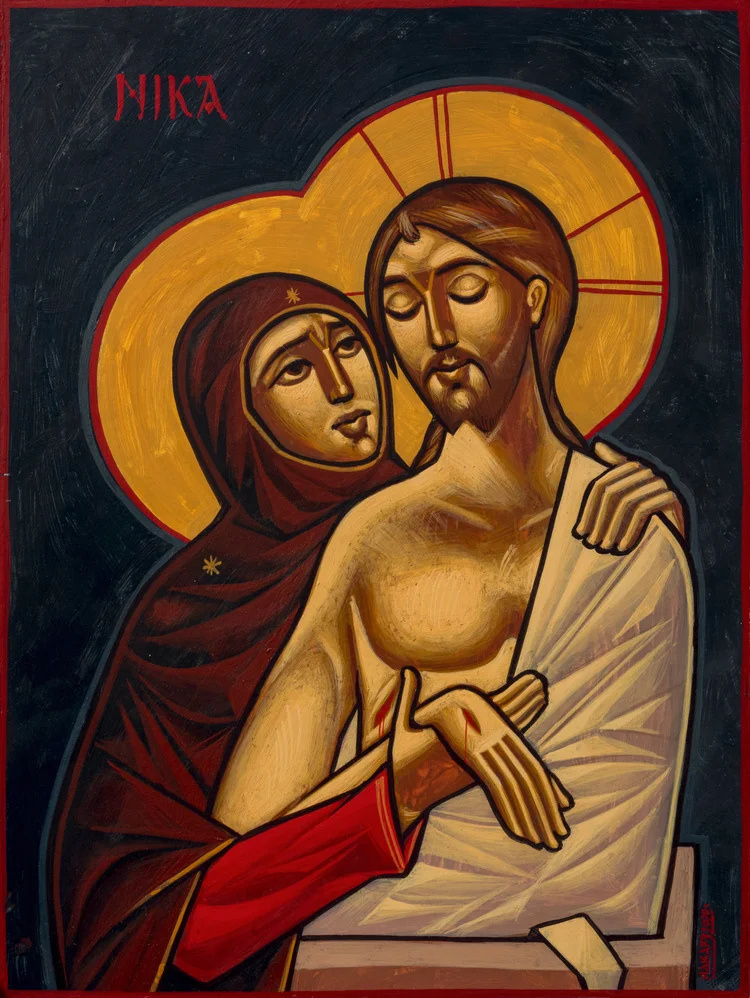
The Risen Christ bears His marks still
Thomas has missed it. When the disciples say to him “We have seen the Lord,” his answer is not disbelief in the Resurrection as a theological proposition. It is something more personal than that. It is the response of a man who will not accept a secondhand report of the most important event in history. He does not want a testimony. He wants the marks. Unless I see — unless I put my finger into the print of the nails — unless I put my hand into His side: he is asking for contact with the wound, not with the glory of the Resurrection viewed from a safe distance.
Eight days later, the Lord comes. He stands among them, and He does not rebuke Thomas for his demand. He offers exactly what was asked for: Reach your finger here, and look at My hands; and reach your hand here, and put it into My side. The wound is still there. The glorified, risen, death-conquering body of the Son of God still carries the marks of the Passion. The Resurrection has not removed them. The Resurrection has transfigured them — transformed what was the evidence of death into the evidence of life.
Thomas touches the wound and confesses: My Lord and my God. This is the highest Christological confession in the entire Gospel of St John — made not in response to a miracle, not in response to a teaching, but in response to a wound.
The wound is the doorway to the deepest faith. The marks in the hands of the Risen Christ are the ground of the fullest confession. What the wound carries, when it has passed through the hands of God, is not the evidence of defeat. It is the proof that Love does not ultimately lose.
The servant who carries wounds from their service — and who has brought those wounds, however frail the offering, to the God who was wounded before them — is not marked by failure. They carry, in those marks, something that the unwounded servant does not possess: the capacity for a particular kind of encounter. Not the encounter of strength meeting weakness from above, but the encounter of wound meeting wound at the same level, in the same dark, with the testimony of one who has been held.
St Paul understood this when he wrote: “I bear in my body the marks of the Lord Jesus” (Galatians 6:17). The marks are the identification. They are the sign that the servant has not served from a comfortable distance. They are the mark of one who drew close enough to be touched — and was. And the marks are permanent. They are carried into the Resurrection, just as our Lord carried His. They are not shed on the threshold of glory. They are taken up into it. And there, in the light of the Resurrection, they shine not as the evidence of what was lost but as the evidence of what Love was willing to enter in order to find us.
The Church that begins its calendar from the wound prays its Liturgy from within the wound — and finds there, at the very centre of it, not emptiness but the Body and Blood of the One who entered every wound from the inside, and made of the deepest wound the door of life.
You are not the same as when this day began. The wound is the same. But something has shifted in how it is held. It is still yours. But it has been placed, however tentatively, in the hands of the One who was wounded before you. And the One who holds it knows what to do with it. He has done it before.